|
Getting your Trinity Audio player ready...
|
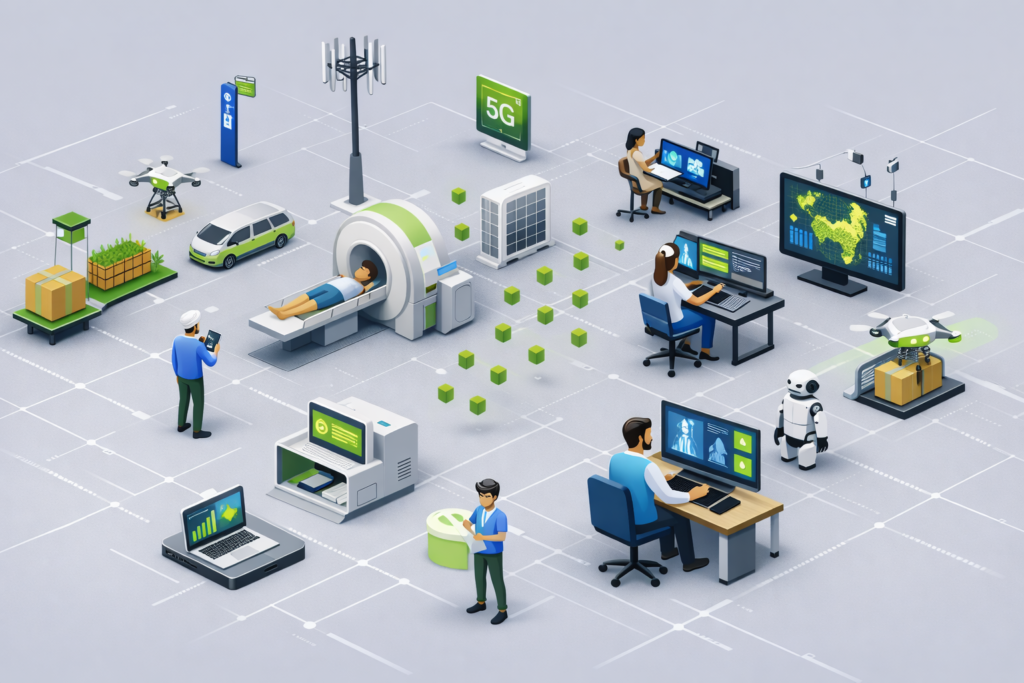
India is witnessing a technological revolution, and artificial intelligence (AI) stands at the center of this transformation. From improving governance and healthcare to reshaping infrastructure and education, AI is actively building a smarter, faster, and more efficient nation. Unlike traditional technologies, AI does not just automate tasks—it learns, adapts, and evolves. As a result, India is now entering an era where data-driven decisions and intelligent systems define progress.
Moreover, with initiatives like Digital India, Smart Cities Mission, and Make in India, the government is actively encouraging AI-driven development. Together, public and private sectors are leveraging AI to solve real-world problems at scale. This shift is not futuristic anymore—it is happening right now.
AI and Smart Infrastructure in India
Infrastructure forms the backbone of any developing economy, and AI is revolutionizing how India plans, builds, and manages it. Traditional systems often struggle with inefficiencies, delays, and cost overruns. However, AI-powered tools now analyze massive datasets to optimize construction schedules, predict material needs, and prevent structural failures.
For instance, AI-based predictive maintenance systems monitor bridges, highways, and railways in real time. These systems detect early signs of damage and recommend timely repairs. Consequently, this approach saves money, reduces accidents, and improves public safety.
In addition, smart traffic management systems powered by AI are transforming urban mobility. These systems analyze live traffic data and automatically adjust signals to reduce congestion. As a result, cities experience smoother traffic flow and lower pollution levels.
AI in Healthcare: Making Quality Care Accessible
Healthcare remains one of India’s biggest challenges, especially in rural and semi-urban areas. However, AI is bridging this gap by enabling faster diagnoses, personalized treatments, and remote consultations.
AI-powered diagnostic tools now analyze X-rays, MRIs, and CT scans with remarkable accuracy. These systems help doctors detect diseases like cancer, tuberculosis, and heart conditions at early stages. Consequently, early detection improves survival rates and reduces treatment costs.
Furthermore, AI-driven telemedicine platforms allow patients in remote villages to consult specialists without traveling long distances. This not only saves time but also ensures timely medical attention. Meanwhile, AI chatbots assist patients with appointment bookings, symptom checks, and medication reminders, making healthcare more accessible than ever.
Transforming Education Through AI
Education shapes the future of any nation, and AI is redefining how Indians learn. Traditional classroom models often fail to address individual learning needs. However, AI-powered platforms now personalize education based on a student’s strengths, weaknesses, and pace.
For example, adaptive learning systems analyze a student’s performance and automatically adjust content difficulty. This approach helps slow learners catch up while challenging advanced students. As a result, learning becomes more inclusive and effective.
Moreover, AI tools assist teachers by automating administrative tasks such as grading and attendance. This frees up time for meaningful interactions with students. Additionally, virtual tutors and AI-powered doubt-solving systems provide 24/7 academic support.
In rural areas, AI-based language translation tools help students access quality content in their native languages. This significantly reduces the digital divide and promotes equal learning opportunities.
Smarter Governance With AI
Governance plays a critical role in national development, and AI is helping India build a more transparent, responsive, and efficient system. Traditionally, government processes involved heavy paperwork, slow approvals, and limited data insights. However, AI now enables faster decision-making and better resource allocation.
For instance, AI-powered data analytics systems identify welfare beneficiaries accurately. This reduces fraud and ensures that benefits reach the right people. Similarly, predictive analytics help governments prepare for natural disasters, manage crowd control, and plan emergency responses.
Additionally, AI chatbots assist citizens with queries related to government schemes, documentation, and services. These bots operate 24/7, reducing dependency on physical offices. Consequently, citizens enjoy faster service delivery and improved trust in public systems.
AI in Agriculture: Empowering Farmers
Agriculture employs a large portion of India’s population, yet it often suffers from unpredictable weather, pests, and low productivity. AI is changing this narrative by making farming smarter and more data-driven.
AI-powered tools analyze soil quality, weather patterns, and crop health using satellite imagery and sensors. Based on this data, farmers receive precise recommendations on irrigation, fertilization, and pest control. As a result, crop yields increase while resource wastage decreases.
Moreover, AI-based market prediction systems help farmers decide the best time to sell their produce. This minimizes losses and improves income stability. Over time, these technologies contribute to sustainable farming practices and food security.
Driving Economic Growth With AI
AI is not just improving services—it is also creating new industries and job opportunities. From fintech and e-commerce to cybersecurity and robotics, AI-driven startups are booming across India.
Businesses now use AI to analyze customer behavior, optimize supply chains, and personalize marketing strategies. This leads to higher efficiency and better customer experiences. In turn, increased productivity strengthens India’s global competitiveness.
Furthermore, AI is supporting small and medium enterprises by offering affordable automation tools. These tools help businesses scale faster without heavy investments. Consequently, entrepreneurship thrives, and innovation becomes more accessible.
Ethical and Responsible AI Development
While AI brings massive benefits, it also raises concerns about data privacy, job displacement, and algorithmic bias. Therefore, responsible AI development remains crucial for long-term success.
India is actively working on frameworks that promote ethical AI usage. These frameworks emphasize transparency, accountability, and fairness. For example, explainable AI models ensure that decisions remain understandable and traceable.
Moreover, reskilling programs aim to prepare the workforce for AI-driven jobs. Instead of replacing humans, AI should augment human capabilities. With the right policies, India can ensure that technological growth benefits everyone.
The Road Ahead: A Smarter, Stronger India
AI is no longer an optional upgrade—it is a necessity for national progress. By integrating AI into infrastructure, healthcare, education, agriculture, and governance, India is building a future that is not only smarter but also more inclusive.
However, success depends on collaboration between government, private companies, and academic institutions. Together, they must focus on innovation, data security, and ethical standards. When implemented responsibly, AI can uplift millions of lives and create long-term prosperity.
In the coming years, India will not just adopt AI—it will shape it. With its massive talent pool, growing startup ecosystem, and digital-first mindset, the nation is well-positioned to become a global leader in AI-powered development.