|
Getting your Trinity Audio player ready...
|
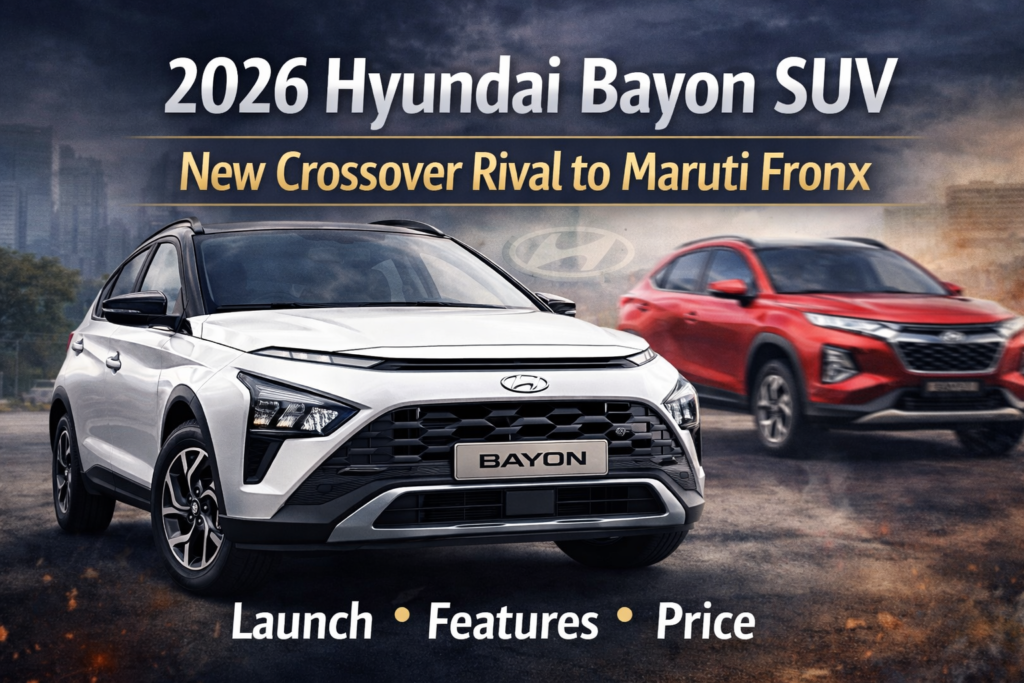
Hyundai is preparing to enter India’s most competitive segment with the 2026 Hyundai Bayon, a compact crossover SUV designed for modern urban buyers. With SUV demand growing rapidly, Hyundai aims to strengthen its lineup by placing the Bayon between the Exter and the Venue.
This move makes strategic sense. Buyers now prefer SUVs over hatchbacks. They want bold styling, high ground clearance, and advanced features. The Bayon promises all of that in a compact and affordable package.
More importantly, the Bayon will challenge the Maruti Suzuki Fronx, which currently leads the sub-4-meter crossover space. Hyundai plans to attract customers who want premium design, smart technology, and strong road presence.
Where the Hyundai Bayon Fits in the Lineup
Hyundai already sells multiple SUVs in India. The Exter targets entry-level buyers. The Venue caters to premium compact SUV customers. The Creta dominates the mid-size segment.
However, there remains a gap between the Exter and Venue.
The Bayon will fill this space.
It will offer more style, space, and features than the Exter. At the same time, it will stay more affordable than the Venue. This placement gives Hyundai the chance to attract a wider audience.
Young professionals, small families, and first-time SUV buyers will likely prefer this model.
Exterior Design: Sporty, Bold, and Modern
Hyundai will design the Bayon using its latest global design language. Expect sharp body lines, bold styling elements, and a confident stance.
The front will likely feature split headlamps and signature LED daytime running lights. These elements will give the SUV a futuristic appearance. A wide grille and sculpted bumper will add visual strength.
From the side, the Bayon will look compact yet muscular. It will have strong wheel arches and stylish alloy wheels. These details will enhance its road presence.
At the rear, Hyundai may offer unique LED tail lamps and a sculpted tailgate. This design will make the Bayon instantly recognizable on the road.
Overall, the SUV will look modern, youthful, and urban-focused.
Interior: Premium Feel with Smart Technology
Hyundai focuses heavily on interior quality. The Bayon will follow the same philosophy.
Inside, you can expect a clean dashboard layout with soft-touch materials and a modern design. A large touchscreen infotainment system will likely take center stage. It may support wireless Android Auto and Apple CarPlay.
A fully digital instrument cluster could appear in higher variants. Hyundai might also include ambient lighting, premium seat fabrics, and a flat-bottom steering wheel.
In addition, features like wireless charging, rear AC vents, and push-button start will improve comfort. These elements will make daily commuting easier and more enjoyable.
Hyundai understands Indian buyers. Therefore, it will likely focus on space, storage, and comfort.
Safety: A Strong Focus Area
Safety has become a major selling point in India. Hyundai knows this well.
The Bayon will likely offer six airbags as standard. It may also include electronic stability control, hill-start assist, and tire pressure monitoring.
Higher trims could receive advanced driver assistance features. These may include lane-keeping assist, forward collision warning, and adaptive cruise control.
Such features will help Hyundai stand out in the segment. They will also appeal to buyers who value safety above everything else.
Engine Options and Performance
Hyundai will likely offer multiple petrol engines with the Bayon.
The base variants may feature a 1.2-liter naturally aspirated petrol engine. This engine will focus on fuel efficiency and smooth city driving.
Higher variants may get a 1.0-liter turbo-petrol engine. This option will deliver better acceleration and a more engaging driving experience.
Transmission choices could include manual and automatic options. Hyundai may offer a dual-clutch or torque converter automatic for premium trims.
In the future, Hyundai might also introduce mild-hybrid or hybrid-ready powertrains. This move will help meet stricter emission norms and improve fuel economy.
Ride Comfort and Handling
Hyundai tunes its cars for Indian road conditions. The Bayon will likely follow this approach.
Expect a suspension setup that balances comfort and stability. It should absorb potholes well while maintaining control at high speeds.
The steering will probably feel light. This will help during city driving and tight parking situations.
With higher ground clearance than hatchbacks, the Bayon will handle bad roads more easily. Speed breakers and uneven surfaces should not pose major problems.
Competition in the Segment
The compact SUV space in India is extremely crowded.
The Bayon will compete with several strong rivals. The Maruti Suzuki Fronx will be its biggest challenge. The Fronx attracts buyers with its coupe-like design and fuel-efficient engines.
Other rivals include the Tata Nexon, Kia Sonet, Renault Kiger, Nissan Magnite, and Mahindra XUV 3XO.
Each competitor offers something unique. Some focus on safety. Others highlight performance or pricing.
To succeed, Hyundai must balance features, pricing, and brand appeal.
Expected Price Range
Hyundai will price the Bayon carefully. The brand understands the importance of value in this segment.
The expected starting price could be around ₹8 lakh (ex-showroom). The top variants may go up to ₹13–15 lakh.
This pricing will keep it below the Venue while staying competitive with the Fronx and other rivals.
Expected Launch Timeline
Industry sources suggest that Hyundai could launch the Bayon in India around mid to late 2026.
Hyundai may choose the festive season for maximum impact. This period usually sees strong sales and high customer interest.
Why the Hyundai Bayon Matters
The Bayon is more than just another SUV. It represents Hyundai’s aggressive push into India’s fastest-growing segment.
Compact SUVs now dominate Indian roads. Buyers want style, practicality, and safety in one package.
Hyundai already enjoys strong brand trust. It also offers a wide service network and good resale value.
With the Bayon, Hyundai can attract new buyers and retain existing customers.
Final Thoughts
The 2026 Hyundai Bayon looks promising. It will combine bold design, modern features, and strong safety equipment.
If Hyundai prices it right, the Bayon could become a bestseller.
- It will appeal to young buyers. It will suit families. It will satisfy daily commuters.
Most importantly, it will give serious competition to the Fronx and other rivals.
As the launch approaches, expect more details about its design, features, and specifications.
Until then, one thing is clear: the Bayon could become Hyundai’s next big success in India.