|
Getting your Trinity Audio player ready...
|
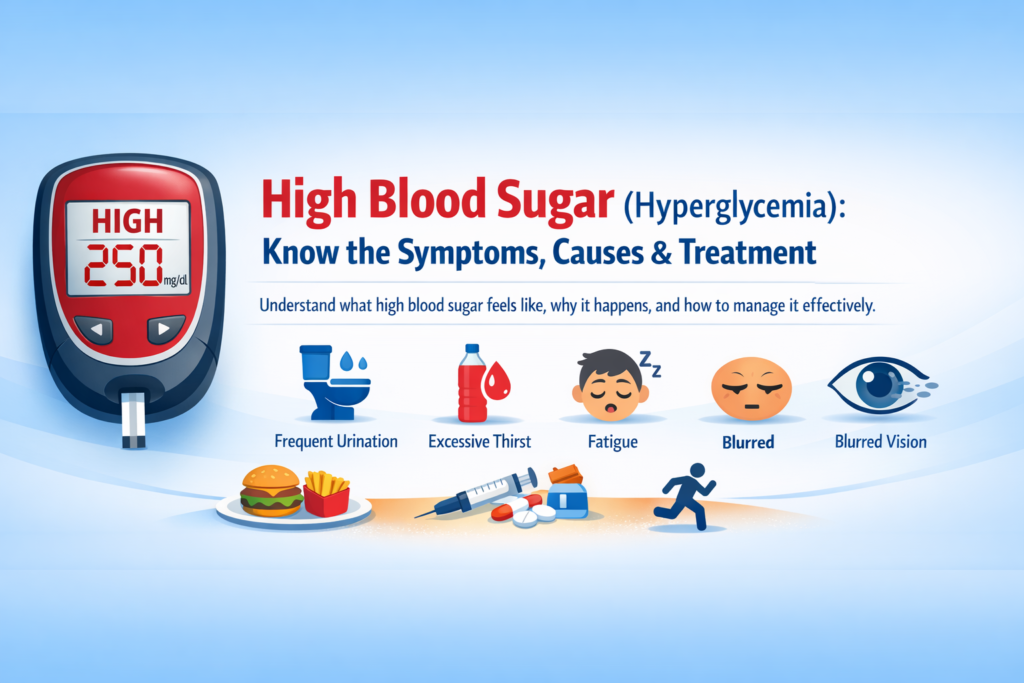
High blood sugar, also known as hyperglycemia, is a condition where the level of glucose in the bloodstream rises above normal. Glucose is the body’s primary source of energy, but when it remains in the blood instead of being absorbed by the cells, it can create serious health problems.
Many people assume that high blood sugar only affects those with diabetes, but that is not true. Temporary spikes can occur due to stress, illness, lack of sleep, poor diet, dehydration, or hormonal changes. However, when high blood sugar becomes frequent or chronic, it can damage vital organs such as the heart, kidneys, nerves, and eyes.
What makes hyperglycemia dangerous is that it often develops silently. Some people feel completely normal while their sugar levels are already harming their body. That is why awareness, early detection, and proper management are essential.
This blog explores high blood sugar in detail—its symptoms, causes, common myths, scientific research, treatment options, home remedies, prevention strategies, and frequently asked questions.
- What Is High Blood Sugar?
- Symptoms of High Blood Sugar
- Causes of High Blood Sugar
- Common Rumors and Myths
- What Research Says
- Is There a Cure for High Blood Sugar?
- Medical Treatment Options
- Home Remedies and Natural Support
- Lifestyle Changes That Make the Biggest Difference
- Prevention of High Blood Sugar
- Possible Complications If Ignored
- FAQs
- Conclusion
What Is High Blood Sugar?
High blood sugar occurs when the body either does not produce enough insulin or cannot use insulin efficiently. Insulin is the hormone that helps glucose enter the cells, where it is used for energy.
When insulin does not work properly, glucose remains in the bloodstream, leading to elevated sugar levels. Over time, this excess glucose begins to damage blood vessels, nerves, and tissues.
Hyperglycemia can be:
- Temporary (caused by stress, illness, or food)
- Chronic (linked to metabolic disorders)
- Medication-induced
- Lifestyle-related
Symptoms of High Blood Sugar
Symptoms vary from person to person. Some people experience strong warning signs, while others feel almost nothing.
Early Symptoms
- Increased thirst
- Frequent urination
- Fatigue
- Headaches
- Dry mouth
- Difficulty focusing
- Blurred vision
Moderate Symptoms
- Irritability
- Weakness
- Slow healing of wounds
- Frequent infections
- Skin dryness
Severe Symptoms
- Nausea
- Vomiting
- Confusion
- Shortness of breath
- Fruity-smelling breath
- Drowsiness
Ignoring severe symptoms can be life-threatening and requires immediate medical attention.
Causes of High Blood Sugar
High blood sugar is not caused by sugar alone. It is a complex condition influenced by many internal and external factors.
Lifestyle Causes
- Excessive intake of refined carbohydrates
- Sugary beverages
- Processed foods
- Lack of physical activity
- Poor sleep
- Chronic stress
Medical Causes
- Insulin resistance
- Hormonal imbalances
- Pancreatic issues
- Certain medications
- Infections
- Fever
- Dehydration
Emotional and Psychological Triggers
Stress hormones like cortisol and adrenaline can raise blood sugar levels even if diet remains unchanged. Long-term emotional stress is a major but often ignored factor.
Common Rumors and Myths
Myth 1: Only diabetic people get high blood sugar
False. Anyone can experience hyperglycemia due to stress, illness, or lifestyle habits.
Myth 2: Eating sweets is the only cause
False. High blood sugar is influenced by sleep, hormones, activity levels, and mental health.
Myth 3: If there are no symptoms, it’s harmless
False. Damage can occur silently for years.
Myth 4: Natural remedies can cure high blood sugar
False. Natural methods can support control but do not replace medical care.
Myth 5: High sugar means diabetes
Not always. Temporary hyperglycemia does not automatically mean diabetes.
What Research Says
Scientific research has shown that prolonged high blood sugar leads to oxidative stress and chronic inflammation. These processes damage blood vessels, accelerate aging, and increase the risk of heart disease, kidney problems, and nerve damage.
Studies also show that early lifestyle interventions—such as improving diet, increasing physical activity, and reducing stress—can significantly reduce sugar levels without medication in many people.
Recent research highlights that consistent blood sugar fluctuations, even if not constantly high, can still harm the body. Stability is just as important as reduction.
Is There a Cure for High Blood Sugar?
If caused by temporary factors like stress, poor sleep, or dehydration, it can be completely reversed. However, if it is linked to chronic insulin resistance or diabetes, it cannot be permanently cured—but it can be controlled and stabilized.
The goal is not a miracle cure but long-term balance.
Medical Treatment Options
Treatment depends on the severity and cause.
Mild Cases
- Dietary adjustments
- Increased hydration
- Physical activity
- Stress reduction
Moderate Cases
- Blood sugar monitoring
- Oral medications
- Lifestyle counseling
Severe Cases
- Insulin therapy
- Hospital-based care
- Electrolyte correction
Doctors focus on stabilizing levels rather than sudden drops, as rapid changes can be dangerous.
Home Remedies and Natural Support
Home remedies should always support, not replace, medical care.
Helpful Habits
- Drinking enough water
- Eating high-fiber foods
- Including protein in meals
- Walking after eating
- Reducing refined carbs
- Practicing meditation or breathing exercises
- Maintaining regular sleep
Foods That Support Stable Sugar
- Leafy vegetables
- Whole grains
- Nuts and seeds
- Legumes
- Berries
- Healthy fats
Lifestyle Changes That Make the Biggest Difference
Small daily habits matter more than extreme actions.
- Eat smaller, balanced meals
- Avoid long gaps between meals
- Move your body daily
- Manage emotional stress
- Reduce screen time before bed
- Avoid emotional eating
Prevention of High Blood Sugar
Prevention is always easier than treatment.
- Maintain a healthy weight
- Eat whole foods
- Avoid excessive sugar
- Exercise regularly
- Sleep 7–8 hours
- Stay hydrated
- Manage mental health
Possible Complications If Ignored
Long-term high blood sugar can lead to:
- Heart disease
- Kidney damage
- Nerve damage
- Vision problems
- Poor wound healing
- Weak immunity
FAQs
Can high blood sugar go back to normal?
Yes, if it is temporary and managed properly.
How fast can sugar levels drop?
It varies based on cause, treatment, and lifestyle changes.
Does stress really increase sugar?
Yes, stress hormones raise glucose levels.
Can walking reduce sugar?
Yes, physical activity helps cells absorb glucose.
Is fasting good for high sugar?
It depends on the person and must be done carefully.
Conclusion
High blood sugar is not something to ignore or fear—it is something to understand and manage. Whether temporary or chronic, it sends a clear message that your body needs balance.
Through early awareness, consistent habits, proper nutrition, emotional well-being, and medical guidance when needed, high blood sugar can be effectively controlled.
Long-term health is not built on quick fixes—it is built on daily choices.