|
Getting your Trinity Audio player ready...
|
Hair loss is a common condition that affects millions of people worldwide, regardless of age or gender. While shedding some hair daily is normal, excessive or sudden hair loss can be a sign of underlying medical or lifestyle issues.
Hair plays a major role in personal identity and confidence. When hair starts thinning or falling out, it can cause emotional stress, anxiety, and low self-esteem. Many people assume hair loss is only due to aging, but in reality, it can be caused by a wide range of medical, hormonal, nutritional, and environmental factors.
Understanding the root cause of hair loss is the first and most important step toward effective treatment. This blog explores hair loss in depth, covering its symptoms, medical causes, myths, what research says, cure possibilities, treatment options, home remedies, prevention strategies, and frequently asked questions.
What Is Hair Loss?
Hair loss, medically known as alopecia, refers to the partial or complete loss of hair from the scalp or other parts of the body. It can be temporary or permanent, depending on the cause.
Hair grows in cycles:
- Growth phase
- Resting phase
- Shedding phase
When this cycle is disrupted, hair may fall out faster than it grows back, leading to thinning or bald patches.
Symptoms of Hair Loss
Hair loss does not look the same for everyone. It may appear gradually or suddenly.
Common Symptoms
- Excessive hair shedding
- Thinning hair on the scalp
- Receding hairline
- Bald patches
- Widening part line
- Hair falling out in clumps
- Reduced hair volume
- Slow hair regrowth
Advanced Symptoms
- Complete baldness in some areas
- Loss of eyebrows or eyelashes
- Scalp itching or irritation
- Scalp inflammation
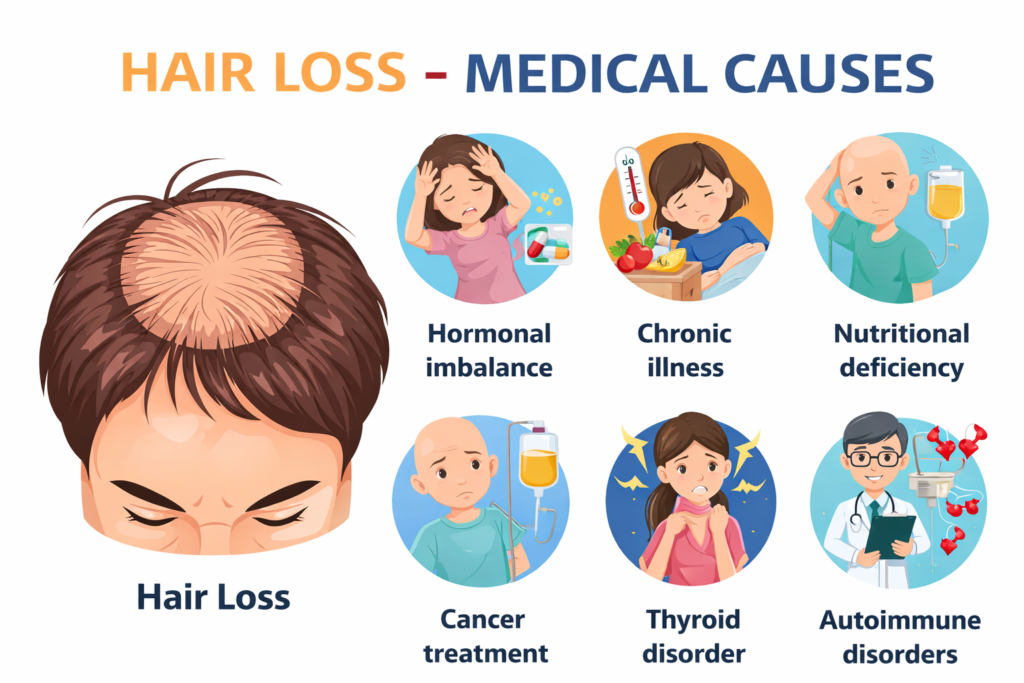
Medical Causes of Hair Loss
Hair loss is often a symptom, not a disease itself. Many medical and physiological factors can trigger it.
Hormonal Imbalances
Hormones play a crucial role in hair growth. Changes in hormone levels can disrupt the hair cycle.
Common triggers:
- Thyroid disorders
- Pregnancy and childbirth
- Menopause
- Polycystic ovary syndrome
- Low testosterone
Nutritional Deficiencies
Hair follicles require nutrients to function properly. A lack of essential vitamins and minerals can weaken hair roots.
Deficiencies linked to hair loss include:
- Iron deficiency
- Vitamin D deficiency
- Vitamin B12 deficiency
- Protein deficiency
- Zinc deficiency
Chronic Illnesses
Long-term medical conditions can interfere with hair growth.
Examples include:
- Autoimmune diseases
- Diabetes
- Lupus
- Anemia
- Hormonal disorders
Medications
Some medicines list hair loss as a side effect.
These may include:
- Chemotherapy drugs
- Blood pressure medications
- Antidepressants
- Hormonal treatments
- Birth control pills
Stress and Trauma
Physical or emotional stress can push hair into the shedding phase prematurely.
Triggers include:
- Surgery
- Illness
- High fever
- Emotional trauma
- Sudden weight loss
Genetic Factors
Hereditary hair loss is the most common form. It usually follows a predictable pattern and progresses slowly.
Types of Hair Loss
Different causes lead to different types of hair loss.
- Androgenetic alopecia (pattern baldness)
- Telogen effluvium (stress-related shedding)
- Alopecia areata (autoimmune)
- Traction alopecia (from tight hairstyles)
- Scarring alopecia (permanent hair loss due to inflammation)
Rumors and Myths About Hair Loss
Myth 1: Hair loss happens only to men
False. Women experience hair loss too, often due to hormones and nutritional deficiencies.
Myth 2: Wearing hats causes baldness
False. Hats do not affect hair follicles.
Myth 3: Frequent washing causes hair loss
False. Washing removes loose hairs that were already in the shedding phase.
Myth 4: Hair loss means permanent baldness
Not always. Many types of hair loss are reversible.
Myth 5: Natural remedies can instantly regrow hair
False. Hair regrowth takes time and consistency.
What Research Says
Scientific studies show that hair loss is strongly linked to genetics, hormonal imbalances, inflammation, and nutritional deficiencies.
Research confirms:
- Iron and vitamin deficiencies can slow hair growth
- Stress hormones can push hair into the shedding phase
- Autoimmune reactions can attack hair follicles
- Early treatment improves regrowth chances
Modern research also explores stem cell therapy, growth factor treatments, and platelet-rich plasma therapy.
Is There a Cure for Hair Loss?
Hair loss does not have a single universal cure. The possibility of reversal depends on the cause.
Reversible Hair Loss
- Stress-related hair loss
- Nutritional deficiency hair loss
- Hormonal imbalance hair loss
- Post-illness shedding
Permanent Hair Loss
- Genetic baldness
- Scarring alopecia
While permanent hair loss cannot be cured, it can be managed and cosmetically improved.
Medical Treatment Options
Treatment depends on the cause and severity.
Medications
- Hair growth stimulants
- Hormone regulators
- Anti-inflammatory drugs
- Nutritional supplements
Therapies
- Platelet-rich plasma therapy
- Low-level laser therapy
- Microneedling
Surgical Options
- Hair transplantation
- Scalp reduction surgery
These options are usually recommended when other treatments fail.
Home Remedies for Hair Loss
Home remedies support hair health but are not miracle cures.
Helpful Natural Practices
- Scalp massage
- Oil treatments
- Gentle hair care
- Avoiding heat styling
- Reducing chemical treatments
Supportive Foods
- Eggs
- Nuts and seeds
- Leafy vegetables
- Fruits
- Whole grains
Prevention of Hair Loss
Prevention is often easier than treatment.
- Eat a balanced diet
- Manage stress
- Sleep well
- Avoid harsh hair products
- Treat medical conditions early
- Avoid tight hairstyles
- Stay hydrated
Psychological Impact of Hair Loss
Hair loss can deeply affect emotional well-being.
People may experience:
- Anxiety
- Depression
- Social withdrawal
- Low self-esteem
Support from healthcare providers, family, and mental health professionals can be beneficial.
FAQs
Is hair loss always permanent?
No. Many types are temporary and reversible.
Can stress really cause hair loss?
Yes, stress can disrupt the hair growth cycle.
How long does regrowth take?
It may take several months.
Does shaving make hair grow thicker?
No, this is a myth.
Can hair loss be prevented completely?
Not always, but risk can be reduced.
Conclusion
Hair loss is not just a cosmetic issue—it often reflects what is happening inside the body. Identifying the root cause is the key to effective treatment. While some forms of hair loss are permanent, many are reversible with early intervention, proper care, and consistent treatment.
Healthy habits, medical guidance, and emotional support together form the strongest foundation for managing hair loss successfully.