|
Getting your Trinity Audio player ready...
|
Holi, known as the Festival of Colors, is one of the most vibrant and joyful festivals celebrated in India and across the world. Every year, people gather to play with colors, dance, enjoy festive foods, and celebrate unity. But beyond the colors and celebrations lies a deep spiritual, cultural, and historical significance that explains why we celebrate Holi.
Understanding the origin, mythology, and cultural meaning of Holi reveals that this festival is not just about fun. It symbolizes the victory of good over evil, the arrival of spring, and the power of love, unity, and forgiveness.
The Mythological Story Behind Holi
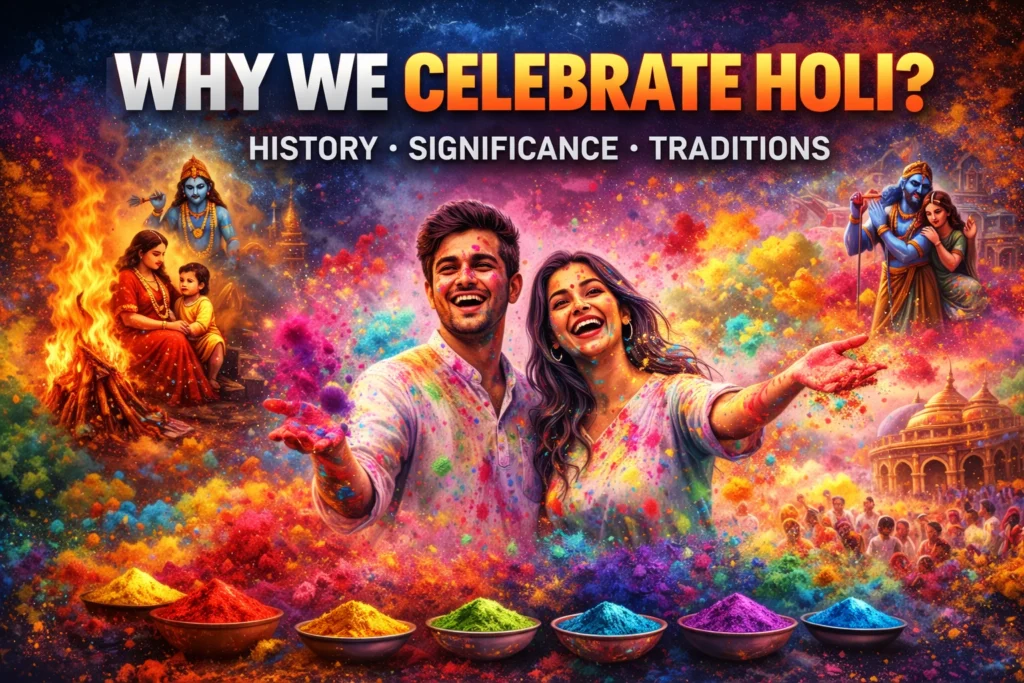
The primary reason why we celebrate Holi comes from Hindu mythology, specifically the story of Prahlad and Holika. This ancient legend represents the triumph of devotion and righteousness over arrogance and evil.
According to the story, King Hiranyakashipu was a powerful but arrogant ruler who wanted everyone to worship him as a god. However, his own son Prahlad was a devoted follower of Lord Vishnu. Angered by Prahlad’s devotion, Hiranyakashipu tried multiple times to punish him but failed each time due to divine protection.
Finally, he asked his sister Holika, who had a magical cloak that made her immune to fire, to sit in a blazing fire with Prahlad on her lap. The plan was to burn Prahlad alive. However, due to Prahlad’s faith and divine blessings, Holika was burned while Prahlad survived unharmed.
This event symbolizes the victory of good over evil, which is why the night before Holi is celebrated as Holika Dahan, where bonfires are lit to mark the destruction of negativity and evil forces.
Holi as the Festival of Colors
The next day after Holika Dahan, people celebrate Rangwali Holi by playing with colors. This tradition represents joy, positivity, and the beauty of diversity in life. Colors symbolize happiness, love, and the vibrant nature of human relationships.
Throwing colors on each other breaks social barriers and promotes unity among people regardless of caste, class, or status. It is a day when differences are forgotten, and everyone comes together in harmony.
This aspect explains why Holi is often called the festival of unity and equality.
Cultural Significance of Holi in India
Holi holds immense cultural importance in Indian society. It marks the arrival of spring and the end of winter, symbolizing renewal, growth, and fresh beginnings. Farmers also celebrate Holi as a harvest festival, expressing gratitude for good crops and prosperity.
The festival encourages people to forgive past conflicts and start new relationships with love and positivity. Visiting friends and family, sharing sweets, and greeting each other with colors strengthen social bonds and cultural traditions.
Holi celebrations vary across regions.
- In Mathura and Vrindavan, Holi is associated with Lord Krishna and Radha, reflecting divine love and playful celebrations.
- In Punjab, Hola Mohalla showcases bravery and martial traditions.
- In West Bengal, Dol Jatra is celebrated with devotional songs and cultural performances.
Spiritual Meaning of Holi
Beyond mythology and cultural celebrations, Holi also has a deep spiritual meaning. It represents the purification of the mind and soul. The Holika Dahan bonfire signifies burning away negative emotions such as anger, jealousy, and ego.
Playing with colors the next day symbolizes spreading joy, love, and positivity in life. It teaches people to embrace diversity and celebrate the different shades of human experiences.
Holi also reminds individuals to let go of past grudges and start fresh with forgiveness and happiness. This spiritual message makes Holi more than just a festival; it becomes a celebration of emotional and inner renewal.
Importance of Colors in Holi Celebrations
Colors are the heart of Holi celebrations, and each color carries its own symbolic meaning. Red represents love and fertility, yellow symbolizes happiness and energy, green stands for new beginnings, and blue signifies calmness and devotion.
The use of colors during Holi reflects the diversity of life and emotions. Just like colors blend together to create beauty, Holi teaches that unity in diversity strengthens society.
Traditionally, natural colors made from flowers and herbs were used, highlighting the festival’s connection with nature and environmental harmony.
Modern-Day Relevance of Holi
In today’s fast-paced world, Holi continues to remain relevant as a festival that promotes positivity and togetherness. With increasing stress and social distance in modern lifestyles, Holi acts as a reminder to reconnect with people, celebrate relationships, and spread happiness.
The festival has also gained global popularity, with Holi events being organized in many countries. These celebrations showcase Indian culture and values, spreading the message of love, joy, and unity worldwide.
However, modern celebrations are also focusing more on eco-friendly practices, encouraging the use of organic colors and water conservation to protect the environment.
Why Holi Is More Than Just a Festival
Holi is not merely about playing with colors or enjoying festive foods. It is a celebration of life’s positive values. It teaches important lessons about faith, forgiveness, and harmony. The story of Prahlad inspires devotion and courage, while the burning of Holika symbolizes the end of negativity.
The vibrant colors reflect joy and diversity, and the festival itself promotes equality, unity, and renewal. These combined elements explain why Holi continues to be one of the most loved and widely celebrated festivals.
It serves as a reminder that no matter how strong evil forces may seem, truth and goodness always prevail. It also encourages people to embrace happiness, forgive others, and move forward with optimism.
Conclusion
We celebrate Holi to honor the victory of good over evil, welcome the arrival of spring, and spread love, unity, and joy. Rooted in ancient mythology and rich cultural traditions, Holi carries deep spiritual meaning that goes far beyond its colorful celebrations.
The festival teaches forgiveness, renewal, and togetherness while reminding people to eliminate negativity from their lives. Whether celebrated through Holika Dahan, playing with colors, or sharing sweets with loved ones, Holi symbolizes happiness and harmony.
This timeless significance is the true reason why Holi remains one of the most cherished and meaningful festivals in India and across the world.
FAQs
1. Why do we celebrate Holi?
We celebrate Holi to mark the victory of good over evil, based on the story of Prahlad and Holika, and to welcome spring with joy and unity.
2. What is the story behind Holi?
The festival is linked to the legend of Prahlad’s devotion to Lord Vishnu and Holika’s defeat in the fire, symbolizing the triumph of righteousness.
3. What does Holika Dahan represent?
Holika Dahan represents the burning of evil, negativity, and ego, encouraging spiritual purification and positivity.
4. Why are colors used in Holi?
Colors symbolize happiness, love, and diversity, reflecting the vibrant and joyful spirit of life and human relationships.
5. What is the spiritual meaning of Holi?
Holi signifies forgiveness, renewal, and the removal of negative emotions, promoting inner peace and harmony.