|
Getting your Trinity Audio player ready...
|
Awards play an important role in every country because they recognize individuals who make exceptional contributions to society. Whether it is a scientist making groundbreaking discoveries, a soldier displaying extraordinary bravery, a sportsperson winning medals for the country, or a writer enriching literature, awards acknowledge their achievements and inspire others to follow their path.
India has one of the most comprehensive award systems in the world. Since independence, the country has established various national honors to recognize excellence in public service, arts, literature, science, sports, cinema, social work, education, military service, and many other fields. These awards not only celebrate individual accomplishments but also reflect the values and aspirations of the nation.
Some awards, such as the Bharat Ratna and Padma Awards, are known throughout the country and often make national headlines. Others, like the Param Vir Chakra, Arjuna Award, Jnanpith Award, and Dadasaheb Phalke Award, hold immense prestige within their respective fields. Together, these honors create a system that rewards dedication, courage, innovation, and service to society.
Understanding India’s awards is important for students, competitive exam aspirants, current affairs enthusiasts, and anyone interested in learning how the nation recognizes excellence. This article provides a complete overview of the major awards in India, their significance, history, categories, and why they continue to be among the country’s most respected honors.
What Are National Awards?
National awards are official honors presented by the Government of India or recognized national institutions to acknowledge outstanding achievements and contributions.
The primary objectives of these awards are:
- To recognize excellence and innovation
- To encourage public service
- To honor bravery and sacrifice
- To preserve culture and heritage
- To inspire future generations
- To celebrate achievements that contribute to national development
Over the years, Indian awards have become symbols of prestige and achievement. Receiving a national award often represents the highest level of recognition in a person’s field.
Categories of Awards in India
India’s awards can broadly be divided into several categories:
1. Civilian Awards
Recognize exceptional contributions in public life, arts, science, literature, medicine, social work, and other fields.
2. Military and Gallantry Awards
Honor bravery, courage, and sacrifice by members of the armed forces and civilians.
3. Sports Awards
Recognize athletes, coaches, and contributors to sports.
4. Literary Awards
Celebrate excellence in writing and literature.
5. Film and Entertainment Awards
Honor achievements in cinema and performing arts.
6. Cultural Awards
Recognize contributions to music, dance, theatre, and traditional arts.
7. Children’s Awards
Reward extraordinary achievements by young citizens.
Each category reflects a different aspect of India’s social, cultural, and national development.
Civilian Awards in India
Civilian awards are among the highest honors that can be conferred upon an individual by the Government of India.
1. Bharat Ratna
India’s Highest Civilian Award
The Bharat Ratna is the highest civilian award in India.
Established in 1954, it is awarded for exceptional service or performance of the highest order in any field of human endeavor. The award recognizes individuals whose contributions have had a profound impact on society, the nation, or humanity.
Unlike many other awards, Bharat Ratna recommendations are made directly by the Prime Minister and approved by the President of India.
Importance of Bharat Ratna
The Bharat Ratna symbolizes the highest level of national appreciation. It is considered the ultimate recognition for an individual’s lifetime contribution and achievements.
Famous Bharat Ratna Recipients
- Dr. B. R. Ambedkar
- Dr. A. P. J. Abdul Kalam
- Lata Mangeshkar
- Sachin Tendulkar
- Atal Bihari Vajpayee
- Mother Teresa
2. Padma Vibhushan
India’s Second-Highest Civilian Award
The Padma Vibhushan is awarded for exceptional and distinguished service in any field.
Recipients are often globally recognized personalities whose contributions have significantly influenced society.
Importance of Padma Vibhushan
The award honors excellence at the highest level and recognizes individuals whose work has left a lasting impact on the nation.
3. Padma Bhushan
India’s Third-Highest Civilian Award
The Padma Bhushan is awarded for distinguished service of a high order.
It recognizes outstanding contributions in science, medicine, education, public affairs, arts, literature, and social work.
Importance of Padma Bhushan
The award acknowledges individuals who have demonstrated exceptional dedication and leadership in their respective fields.
4. Padma Shri
India’s Fourth-Highest Civilian Award
The Padma Shri recognizes distinguished service across a wide range of disciplines.
It is among India’s most respected honors because it frequently recognizes both well-known personalities and grassroots heroes working in remote communities.
Importance of Padma Shri
The Padma Shri demonstrates that meaningful contributions can come from any part of society, regardless of fame or status.
Military and Gallantry Awards in India
India’s military awards recognize extraordinary bravery and sacrifice.
1. Param Vir Chakra
Highest Wartime Gallantry Award
The Param Vir Chakra is India’s highest military decoration.
It is awarded for the most conspicuous bravery or self-sacrifice in the presence of the enemy during wartime.
Importance of Param Vir Chakra
The award represents the ultimate symbol of courage and patriotism.
Famous Recipient
Captain Vikram Batra remains one of the most celebrated recipients of the Param Vir Chakra.
2. Maha Vir Chakra
The Maha Vir Chakra is India’s second-highest wartime gallantry award.
It recognizes exceptional bravery during military operations.
Importance
The award honors soldiers who display extraordinary courage in combat situations.
3. Vir Chakra
The Vir Chakra is awarded for acts of bravery on the battlefield.
Importance
It recognizes courage under enemy fire and commitment to duty.
4. Ashoka Chakra
Highest Peacetime Gallantry Award
The Ashoka Chakra is awarded for extraordinary bravery during peacetime.
Both civilians and military personnel may receive this honor.
Importance
The award recognizes individuals who risk or sacrifice their lives to protect others.
5. Kirti Chakra
The Kirti Chakra is India’s second-highest peacetime gallantry award.
Importance
It honors exceptional courage and self-sacrifice outside combat situations.
6. Shaurya Chakra
The Shaurya Chakra recognizes acts of bravery during peacetime.
Importance
It rewards individuals who display remarkable courage in dangerous circumstances.
Sports Awards in India
Sports awards recognize athletes and coaches who bring pride to the nation.
1. Major Dhyan Chand Khel Ratna Award
India’s Highest Sports Award
Named after hockey legend Major Dhyan Chand, this award recognizes exceptional sporting achievements at the international level.
Importance
The Khel Ratna is the highest honor an athlete can receive in India.
Notable Winners
- Neeraj Chopra
- P. V. Sindhu
- Virat Kohli
- Rohit Sharma
2. Arjuna Award
The Arjuna Award recognizes consistent excellence and outstanding performance in sports.
Importance
It encourages athletes to maintain high standards of achievement and sportsmanship.
Dronacharya Award
The Dronacharya Award honors coaches who train athletes to achieve success.
Importance
It acknowledges the vital role of coaches in developing sporting talent.
3. Dhyan Chand Award
This award recognizes lifetime contributions to sports.
Importance
It honors retired athletes who continue to contribute to sports development.
Literary Awards in India
India’s literary awards celebrate creativity, language, and storytelling.
1. Jnanpith Award
India’s Highest Literary Honor
The Jnanpith Award recognizes outstanding contributions to Indian literature.
Importance
It is considered the most prestigious literary award in the country.
Why It Matters
The award helps preserve India’s diverse literary traditions and languages.
2. Sahitya Akademi Award
The Sahitya Akademi Award recognizes outstanding literary works published in Indian languages.
Importance
It promotes literature and supports writers across India’s linguistic landscape.
Film and Entertainment Awards
India’s film industry is one of the largest in the world, and several awards recognize excellence in cinema.
1. Dadasaheb Phalke Award
India’s Highest Cinema Award
Named after the father of Indian cinema, Dadasaheb Phalke, this award honors lifetime contributions to filmmaking.
Importance
It is considered the highest achievement in Indian cinema.
2. National Film Awards
The National Film Awards recognize excellence in filmmaking across various languages and categories.
Importance
They celebrate artistic merit and cinematic excellence rather than commercial success alone.
Cultural Awards in India
Culture is a vital part of India’s identity.
Sangeet Natak Akademi Award
This award recognizes excellence in music, dance, theatre, and traditional performing arts.
Importance
It helps preserve India’s rich cultural heritage and encourages artistic excellence.
Children’s Awards
Young achievers also receive national recognition.
Pradhan Mantri Rashtriya Bal Puraskar
This award recognizes children who excel in innovation, academics, sports, arts, bravery, and social service.
Importance
It encourages young Indians to pursue excellence from an early age.
Why Are Awards Important?
Awards play a significant role in society because they:
- Recognize excellence
- Encourage innovation
- Inspire future generations
- Promote national pride
- Honor sacrifice and bravery
- Preserve culture and heritage
- Highlight positive role models
They remind society that dedication and service are valued and appreciated.
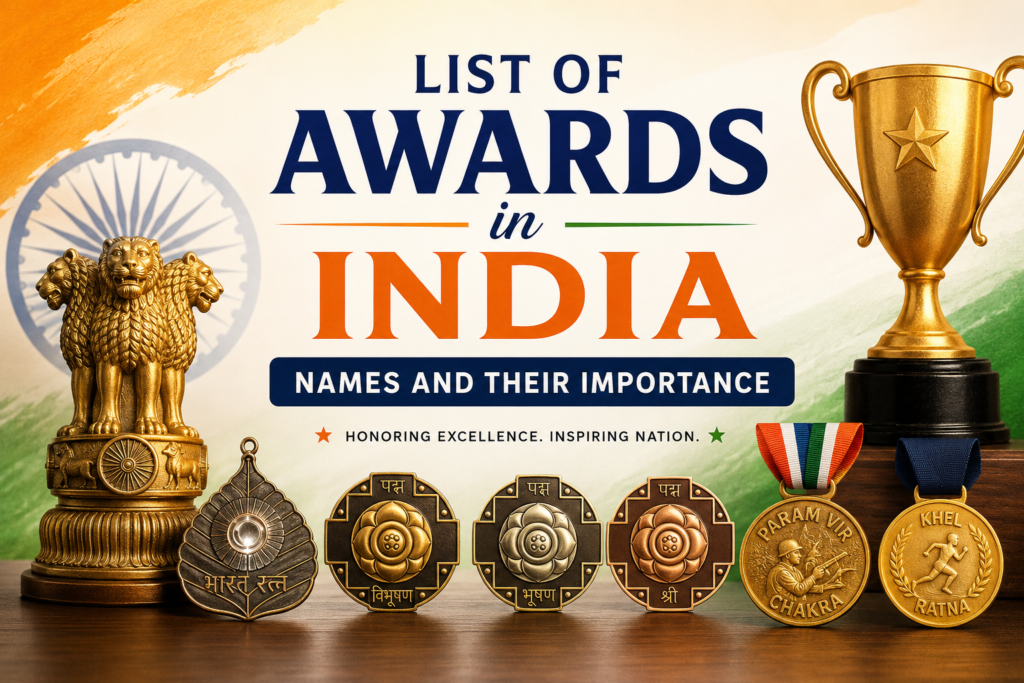
List of Major Awards in India
| Award | Category | Importance |
|---|---|---|
| Bharat Ratna | Civilian | Highest civilian award |
| Padma Vibhushan | Civilian | Second-highest civilian honor |
| Padma Bhushan | Civilian | Third-highest civilian honor |
| Padma Shri | Civilian | Fourth-highest civilian honor |
| Param Vir Chakra | Military | Highest wartime gallantry award |
| Ashoka Chakra | Military | Highest peacetime gallantry award |
| Khel Ratna | Sports | Highest sports award |
| Arjuna Award | Sports | Sports excellence |
| Dronacharya Award | Sports | Coaching excellence |
| Jnanpith Award | Literature | Highest literary award |
| Sahitya Akademi Award | Literature | Literary excellence |
| Dadasaheb Phalke Award | Cinema | Highest film award |
| National Film Awards | Cinema | Excellence in filmmaking |
| Sangeet Natak Akademi Award | Culture | Performing arts excellence |
Conclusion
India’s awards and honors system reflects the nation’s commitment to recognizing excellence, bravery, creativity, service, and achievement. From the Bharat Ratna and Padma Awards to the Param Vir Chakra, Khel Ratna, Jnanpith Award, and Dadasaheb Phalke Award, these honors celebrate individuals who have made remarkable contributions to society and the nation.
These awards are more than symbols of prestige. They represent the values that India seeks to promote—hard work, dedication, courage, innovation, and service. Whether awarded to a scientist, soldier, athlete, writer, artist, teacher, or social worker, each honor serves as a reminder that exceptional contributions can inspire millions and help shape the future of the country.
As India continues to evolve and grow, its national awards will remain an important way of celebrating those who strive to make a positive difference, ensuring that excellence and service are recognized for generations to come.