|
Getting your Trinity Audio player ready...
|
The monsoon has once again brought life to a standstill in Maharashtra, with relentless rainfall triggering multiple landslides that severely disrupted transport links between Mumbai and Pune. Thousands of commuters and travellers faced uncertainty after train services were suspended, major highways were shut, and traffic movement was affected across one of India’s busiest transport corridors.
The situation unfolded after continuous overnight rainfall caused landslides in the Karjat-Lonavala Bhor Ghat section, a critical route connecting Mumbai and Pune. Railway authorities were forced to suspend services as debris and mudslides affected tracks, raising safety concerns for passenger and freight operations.
Landslides Bring Mumbai-Pune Rail Route to a Standstill
According to railway officials, multiple landslides occurred in the Bhor Ghat region during the early hours of July 6. One major landslide was reported near Thakurwadi, while another struck the section between Khandala and Monkey Hill. The debris spread across railway tracks, making operations unsafe and forcing authorities to halt train movement.
The disruption led to widespread cancellations and diversions. Several popular trains operating between Mumbai and Pune were either cancelled or rescheduled, causing inconvenience to thousands of passengers. Railway teams were immediately deployed to clear debris and inspect track safety before services could resume.
Reports indicated that more than a dozen trains were cancelled while several others were diverted or short-terminated due to the disruption. Passengers were advised to check train status before commencing their journeys.
Expressway and Highway Traffic Severely Affected
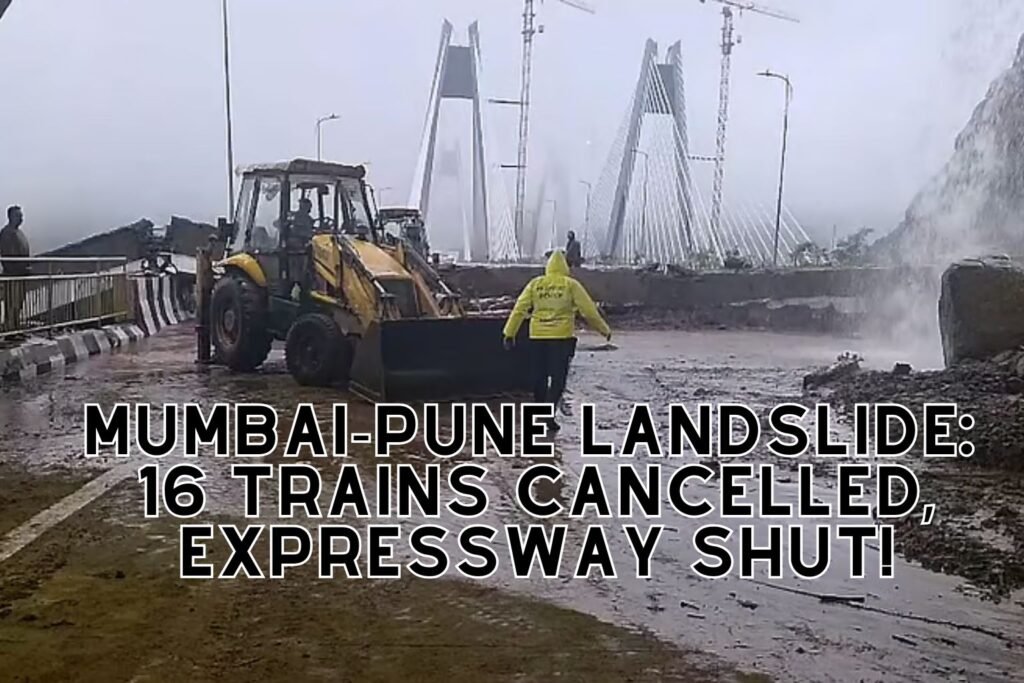
The impact of the heavy rainfall extended beyond railways. The Mumbai-Pune Expressway and sections of the old Mumbai-Pune Highway experienced significant disruptions after landslides and waterlogging affected traffic movement. Authorities temporarily halted vehicle movement in certain stretches to ensure commuter safety.
Particular concern emerged around the recently inaugurated “Missing Link” section of the expressway, where a landslide near Tunnel 2 caused prolonged traffic congestion. The incident resulted in hours of delays and sparked discussions regarding the preparedness of the new infrastructure for extreme monsoon conditions.
Although authorities later reopened parts of the expressway after safety inspections and debris removal, traffic continued to move slowly due to water accumulation and ongoing rainfall.
Mumbai Faces Another Test of Monsoon Preparedness
Mumbai and its surrounding regions have witnessed intense rainfall over recent days. Several low-lying areas experienced waterlogging, while strong winds and heavy showers affected daily life across the metropolitan region. Weather agencies had issued alerts warning residents about continued rainfall and possible disruptions.
The city’s transport infrastructure came under pressure as road congestion increased and some suburban train services reported delays. Airlines also issued travel advisories, asking passengers to verify flight schedules before heading to airports.
Experts note that Mumbai’s recurring flooding challenges stem from a combination of heavy rainfall, urban expansion, drainage limitations, and environmental changes. These factors continue to make the city vulnerable during intense monsoon events.
Pune Region Also Records Heavy Rainfall
Pune and nearby districts have also experienced unusually high rainfall during the current monsoon spell. Weather data shows rainfall levels exceeding normal averages within just a few days, prompting authorities to remain on high alert. Schools and colleges in some areas were closed as a precautionary measure.
The region reported several rain-related incidents, including landslides and structural collapses, highlighting the broader impact of the weather system affecting western Maharashtra. Rescue and emergency response teams have been deployed in vulnerable areas to monitor risks and assist affected residents.
Restoration Efforts Underway
Railway engineers, disaster response teams, and highway authorities worked around the clock to restore normalcy. Heavy machinery was deployed to clear debris from railway tracks and roadways, while safety inspections were carried out before reopening transport routes.
Officials have urged citizens to avoid unnecessary travel during periods of intense rainfall and to stay updated through official transport and weather advisories. With forecasts indicating continued monsoon activity across Maharashtra, authorities remain cautious about the possibility of further landslides and flooding.
Why This Incident Matters
The Mumbai-Pune corridor is one of India’s most important economic and transportation lifelines. Any disruption affects daily commuters, business travel, freight movement, and tourism. The latest landslides serve as a reminder of how vulnerable critical infrastructure remains during extreme weather events.
As climate patterns continue to bring heavier rainfall episodes across parts of India, experts argue that stronger disaster-resilient infrastructure, better slope stabilization measures, and improved early warning systems will be crucial for reducing future disruptions.
Conclusion
Heavy monsoon rains have once again exposed the challenges of maintaining transport connectivity during extreme weather conditions. The landslides that disrupted Mumbai-Pune rail services and expressway traffic caused significant inconvenience for travellers and highlighted the ongoing risks posed by seasonal rainfall in Maharashtra. While restoration work has helped reopen key routes, authorities continue to monitor conditions closely as the monsoon remains active across the state.
FAQs
Why were Mumbai-Pune train services suspended?
Train services were suspended after landslides occurred in the Karjat-Lonavala Bhor Ghat section, depositing debris on railway tracks and making operations unsafe.
How did the landslides affect the Mumbai-Pune Expressway?
The landslides caused temporary closures, severe traffic congestion, and delays, particularly near the Missing Link tunnel section.
Were trains cancelled because of the rainfall?
Yes. Multiple trains were cancelled, diverted, or rescheduled following the landslides and track damage.
Is the Mumbai-Pune route operational now?
Authorities have reopened several sections after restoration and safety checks, though some services and traffic movement may still face delays.
What weather warnings are in place for Maharashtra?
The IMD has issued alerts for heavy to very heavy rainfall in parts of Maharashtra, urging residents to remain cautious and monitor official updates.