|
Getting your Trinity Audio player ready...
|
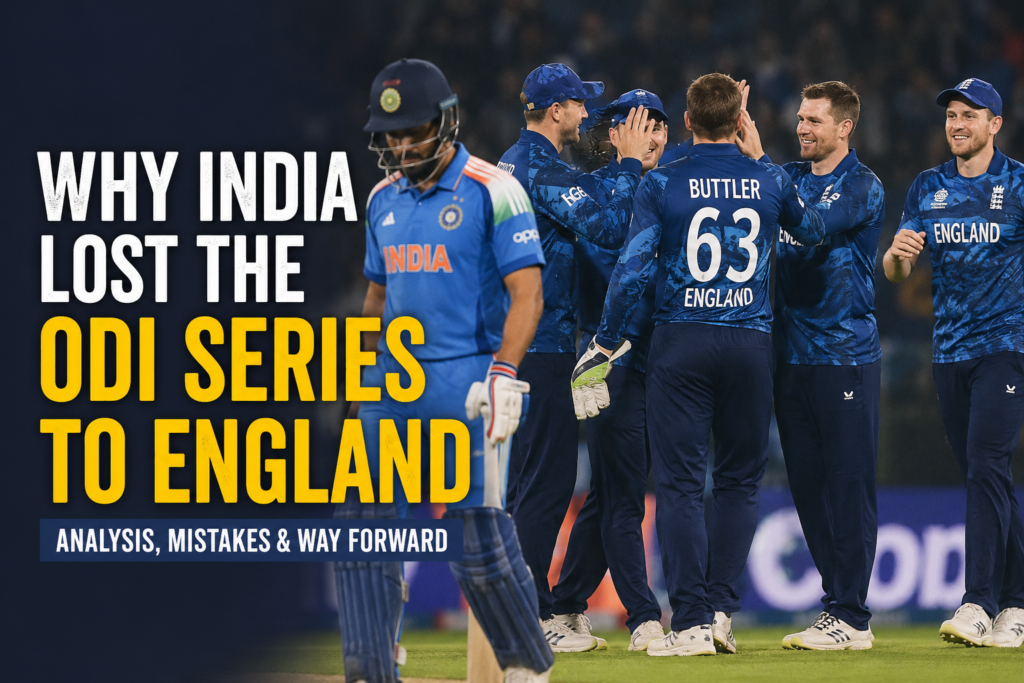
India’s defeat in the ODI series against England has triggered serious discussions among cricket experts, former players, and millions of fans. Expectations were high after India’s recent success in white-ball cricket, but England once again proved why they remain one of the strongest ODI sides in world cricket. Winning the series 2-1, the hosts displayed aggressive batting, disciplined bowling, and smarter tactical execution at crucial moments.
While one series loss does not define a team, the manner in which India lost exposed several weaknesses that cannot be ignored. Questions have been raised about team selection, player fitness, middle-order consistency, bowling combinations, fielding standards, and leadership decisions. Captain Shubman Gill himself admitted after the series that recurring fitness issues affected the team’s balance, while several former cricketers criticised India’s tactical approach and squad management.
This series was not simply about one bad match. It was a combination of small mistakes across three games that eventually allowed England to dominate when it mattered the most.
England Deserved the Series Victory
Before analysing India’s mistakes, credit must be given to England. They played fearless cricket throughout the series.
Their batting lineup attacked from the very first over instead of waiting for loose deliveries. Their bowlers consistently targeted good lengths, forcing Indian batters into risky shots. Their fielders converted half-chances into wickets while India dropped opportunities that proved costly.
England’s confidence reflected modern ODI cricket. Instead of protecting wickets early, they focused on maintaining scoring momentum throughout the innings. Even when wickets fell, the next batter continued attacking.
This aggressive approach placed constant pressure on India’s bowlers.
India’s Bowling Failed to Build Pressure
One of the biggest reasons behind India’s defeat was the inability of the bowling attack to take wickets consistently.
Modern ODI cricket demands wicket-taking bowlers rather than defensive bowlers. England’s batsmen rarely looked uncomfortable because India struggled to maintain sustained pressure.
- The pace attack lacked consistency with the new ball.
- The middle overs failed to produce breakthroughs.
- Death bowling became increasingly expensive.
- Whenever India appeared to gain momentum, England found partnerships that shifted the match back in their favour.
The absence of regular breakthroughs meant England were able to post challenging totals throughout the series. Experts also highlighted India’s shortage of genuine wicket-taking options during key phases of the matches.
Overdependence on Jasprit Bumrah
Jasprit Bumrah remains India’s most valuable fast bowler.
However, one worrying trend has become obvious.
Whenever Bumrah is unavailable or below his best, India’s bowling attack struggles significantly.
- England knew this very well.
- Without Bumrah controlling one end, England’s batters attacked the remaining bowlers more confidently.
- International cricket cannot depend on one bowler carrying the entire attack.
- Every successful ODI side has multiple bowlers capable of changing the game.
- Australia have consistently produced fast bowlers.
- England rotate quality pacers.
- South Africa rely on pace depth.
India still appears heavily dependent on Bumrah whenever pressure situations arise.
Team Selection Became a Talking Point
Selection decisions became one of the biggest discussions during the series.
Several former players questioned whether India had picked the right playing XI for English conditions.
England offered helpful conditions for seam bowling, yet India continued experimenting with combinations.
Questions included:
- Should specialist bowlers have been preferred?
- Was the batting order unnecessarily changed?
- Could experienced players have been used differently?
- Were all-rounders being overused?
One of the biggest talking points was the non-selection of Kuldeep Yadav throughout the ODI series, with both the captain and former players later addressing the decision publicly.
Consistency in selection often creates player confidence.
Frequent changes create uncertainty.
That uncertainty appeared visible in India’s performances.
Middle Order Failed Under Pressure
India’s top order generally gave respectable starts.
The real problem emerged after early wickets.
Whenever England dismissed one or two established batters, India’s middle order struggled to maintain momentum.
Several innings followed the same pattern.
- Strong beginning.
- Loss of quick wickets.
- Run rate slowed dramatically.
- Pressure increased.
- Risky shots followed.
- Collapse.
England’s bowlers understood exactly when to attack.
Instead of allowing partnerships to settle, they kept field placements aggressive.
India never built the kind of long partnerships usually associated with successful ODI cricket.
Former cricketers also questioned changes to KL Rahul’s batting position, arguing that inconsistent roles affected the middle order’s stability.
Fitness Issues Hurt India’s Campaign
Captain Shubman Gill openly admitted after the series that player fitness became a major concern.
Several players missed matches or carried fitness concerns during the tour.
This affected:
- Team combinations
- Bowling workload
- Fielding standards
- Batting stability
International cricket schedules have become extremely demanding.
Players move between IPL, bilateral series, ICC tournaments and franchise competitions.
Managing workload has become one of the biggest challenges.
Gill pointed towards recurring injuries and fitness interruptions as one of the important reasons behind India’s defeat. Reports following the series also questioned the effectiveness of India’s overall player fitness management system.
England Adapted Better to Conditions
Although India possess world-class players, England adapted faster to their home conditions.
English pitches often offer:
- Early seam movement
- Swing under cloudy weather
- Variable bounce
- Faster outfields
England’s players naturally understand these conditions better.
India, on the other hand, appeared uncertain during several phases.
Batters sometimes attacked too early against moving deliveries.
At other times they became overly defensive.
The lack of balance allowed England to dictate the pace of the matches.
Fielding Standards Need Improvement
Fielding often decides modern ODI cricket.
- Throughout the series, England looked sharper.
- They saved crucial boundaries.
- Converted difficult catches.
- Applied pressure through athletic ground fielding.
- India also produced good moments, but there were occasions where missed opportunities proved expensive.
- Against attacking teams like England, every dropped catch can change the match completely.
- A fifty can become a hundred.
- A partnership can become match-winning.
At the highest level, these moments cannot be ignored.
Captaincy Under the Spotlight
This series also became an important learning experience for captain Shubman Gill.
Leading India in England is never easy.
- Every field placement.
- Every bowling change.
- Every review.
- Every batting order decision comes under scrutiny.
- Gill remained calm throughout the series but tactical decisions were questioned after defeats.
- Some critics believed bowling changes could have been made earlier.
- Others questioned batting promotions.
- A few experts felt India reacted to England instead of forcing England to react.
- These experiences, however, are part of every captain’s journey.
Many legendary captains faced similar criticism early in their leadership careers before achieving success.
England Won the Key Moments
One statistic rarely tells the entire story.
Instead, ODI cricket is often decided by small moments.
- England consistently won those moments.
- They recovered after losing wickets.
- They accelerated at the right time.
- They took catches under pressure.
- They dismissed set batters before the death overs.
- They controlled crucial overs during India’s chase.
India remained competitive throughout the series, but England repeatedly found ways to stay one step ahead.
Those small advantages eventually became the difference between winning and losing.
India’s Approach Against Spin Was Surprisingly Conservative
For years, India have been regarded as one of the best teams against spin bowling. However, this series painted a different picture. England’s spin attack may not have been packed with legendary names, but they bowled with discipline, varied their pace intelligently, and forced Indian batters into making mistakes.
Instead of rotating strike consistently, several Indian batters became stuck against spin during the middle overs. Dot balls increased the pressure, and the required run rate gradually climbed. When the batters eventually attempted to attack, they often chose high-risk shots that resulted in wickets.
Modern ODI cricket rewards teams that keep the scoreboard moving every over. Singles and doubles are just as valuable as boundaries because they prevent bowlers from settling into a rhythm.
England executed this strategy much better than India. Their batters rarely allowed Indian spinners to dominate for long periods. They swept, reverse-swept, used their feet effectively, and constantly rotated strike.
India’s inability to match that intent became one of the overlooked reasons behind the series defeat.
The Death Overs Made a Huge Difference
Another major factor that separated the two teams was their performance in the final ten overs.
England consistently finished their innings strongly.
Even after losing wickets, their lower middle order continued attacking until the very last ball. The result was several valuable extra runs that pushed totals beyond India’s comfort zone.
India, however, struggled in both departments.
While bowling at the death, they conceded boundaries through yorkers that became full tosses, slower balls that were picked early, and length deliveries that disappeared into the stands.
While batting at the death, India often lost momentum because wickets had already fallen during the middle overs.
Successful ODI teams usually score between 80 and 100 runs in the final ten overs when batting first. England repeatedly achieved that benchmark, while India frequently fell short.
Those additional 20 or 30 runs often proved decisive.
Pressure Situations Exposed India’s Weaknesses
One characteristic of championship-winning teams is their ability to remain calm under pressure.
Throughout the series, England looked composed during crunch moments.
Whether chasing a target or defending one, they trusted their plans.
India, meanwhile, appeared rushed whenever the game entered its decisive phase.
Examples included:
- Playing unnecessary attacking shots immediately after a wicket.
- Bowling loose deliveries after building pressure.
- Missing run-out opportunities.
- Allowing partnerships to develop despite early breakthroughs.
- Failing to capitalise after reducing England to difficult positions.
Championship teams understand that matches are rarely won in spectacular fashion. They are won through patience, discipline, and execution over fifty overs.
England demonstrated those qualities more consistently.
Young Players Need More International Exposure
India possess one of the strongest pools of young cricketing talent in the world.
The IPL has produced numerous exciting players capable of succeeding internationally.
However, bilateral ODI cricket remains very different from franchise cricket.
Conditions change.
- Opposition teams study weaknesses carefully.
- Pressure becomes significantly higher.
- England’s experienced players exposed areas where India’s younger cricketers still need development.
- This should not be viewed negatively.
- Every great Indian cricketer has gone through similar learning phases.
- Virat Kohli experienced difficult overseas tours early in his career.
- Rohit Sharma took time before becoming one of the world’s greatest ODI openers.
- Hardik Pandya evolved gradually into a dependable all-rounder.
The current generation will also improve through experience.
England’s Planning Was Better
Preparation often determines success before the match even begins.
England appeared to have studied India’s strengths and weaknesses thoroughly.
- They targeted specific batters with carefully planned bowling fields.
- They attacked particular bowlers instead of taking unnecessary risks against everyone.
- They identified India’s slower fielders and looked for quick singles in those areas.
- India also prepared well, but England seemed to execute their tactical plans with greater precision.
- International cricket increasingly depends on data analysis.
- Every player’s scoring areas.
- Every bowler’s preferred lengths.
- Every batter’s weakness against certain deliveries.
England used these insights effectively throughout the series.
The Leadership Group Faces Important Decisions
The series defeat will force India’s leadership group to evaluate several aspects before upcoming ICC tournaments.
Among the major questions are:
- What should India’s strongest ODI batting order look like?
- Which all-rounders offer the best balance?
- Does the pace attack require greater depth?
- Should specialist spinners play a larger role overseas?
- How should player workload be managed across formats?
These are not questions that require immediate dramatic changes.
Instead, they demand careful planning over the coming months.
India remain one of the strongest ODI teams in world cricket, but maintaining that position requires constant improvement.
Positives India Can Still Take Away
Despite losing the series, there were encouraging signs.
- Several players displayed excellent individual performances.
- The top order showed the ability to score quickly.
- Young bowlers gained valuable experience in English conditions.
- Fielding standards improved during certain stages.
- Most importantly, this series exposed weaknesses well before major ICC tournaments.
- Sometimes a bilateral series defeat provides lessons that ultimately help a team succeed on the biggest stage.
- India have experienced similar situations before.
- After disappointing overseas tours in previous years, the team often returned stronger by addressing tactical and technical shortcomings.
The current squad has enough talent to do exactly the same.
What Needs to Change Before the Next ODI Assignment
India’s roadmap should focus on a few clear priorities.
Strengthen the Bowling Attack
India need multiple wicket-taking options instead of relying heavily on one or two bowlers.
Fast bowlers capable of swinging the new ball and executing yorkers consistently will be essential.
Improve Middle-Order Stability
The batting order should have clearly defined roles.
Every player must know when to attack, when to rebuild, and how to finish innings.
Frequent positional changes can affect confidence.
Enhance Fielding Standards
Modern cricket leaves little margin for error.
Saving ten runs in the field or taking one difficult catch can decide an ODI.
Athleticism must remain a major priority.
Manage Player Fitness Better
Workload management will become increasingly important as the international calendar grows busier.
Ensuring key players remain fit for major tournaments should be one of the team’s biggest objectives.
Continue Backing Young Talent
India should avoid making drastic changes after one series defeat.
Young players need consistent opportunities along with clear guidance from experienced teammates and coaches.
Former Cricketers Share Their Views
Following the series, several former Indian cricketers highlighted recurring concerns.
Some questioned the team’s tactical flexibility.
Others pointed towards inconsistent team selection and the lack of settled combinations.
A few believed India became too dependent on individual brilliance rather than collective execution.
There was also discussion about balancing aggression with patience in ODI cricket.
While modern cricket encourages attacking play, experienced analysts stressed that successful ODI teams still build innings carefully before accelerating.
These observations will likely influence India’s planning for future tours.
Looking Ahead
India’s defeat against England should not be viewed as a crisis, but rather as a timely reminder that international cricket continues to evolve.
England demonstrated how aggressive batting, disciplined bowling, outstanding fielding, and clear tactical planning can combine to win a closely contested series.
India, despite possessing world-class talent, fell short in several crucial areas. Inconsistent bowling, middle-order collapses, missed fielding opportunities, fitness concerns, and tactical errors collectively contributed to the defeat.
The encouraging aspect for Indian supporters is that these problems are correctable.
The squad still contains some of the finest cricketers in the world, an experienced coaching setup, and a strong domestic system producing exciting young talent every season.
If the lessons from this series are addressed honestly, India will emerge stronger and better prepared for the challenges ahead.
Every successful cricket team experiences setbacks. What separates champions from the rest is not avoiding defeat, but responding to it with smarter planning, stronger execution, and a relentless commitment to improvement.
England earned the ODI series through superior cricket over three matches. For India, the loss should serve as motivation rather than disappointment—a valuable opportunity to refine their approach and build a team capable of dominating world cricket once again.