|
Getting your Trinity Audio player ready...
|
Electric cars are becoming an increasingly important part of India’s automobile market. Better battery technology, growing charging infrastructure and new models across different price segments are giving buyers more reasons to consider an electric vehicle.
From affordable compact EVs to premium electric SUVs, several manufacturers are preparing new products for India. Buyers are particularly interested in upcoming electric cars with long driving ranges, fast-charging capabilities, modern safety features and competitive prices.
The final months of 2026 and the year 2027 could bring more choices for customers who want to switch from petrol or diesel vehicles. However, not every model appearing on an upcoming-car list has a confirmed Indian launch date. Buyers should distinguish official announcements from industry expectations.
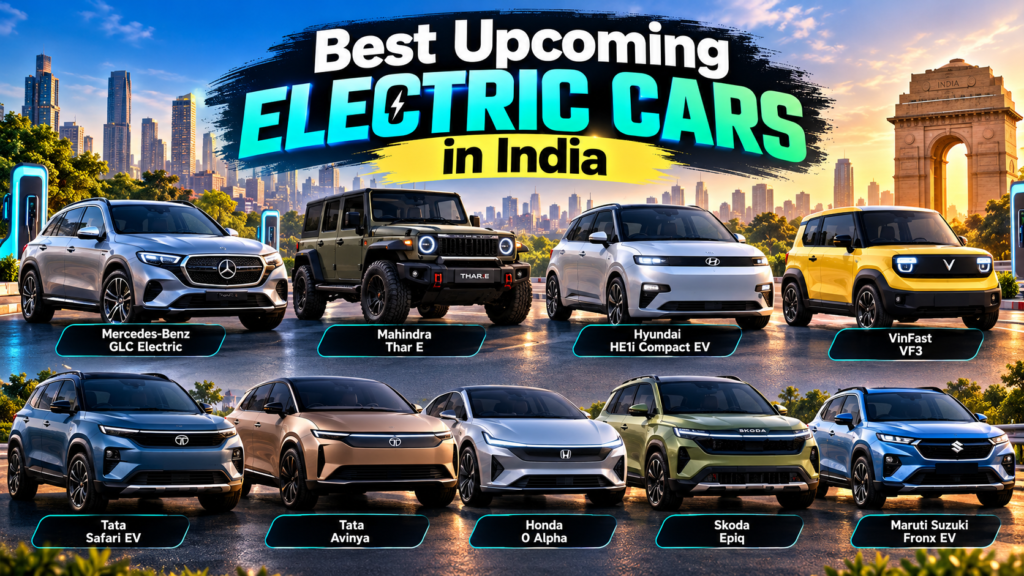
In this guide, we look at some of the best upcoming electric cars in India, their expected prices, possible launch timelines and the features buyers should watch.
Upcoming Electric Cars in India: Quick Overview
The following models appear on current automotive-industry launch lists. Prices and dates are estimates unless the manufacturer has officially confirmed them. Some models may have uncertain India launch plans.
| Electric car | Expected price | Expected launch |
|---|---|---|
| Mercedes-Benz GLC Electric | Around ₹80 lakh | November 2026 |
| Mahindra Thar E | Around ₹25 lakh | November 2026, tentative |
| Hyundai HE1i Compact EV | Around ₹10 lakh | November 2026, tentative |
| VinFast VF3 | Around ₹10 lakh | November 2026, tentative |
| Tata Safari EV | Around ₹32 lakh | December 2026, tentative |
| Tata Avinya | Around ₹40 lakh | 2027, timing uncertain |
| Honda 0 Alpha | Around ₹20 lakh | 2027, tentative |
| Skoda Epiq | Around ₹15 lakh | 2027, tentative |
| Maruti Suzuki Fronx EV | Around ₹12 lakh | 2027, tentative |
Prices are indicative estimates, generally reported as expected ex-showroom prices. They are not official quotations. Launch schedules can change, and some models may not launch in India within these periods.
1. Mercedes-Benz GLC Electric
The Mercedes-Benz GLC Electric is one of the premium electric SUVs to watch in India. It targets buyers who want the comfort, technology and premium driving experience associated with Mercedes-Benz, along with an all-electric powertrain.
The model is listed for an expected Indian launch in November 2026, with an estimated price of around ₹80 lakh. Buyers should wait for the manufacturer’s announcement to confirm the final price, variants and specifications.
What can buyers expect?
The international GLC electric model focuses on premium cabin quality, advanced infotainment, driver-assistance technology and long-distance electric driving. The final Indian specification and equipment package will determine which features are available locally.
Its premium positioning means that the vehicle will appeal mainly to luxury-car buyers rather than customers looking for an affordable daily commuter.
Who should consider it?
This electric SUV may suit buyers upgrading from a luxury petrol or diesel SUV who want an electric alternative without giving up comfort and technology.
2. Mahindra Thar E
The Mahindra Thar E is an electric SUV concept that has attracted attention because it combines the rugged image of the Thar with the possibility of electric mobility.
Its appeal lies in the idea of an electric vehicle designed around a bold, adventure-oriented SUV identity. However, the concept’s design and capabilities should not automatically be treated as confirmed production specifications.
Expected price and launch
Automotive launch listings have suggested a price of approximately ₹25 lakh and a possible late-2026 launch. These details remain tentative, and prospective buyers should wait for official confirmation of the production model.
What makes it interesting?
The Thar E could appeal to buyers who want a distinctive electric SUV rather than a conventional urban crossover. Its eventual success will depend on ground clearance, battery protection, real-world range, charging performance and the ability to handle difficult terrain.
Who should wait for it?
Adventure enthusiasts and existing Thar fans may want to follow official announcements. However, anyone planning a purchase should not make a booking decision based solely on concept images or unofficial specifications.
3. Hyundai HE1i Compact EV
The Hyundai HE1i Compact EV appears on some upcoming-car listings as a possible affordable electric vehicle. Its reported expected price of around ₹10 lakh would place it in a segment where affordability could be a major selling point.
However, the HE1i name, final production identity, specifications and Indian launch schedule should be treated as unconfirmed unless Hyundai makes an official announcement.
Why could an affordable Hyundai EV attract buyers?
A compact electric car could appeal to urban commuters who need a practical vehicle for office travel, shopping and everyday family use. A competitive price, manageable dimensions and convenient charging could make such a car attractive to first-time EV buyers.
Hyundai’s existing presence in India could also be an advantage if the company offers an appropriate service network and battery warranty.
What should buyers watch?
The most important details will be the actual on-road price, battery capacity, certified driving range, safety equipment, charging speed and availability of home-charging solutions.
Until these details are confirmed, buyers should compare announced electric cars already available in their budget instead of assuming the reported price will become the final showroom price.
4. VinFast VF3
The VinFast VF3 is a small, boxy electric vehicle designed primarily for urban mobility. Its compact proportions and distinctive styling make it different from the larger electric SUVs that dominate many upcoming-car lists.
Automotive listings have suggested a possible Indian launch in late 2026, with an expected price of around ₹10 lakh. Its availability and final pricing for India require confirmation.
What makes the VF3 interesting?
The VF3’s small footprint could make parking and navigating crowded urban streets easier. A compact electric vehicle may also be suitable for people whose regular journeys are relatively short.
Its boxy design gives it a distinctive appearance, while the electric powertrain offers the usual benefits of quiet operation and no tailpipe emissions.
What should buyers consider?
A small EV is not automatically suitable for every family. Buyers should check the number of seats, boot space, highway performance, real-world driving range, safety equipment and charging options.
If the VF3 launches at a competitive price with practical specifications, it could become an option for urban buyers who want something different from a conventional hatchback.
5. Tata Safari EV
The Tata Safari EV is a model to watch for families interested in a larger electric SUV. The Safari name is associated with spacious interiors and family-oriented travel, making an electric version an interesting prospect.
Some automotive listings have suggested an expected price of around ₹32 lakh and a possible launch towards the end of 2026. These details should be considered estimates rather than confirmed launch information.
What could the Safari EV offer?
A family-focused electric SUV would need to combine cabin space, comfort, useful storage, modern safety technology and enough battery range for everyday journeys and occasional highway trips.
Its appeal would also depend on charging performance and how effectively Tata Motors positions it against other electric SUVs.
Who should consider waiting?
Families looking for a larger electric vehicle may want to monitor official announcements. Before making a decision, compare the final seating layout, battery options, real-world range, warranty and on-road price with existing electric SUVs.
6. Tata Avinya
Tata Avinya represents a more premium electric-car direction for Tata Motors. The project has been associated with next-generation electric vehicle architecture and a more sophisticated design approach.
Automotive listings have suggested an indicative price around ₹40 lakh and a potential arrival during 2027. The production model, exact launch date and final pricing should be verified through official announcements.
What makes Avinya worth watching?
The Avinya programme has highlighted the possibility of a more advanced electric platform, contemporary styling, spacious interiors and a premium user experience.
Its final appeal will depend on how closely the production vehicle follows the concepts and what Tata Motors offers in terms of battery technology, range, charging capability, safety and after-sales support.
Who could be interested?
Buyers who want a premium Indian electric vehicle and are comfortable waiting for a new product announcement may find Avinya worth following.
7. Honda 0 Alpha
Honda’s 0 Alpha is another electric SUV project worth watching as the company expands its global electric-vehicle ambitions.
Some industry listings have suggested a possible Indian arrival in 2027 and an estimated price around ₹20 lakh. These figures are provisional, and buyers should not treat them as a confirmed India launch commitment.
What could make it attractive?
An electric SUV from Honda could appeal to buyers who value practical packaging, comfort and the brand’s established automotive experience. However, its eventual position in India will depend on local pricing, specifications and the service arrangements offered.
What should buyers wait to learn?
Official details about the India launch, battery options, driving range, charging speed, safety features and variant structure will be important. Without these details, it is too early to make a reliable comparison with currently available electric SUVs.
8. Skoda Epiq
The Skoda Epiq is a compact electric SUV developed for the broader international market. Its smaller format could make it relevant to customers who want an electric SUV without moving into a large or expensive vehicle.
Automotive listings have suggested a possible Indian launch in 2027, with indicative pricing around ₹15 lakh. Skoda’s final India strategy, production plans and pricing need confirmation.
What could buyers expect?
The Epiq’s international positioning focuses on compact proportions, modern design and everyday usability. Its potential Indian appeal would depend on affordability, cabin space, equipment levels, range and charging performance.
Is it worth waiting for?
It could be worth tracking if you prefer European styling and want a compact electric SUV. However, the decision should depend on confirmed Indian specifications and the availability of service and charging support in your city.
9. Maruti Suzuki Fronx EV
The Maruti Suzuki Fronx EV is a model reported in some future-launch lists, with a tentative 2027 timeline and an estimated price around ₹12 lakh.
Maruti Suzuki’s familiarity with Indian buyers and its extensive existing dealership network could make a competitively priced electric vehicle attractive. However, the Fronx EV’s production plans, technical details and India launch schedule must be confirmed before treating it as a definite upcoming purchase.
Why could a Fronx-based EV attract attention?
A compact electric SUV-style vehicle could appeal to urban families and commuters who want a practical size, modern styling and potentially lower daily energy costs.
If Maruti Suzuki introduces an EV in this segment, buyers will want to compare its price, battery range, charging options and warranty with other compact electric vehicles.
What should buyers consider?
Look for official announcements covering battery capacity, certified range, real-world efficiency, safety ratings, charging speed and after-sales support. The final price will be particularly important in determining whether it offers good value.
How to Choose the Best Upcoming Electric Car in India
Choosing an EV requires more than comparing battery sizes or advertised range. Think about how you use your car and the conditions in which you will charge it.
1. Set a realistic budget
Include the on-road price, insurance, financing costs, home-charger installation and any parking or electrical upgrades. Do not rely exclusively on expected ex-showroom prices.
2. Check the real-world driving range
A manufacturer’s certified range is useful for comparison, but actual driving range varies with speed, temperature, traffic, terrain, air-conditioning and passenger load.
Choose a vehicle that comfortably covers your regular journeys while leaving enough battery capacity for unexpected travel.
3. Confirm home-charging access
Home charging can make EV ownership significantly more convenient. Apartment residents should check whether their housing society permits installation, whether electrical capacity is sufficient and how billing will work.
If you depend entirely on public charging, investigate the locations, reliability and pricing of chargers along your regular routes.
4. Compare battery warranties
Review the warranty duration, kilometre limit, battery-capacity conditions and exclusions. Also check whether the warranty transfers to a subsequent owner.
5. Check safety and service support
Review crash-test results where available, standard safety equipment, roadside assistance, repair arrangements and the availability of trained EV technicians near you.
6. Calculate total ownership costs
Compare electricity expenditure, insurance, maintenance, financing and resale expectations with those of a similar petrol car. The cheapest EV to purchase is not necessarily the cheapest to own over several years.
Should You Buy an Electric Car Now or Wait Until 2027?
The answer depends on your current needs.
Buy an EV now if you have convenient charging, a suitable model is already available within your budget and you want to start benefiting from electric driving without waiting for uncertain launches.
Wait for an upcoming EV if a particular model offers something important to you, such as a larger cabin, a preferred body style or a better expected price. Waiting makes more sense when the manufacturer has provided credible information about its plans.
Avoid waiting indefinitely for speculative models. An expected launch date can change, and concept vehicles may differ significantly from production versions. If you need a car soon, compare vehicles available today rather than relying on tentative launch calendars.
Final Verdict
The best upcoming electric car depends on your budget and driving requirements. The Mercedes-Benz GLC Electric is worth following for luxury buyers, while the Mahindra Thar E could interest SUV enthusiasts if a production version and Indian launch are confirmed.
Affordable EV projects such as the reported Hyundai HE1i Compact EV and VinFast VF3 may attract urban commuters. Families looking for larger vehicles can monitor the Tata Safari EV, while buyers interested in premium technology may want to follow Tata Avinya and Honda’s future electric models.
For a purchase planned in late 2026 or 2027, focus on confirmed prices, real-world range, charging convenience, battery warranty and after-sales support. These factors matter far more than an early launch rumour.
FAQs
Which electric cars are expected to launch in India in 2026?
Launch listings include the Mercedes-Benz GLC Electric, Mahindra Thar E, VinFast VF3 and Tata Safari EV, among other models. Their individual launch dates and India availability should be verified because some are tentative.
What is the expected price of upcoming electric cars in India?
Indicative estimates range from around ₹10 lakh for some reported compact EVs to ₹80 lakh or more for premium electric SUVs. Actual prices depend on the production model, battery options, variants and taxes.
Which upcoming electric car could be best for a budget buyer?
Affordable compact EV projects such as the reported Hyundai HE1i Compact EV and VinFast VF3 may be worth monitoring. Their final specifications, launch plans and on-road prices must be confirmed.
Is the Mahindra Thar E launching in India?
The Thar E has attracted attention as an electric SUV concept, and automotive listings have suggested a possible launch. Buyers should wait for an official production-model announcement before relying on a specific launch date or price.
Are upcoming electric cars better than petrol cars?
EVs can have lower energy costs and no tailpipe emissions, but their suitability depends on charging access, purchase price, range and driving patterns. Petrol cars can remain more convenient for buyers who frequently travel where charging infrastructure is limited.
Should I wait for a new electric car in 2027?
Wait if a specific upcoming model meets your needs and you can comfortably delay your purchase. Otherwise, compare currently available EVs with your budget and driving requirements rather than relying on unconfirmed launch dates.