|
Getting your Trinity Audio player ready...
|

Botox skin treatment has become one of the most popular cosmetic procedures in the world. It is widely known for its ability to reduce wrinkles, fine lines, and signs of aging. Beyond beauty, Botox is also used for various medical conditions such as excessive sweating, muscle spasms, migraines, and jaw tension.
While Botox is often promoted as a quick and safe solution for youthful skin, many people are unaware of its potential risks, limitations, and side effects. Some believe it is completely harmless, while others fear it causes permanent damage. The truth lies somewhere in between.
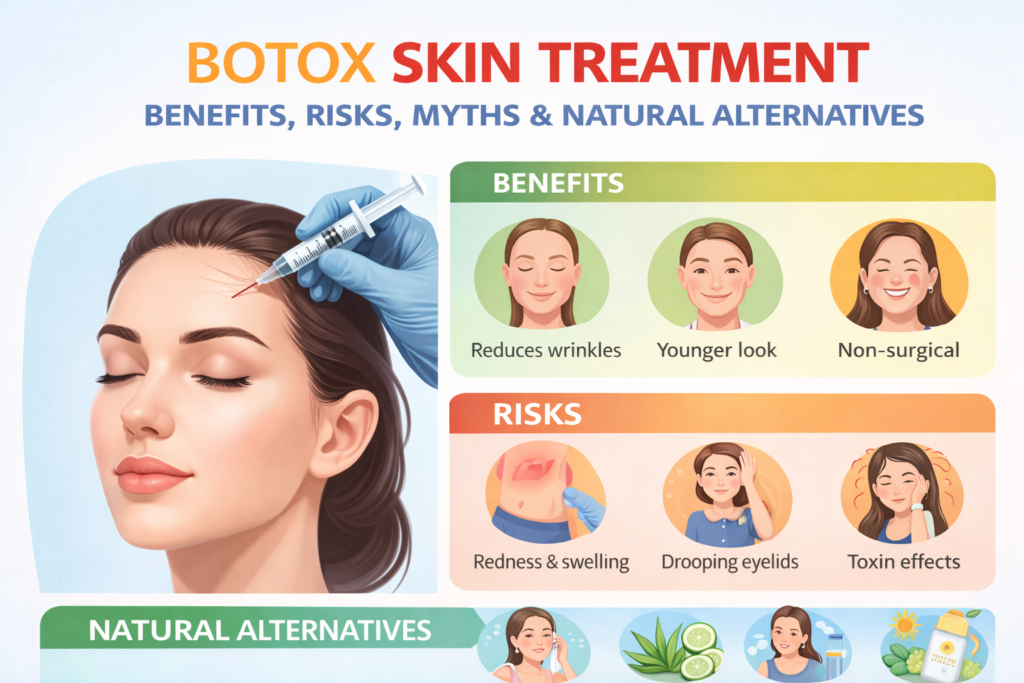
This blog explains Botox skin treatment in detail, including how it works, its uses, myths, risks, side effects, medical facts, home-based natural alternatives, and frequently asked questions.

What Is Botox?
Botox is a purified form of botulinum toxin. When injected in very small, controlled doses, it temporarily relaxes specific muscles.
Facial wrinkles often form due to repeated muscle movements such as smiling, frowning, or squinting. Botox blocks nerve signals to these muscles, preventing them from contracting. As a result, the skin appears smoother and more relaxed.
Botox does not fill wrinkles. It relaxes the muscles that cause them.
Common Uses of Botox in Skin Treatment
Botox is used for both cosmetic and medical purposes.
Cosmetic Uses
- Forehead lines
- Crow’s feet
- Frown lines
- Smile lines
- Neck bands
- Jawline contouring
- Lip flip
Medical Uses
- Excessive sweating
- Chronic migraines
- Jaw clenching
- Muscle spasms
- Eye twitching
How Botox Works
Botox works by blocking a chemical messenger that tells muscles to contract. When the muscle relaxes, the overlying skin smooths out.
The effects usually appear within a few days and last for 3 to 6 months. After that, the muscle activity gradually returns, and wrinkles may reappear.
Symptoms and Side Effects of Botox
Botox is generally considered safe when administered correctly, but side effects can occur.
Common Side Effects
- Redness at injection site
- Mild swelling
- Bruising
- Headache
- Temporary discomfort
- Tightness
Moderate Side Effects
- Drooping eyelids
- Uneven facial expressions
- Dry eyes
- Difficulty raising eyebrows
- Facial stiffness
Rare but Serious Effects
- Difficulty swallowing
- Slurred speech
- Breathing problems
- Muscle weakness
- Allergic reactions
Risks of Botox Skin Treatment
While Botox is widely used, it is not completely risk-free.
Possible Risks
- Infection from unsterile needles
- Incorrect injection placement
- Nerve irritation
- Facial asymmetry
- Over-paralysis of muscles
- Dependency on repeated treatments
- Skin thinning over time
Long-term misuse or overuse can alter natural facial expressions.
Rumors and Myths About Botox
Myth 1: Botox permanently freezes your face
False. Botox effects are temporary.
Myth 2: Botox is toxic and deadly
False. Medical-grade Botox is used in extremely controlled doses.
Myth 3: Botox is only for older people
False. Many young adults use it for prevention.
Myth 4: Botox causes permanent skin damage
False. When used correctly, it does not permanently damage skin.
Myth 5: Natural remedies can give the same results as Botox
False. Natural methods can improve skin health but cannot replicate Botox’s muscle-relaxing effect.
What Research Says
Scientific studies confirm that Botox is effective in reducing dynamic wrinkles. Research also shows that when administered by trained professionals, Botox has a high safety record.
However, studies also warn about:
- Overuse leading to unnatural appearance
- Psychological dependency
- Reduced muscle tone over time
- Risk of complications if misused
Medical experts stress moderation, proper assessment, and professional application.
Is There a Cure for Wrinkles Without Botox?
Wrinkles are a natural part of aging. There is no permanent cure.
Botox only temporarily reduces the appearance of wrinkles. It does not stop aging.
Natural skin care, nutrition, hydration, and sun protection slow down aging but cannot completely eliminate wrinkles.
Medical Treatment Process for Botox
Before Treatment
- Skin assessment
- Medical history review
- Discussion of expectations
- Allergy checks
During Treatment
- Cleaning the area
- Tiny injections into targeted muscles
- Procedure lasts 10–20 minutes
After Treatment
- Avoid rubbing the area
- Stay upright for a few hours
- Avoid heavy exercise
- No makeup for some time
Home Remedies & Natural Alternatives to Botox
While home remedies cannot replace Botox, they can improve skin texture and delay aging.
Natural Skin Tightening Practices
- Facial yoga
- Ice massage
- Cold compresses
- Regular moisturizing
Natural Ingredients That Support Skin
- Aloe vera
- Honey
- Cucumber
- Green tea
- Vitamin E oil
- Coconut oil
Lifestyle Habits
- Drink enough water
- Eat antioxidant-rich foods
- Avoid smoking
- Reduce sugar intake
- Get proper sleep
- Use sunscreen
Prevention of Premature Aging
- Avoid excessive sun exposure
- Wear sunscreen daily
- Maintain hydration
- Eat a balanced diet
- Avoid smoking
- Manage stress
- Follow a skincare routine
FAQs
Is Botox safe for the skin?
Yes, when administered correctly by trained professionals.
Does Botox hurt?
Only mild discomfort is usually felt.
How long does Botox last?
Typically 3 to 6 months.
Can Botox damage skin long-term?
Not usually, but overuse may affect muscle tone.
Can I stop Botox anytime?
Yes, its effects fade naturally.
Are home remedies as effective as Botox?
No, but they support long-term skin health.
Conclusion
Botox skin treatment is an effective, temporary solution for reducing wrinkles and fine lines. While it is generally safe, it is not completely risk-free. Understanding its benefits, risks, and limitations helps people make informed decisions.
Natural skin care methods may not provide instant results like Botox, but they support long-term skin health and slow down aging naturally.
The best approach to skincare is balance — informed choices, moderation, and consistent self-care.