|
Getting your Trinity Audio player ready...
|

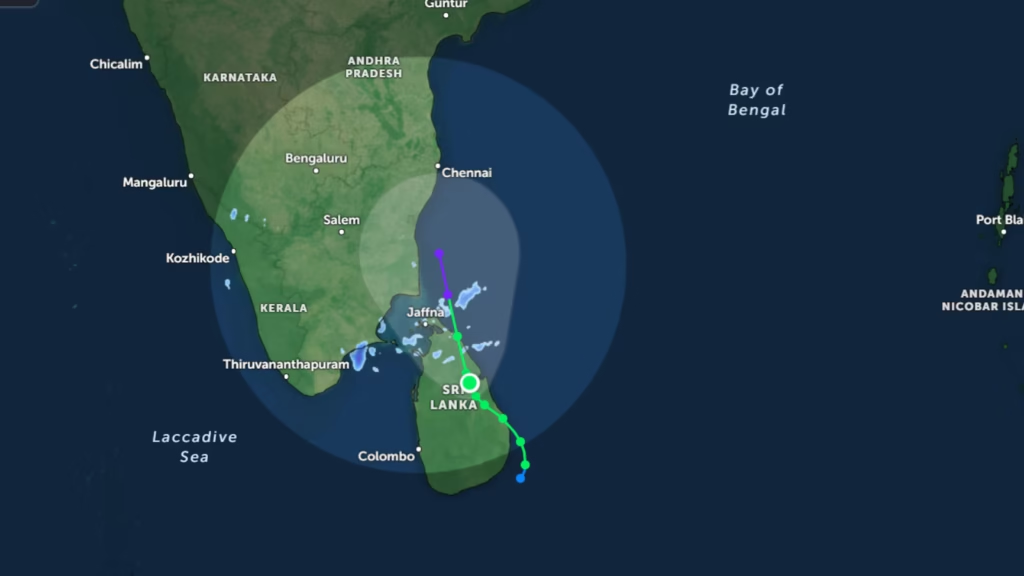
Cyclone Ditwah was a powerful tropical storm that formed over the southwestern Bay of Bengal in November 2025. The weather system strengthened as it moved across the warm sea waters, gathering energy and setting a destructive path. The name “Ditwah” was contributed by Yemen, as part of the standard naming protocol used in the region.
As Ditwah advanced, meteorological agencies issued warnings, watching carefully for possible landfall and impacts along coastal regions.
Path and Landfall: Where it Struck
From its origin over the Bay of Bengal, Ditwah first moved close to the northern Sri Lankan coast. Its outer bands brought torrential rain and high winds to parts of the island even before the main impact. Sri Lanka bore the early brunt of the cyclone’s fury.

After affecting Sri Lanka, Ditwah changed course and headed toward the southeastern coast of India. The coastal belt of Tamil Nadu, along with the union territory of Puducherry and parts of south-Andhra Pradesh, came under alert as the cyclone approached. Red, orange, and yellow warnings were issued by authorities depending on forecasted strength and likely impact zones.
Several coastal districts were advised to brace for heavy rain, strong gusty winds, high tides, and possible flooding. Residents in low-lying and flood-prone areas were cautioned to stay alert and avoid unnecessary travel, particularly near the sea or flood-prone zones.
Devastation in Sri Lanka: Human and Infrastructural Loss
The worst impact of Ditwah was witnessed in Sri Lanka. The cyclone triggered massive floods and landslides, leading to one of the deadliest disasters the island has seen in recent times. More than three hundred lives were lost. Many families were left devastated, with loved ones unaccounted for — reports described “hundreds missing.”
Entire villages and towns were submerged under floodwaters. Rivers and reservoirs overflowed; roads were washed away; bridges and small bridges collapsed. Homes — particularly those made of modest materials — were either completely destroyed or rendered uninhabitable.
The damage was not just structural. Agriculture, which supports a large portion of the population, suffered major setbacks. Paddy fields and other farmlands were submerged, crops ruined, and livelihoods destroyed. Farmers who depended on the land for sustenance and income found themselves in dire straits.
The human cost was stark — families lost shelter, food, and safety. Relief operations began, but the scale of displacement and destruction made the challenge enormous.
Impact in India: Tamil Nadu, Puducherry, Andhra Pradesh
As Ditwah moved toward the Indian coast, authorities sprang into action. Coastal districts were put on high alert. Evacuations were ordered in vulnerable zones. Disaster response teams, local administrations, and relief organisations mobilised to prepare for rescue, sheltering, and aid distribution.
By landfall, the cyclone had weakened somewhat — but the danger hadn’t vanished. Heavy rainfall and gusty winds caused waterlogging, flooding of low-lying areas, damage to homes, especially huts and loosely built houses, and disruption of daily life. Trees and electricity poles were uprooted or fell, causing power cuts and road blockages.
Sadly, there were casualties. Reports confirmed loss of lives due to landslides, collapsing walls, and electrocution in some regions. Many residents rushed to safer ground. Shelters were set up for those displaced.
Agriculture along coastal belts and delta regions experienced severe impact. Farmlands submerged; irrigation systems disrupted. The crops — especially paddy and other rain-fed crops — suffered damage. For small-scale farmers, this could mean loss of income for months, and uncertainty over the next planting season.
Local fisheries and coastal livelihoods — dependent on calm seas — were also disrupted. Fisherfolk were warned against venturing into the sea until further notice.
Environmental and Secondary Effects
Cyclones like Ditwah don’t just damage infrastructure — they have ripple effects. Floodwaters contaminated water supply. There was risk of waterborne diseases, especially in flood-affected zones. Stagnant water and disrupted sanitation raised concerns over hygiene and health.
Coastal erosion and salinity intrusion in delta regions threatened long-term soil health and agriculture. Mangroves, wetlands and coastal biodiversity zones experienced stress — some facing damage due to storm surge and inundation.
Moreover, displaced populations and stressed infrastructure made emergency response and relief delivery difficult. Roads and bridges damaged or washed away — hampering access to remote affected zones.
Relief Efforts, Government Response and Challenges
In India — particularly across Tamil Nadu, Puducherry, and Andhra Pradesh — the state disaster response forces (SDRF/NDRF), along with the local administration, mobilised quickly. As a result, evacuations from vulnerable zones were conducted, and emergency shelters for affected families were arranged. Additionally, medical aid and essential facilities were put in place to support those in need.
Furthermore, relief materials such as food, clean water, and medicines were dispatched. At the same time, temporary shelters were established in safe buildings to accommodate displaced residents. Meanwhile, volunteers and NGOs worked in coordination with government agencies to strengthen the overall relief efforts.
In Sri Lanka, the scale of destruction meant the response was much more challenging. Clearing debris, restoring communication, providing emergency relief — rescue teams faced enormous hurdles. Rehabilitation and rebuilding efforts were expected to take weeks, if not months. For many displaced families, return home would depend on reconstruction and restoration of basic amenities.
Challenges included destroyed roads and bridges, flooded zones, limited access to some villages cut off by landslides or inundation, and widespread displacement. Restoring power, clean water supply, sanitation, shelter — these are essential but time-consuming tasks.
What Needs to Happen Next: Short-Term and Long-Term Priorities
Immediate Relief & Rehabilitation
- Provide emergency shelter, food, clean water, medicines, and sanitation for affected families.
- Restore electricity, communication, and access roads as soon as possible.
- Prioritise medical support to prevent disease outbreaks due to floodwaters and poor sanitation.
- Assist farmers and fishermen — supply seeds, fishing gear, financial aid — to salvage livelihoods.
Assessment & Infrastructure Rebuild
- Survey and assess structural damages — houses, roads, bridges, public utilities. Rebuild with cyclone-resistant design where possible.
- Repair and restore irrigation systems, farmland drainage, soil restoration, and water management — to prevent longer-term agricultural loss.
- Strengthen coastal defences: sea walls, mangrove restoration, wetlands protection to buffer future storms.
Disaster Preparedness & Resilience Building
- Improve early warning systems and public awareness campaigns — ensure people know evacuation routes, safe shelters and basic safety measures.
- Implement coastal-zone regulations: avoid construction in high-risk flood zones, encourage climate-resilient buildings.
- Support livelihood diversification for vulnerable coastal communities — reduce over-dependence on climate-sensitive jobs like fishing and agriculture.
- Engage communities in disaster-management planning; train local volunteers for first response; stock essential supplies.
Lessons from Cyclone Ditwah
- A storm’s strength at landfall isn’t the only metric — heavy rains, flooding, and high tides often cause equal or more destruction, especially in low-lying/coastal zones.
- Coastal and island nations remain highly vulnerable to cyclones — countries must invest proactively in infrastructure, disaster preparation, and community resilience.
- Climate change and warming seas might increase frequency and intensity of such storms — meaning what happened with Ditwah may become more common unless mitigation and adaptation strategies are strengthened.
- Agriculture and coastal livelihoods are extremely fragile; recovery of crops and fisheries can’t wait for infrastructure rebuild — livelihoods must be supported immediately.
- Disaster response needs coordination, resources, and speed; but long-term resilience demands planning, investment, and community involvement.
Final Thoughts
Cyclone Ditwah was a harsh reminder of nature’s unforgiving power. Lives lost, homes destroyed, livelihoods shattered. The pain in Sri Lanka was deep and widespread; parts of India’s coast — still recovering from previous storms — were pushed yet again to the brink.
Yet, in the wreckage lie lessons. If governments, communities, and civil society recognise these lessons, there’s hope: for stronger infrastructure, better early-warning systems, smarter land use, resilient agriculture and protections for vulnerable communities.
The road to recovery will be long. But with coordinated effort — rescue, relief, rebuild, resilience — lives can be restored, and future disasters mitigated.
Cyclone Ditwah must serve not just as a tragedy — but as a turning point for climate preparedness, coastal resilience, and a wake-up call for sustainable living in vulnerable zones.