|
Getting your Trinity Audio player ready...
|

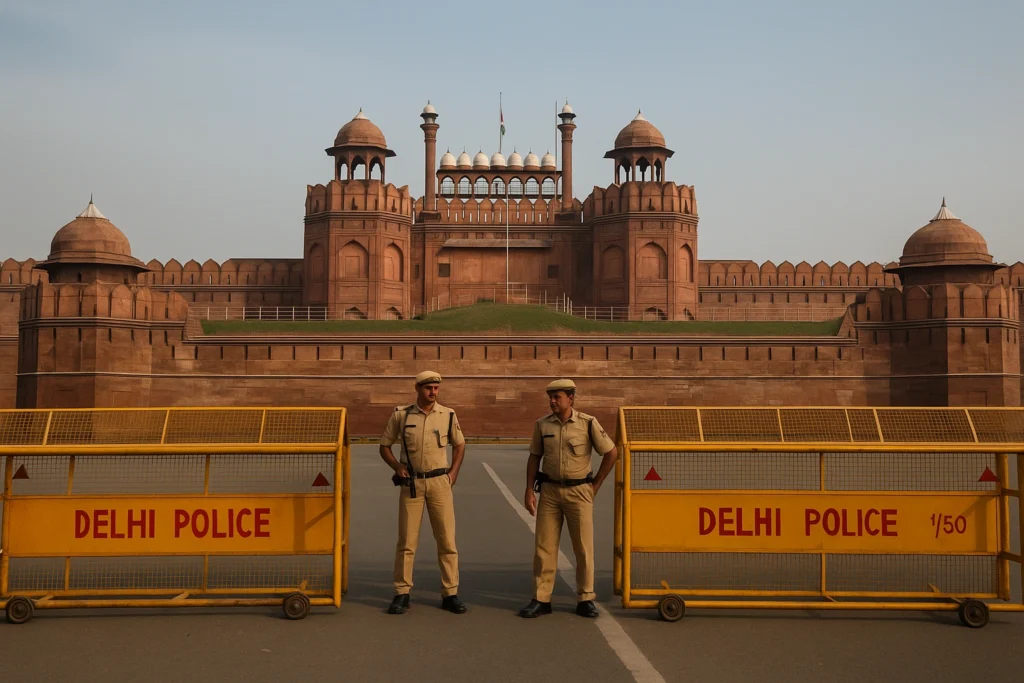
The blast near Delhi’s Red Fort on 10 November 2025 shook the nation. The attack claimed several lives and injured many, immediately raising concerns about security lapses, radicalisation networks and the changing nature of terrorism. Yet within hours, the national conversation moved away from security and straight into politics. A single phrase — “misguided youth” — used by a Congress MP to describe the suicide bomber, triggered a political firestorm that quickly overshadowed the tragedy itself. This moment marked the beginning of what many now call the Delhi Blast Fallout.
Instead of uniting against terrorism, the ruling Bharatiya Janata Party (BJP) and the Indian National Congress (INC) plunged into a loud and polarised battle. Both sides accused each other, countered each other and pushed ideological narratives that turned a national tragedy into a political battleground. The Delhi Blast Fallout intensified as leaders scrambled for control over the narrative, each trying to frame the incident in a way that suited their political stand.
This blog breaks down what actually happened, explains why a single remark exploded into a national controversy, and reveals what the Delhi Blast Fallout says about India’s current political climate and social mindset.

The Blast — What We Know
Initial investigations indicated that a radicalised individual carried out the attack after extremist ideology indoctrinated him. Officials stated that the bomber was not an uneducated drifter but an articulate person who fully understood his actions and acted with ideological commitment. This profile directly challenges the long-held stereotype that terror operatives emerge only from poverty or ignorance.
Security agencies are actively investigating how the bomber was recruited, who trained him and whether a larger module is operating behind the scenes. But even before they uncovered these answers, the narrative shifted — politicians turned the incident into a full-blown mud-wrestling match.
The Comment That Sparked a Fire
Congress MP Imran Masood described the suicide bomber as a “misguided youth.” He also remarked that such violence goes against the principles of the nation and religion. His intention might have been to separate extremist ideology from the broader community, but the wording was poorly timed and poorly received.
Calling a suicide bomber “misguided” struck many as an understatement — almost a softening of an act that was deliberate and ideologically motivated. It was enough for the BJP to launch a full-scale attack.
BJP’s Outrage — And Why It Hit So Hard
The BJP reacted swiftly and aggressively, accusing the Congress of:
- downplaying terrorism,
- indulging in appeasement politics, and
- using language that blurs moral clarity.
BJP leaders argued that describing a suicide bomber as merely misguided sends a weak message at a time when the country needs strong, unequivocal condemnation.
And honestly — from a political communication standpoint — the BJP used this opportunity effectively. Terrorism is a sensitive national issue, and any ambiguous wording becomes a political landmine.
Why the Remark Became a Flashpoint
1. Terror and ambiguity do not mix
In moments of national tragedy, public representatives are expected to speak with absolute clarity. Words like “misguided” seem inadequate when people have died due to an intentional, ideologically driven act. In such situations, nuance can be mistaken for softness.
2. India’s political atmosphere is hypersensitive
The political ecosystem today reacts instantly and aggressively. Every sentence becomes a battlefield. Every phrase is interpreted through ideological lenses. When the environment is this charged, even mild expressions can be construed as provocative.
3. Language becomes political messaging
Terms like “youth”, “misguided”, or references to social injustice carry layered meanings in Indian politics. They signal empathy, blame or justification depending on who is speaking. A phrase that could have been neutral in another context became highly loaded here.
Congress’s Position — Nuance or Misstep?
To be fair, Congress leaders may have tried to make a broader point: radicalisation is a social tragedy, and extremist groups can manipulate citizens, especially young people. The discussion itself holds merit. But they chose the worst possible moment. When a nation is grieving, people interpret intellectual nuance as emotional detachment or political calculation.
This is where Congress failed — not in principle, but in judgement.
The Real Danger: Political Point-Scoring Over National Security
The worst outcome of this controversy is the way it shifted public focus. Instead of discussing:
- how the attack was executed,
- why the bomber was radicalised,
- what gaps exist in intelligence,
- and how to prevent future attacks,
the conversation became about political rhetoric.
The victims, the families, the community impact — all of it took a backseat.
This pattern is not new, and that’s the worrying part. Every time an act of terror occurs, parties jump into a blame game, using the tragedy to strengthen their own narrative.
The Bigger Picture: What This Incident Reveals
1. Radicalization is changing
Today’s terrorists may not fit the old stereotype. They can be educated, articulate and ideologically focused. This demands newer strategies from intelligence agencies.
2. Political discourse has become reactionary
Leaders respond to headlines, not to principles. Every word becomes ammunition. Politics has become a 24×7 war room.
3. Public trust gets eroded
When political parties bicker instead of uniting after an attack, people lose confidence in both leadership and institutions.
4. Media amplifies conflict more than clarity
The coverage highlights what politicians said, not what investigators found. Soundbites overpower substance.
My Straightforward Take
The Congress MP’s wording was inappropriate for the gravity of the situation. A suicide bomber driven by ideology is not simply “misguided”. It’s a deliberate act and must be described as such.
At the same time, the BJP’s response — though politically understandable — turned into an extended battle of rhetoric. A national tragedy became another partisan event.
Both sides need to introspect. India deserves better than emotional grandstanding and verbal warfare every time a terror incident occurs.
What India Needs Going Forward
- Zero-ambiguity political messaging after terror attacks.
- Security-first discourse, not political scoring.
- Understanding how modern radicalisation works to prevent future attacks.
- Unified communication that strengthens national morale.
- Less drama, more leadership.
The Delhi blast should have been a moment for collective grief, unified resolve and serious reflection on national security. Instead, it became another example of how politics, words and ego can overshadow the real issue.
India must learn from this — because the stakes are far too high.