|
Getting your Trinity Audio player ready...
|

Diabetes is a long-term metabolic condition that affects how the body processes glucose, which is its primary source of energy. It occurs when the body either does not produce enough insulin or cannot effectively use the insulin it produces. Insulin is a hormone that helps glucose move from the bloodstream into the cells, where it is used for energy.
When this process is disrupted, glucose builds up in the blood instead of being absorbed by cells. Over time, this excess sugar can damage blood vessels, nerves, organs, and tissues, leading to serious health complications.
Diabetes is not just about sugar. It affects the heart, kidneys, eyes, nerves, immune system, mental health, and overall quality of life. What makes it particularly dangerous is that many people live for years without knowing it.

This comprehensive guide explains in simple language—covering its symptoms, causes, types, myths, research insights, treatment methods, home remedies, prevention strategies, and frequently asked questions.
- What Is Diabetes?
- Types of Diabetes
- Symptoms of Diabetes
- Causes of Diabetes
- Common Rumors and Myths About Diabetes
- What Research Says About Diabetes
- Is There a Cure for Diabetes?
- Medical Treatment Options
- Home Remedies and Natural Support
- Lifestyle Changes That Make the Biggest Impact
- Possible Complications of Diabetes
- Prevention Strategies
- FAQs
- Conclusion
What Is Diabetes?
Diabetes is a chronic condition characterized by elevated levels of glucose in the bloodstream. This happens because the body cannot properly regulate blood sugar due to insulin-related issues.
Under normal circumstances:
- Food is broken down into glucose.
- Glucose enters the bloodstream.
- Insulin helps move glucose into cells.
- Cells use glucose for energy.
Types of Diabetes
Type 1 Diabetes
This occurs when the immune system attacks insulin-producing cells in the pancreas. The body produces little or no insulin. It usually develops at a young age but can occur at any time.
Type 2 Diabetes
This is the most common type. It occurs when the body becomes resistant to insulin or does not produce enough insulin. Lifestyle factors play a major role.
Gestational Diabetes
This type occurs during pregnancy due to hormonal changes. It usually disappears after childbirth but increases the risk of future diabetes.
Prediabetes
A condition where blood sugar levels are higher than normal but not high enough to be diagnosed as diabetes. It is a warning stage.
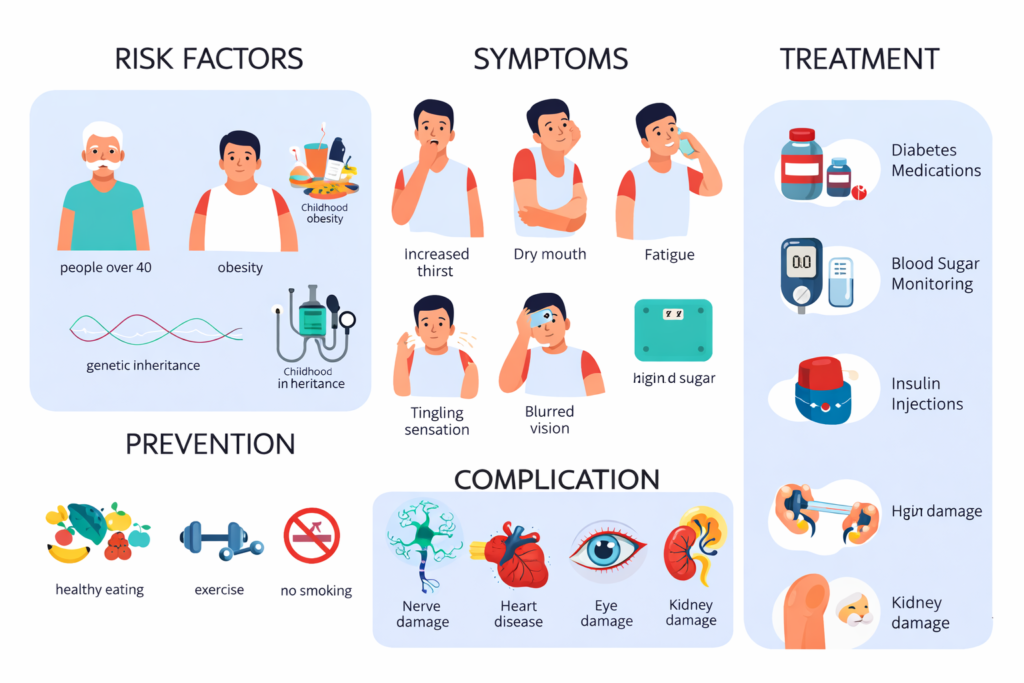
Symptoms of Diabetes
Symptoms may appear gradually or suddenly, depending on the type.
Common Early Symptoms
- Increased thirst
- Frequent urination
- Excessive hunger
- Fatigue
- Blurred vision
- Dry mouth
- Headaches
Moderate Symptoms
- Slow healing of wounds
- Frequent infections
- Tingling or numbness in hands and feet
- Dry or itchy skin
- Mood changes
Severe Symptoms
- Sudden weight loss
- Confusion
- Dizziness
- Shortness of breath
- Nausea
- Weakness
Many people mistake early symptoms for normal tiredness or stress, which delays diagnosis.
Causes of Diabetes
Diabetes does not develop overnight. It is the result of multiple factors working together.
Biological Causes
- Insulin resistance
- Pancreatic dysfunction
- Hormonal imbalances
- Genetic predisposition
Lifestyle Causes
- Poor diet
- High intake of refined carbs
- Excessive sugar consumption
- Lack of physical activity
- Obesity
- Poor sleep patterns
Emotional and Psychological Triggers
- Chronic stress
- Anxiety
- Depression
- Emotional eating
Stress hormones like cortisol can raise blood sugar levels even if diet remains unchanged.
Common Rumors and Myths About Diabetes
Myth 1: Eating sugar causes diabetes
False. Diabetes is influenced by overall lifestyle, genetics, and insulin resistance—not just sugar.
Myth 2: Diabetes is not serious
False. It can damage vital organs if unmanaged.
Myth 3: People with diabetes can never eat carbohydrates
False. They need balanced, complex carbohydrates.
Myth 4: Diabetes is contagious
False. It cannot spread from person to person.
Myth 5: Only overweight people get diabetes
False. Lean individuals can also develop it.
What Research Says About Diabetes
Modern research shows that diabetes is closely linked to insulin resistance, chronic inflammation, and metabolic dysfunction.
Studies confirm that:
- Long-term high sugar damages blood vessels.
- Inflammation worsens insulin resistance.
- Weight loss can improve insulin sensitivity.
- Early lifestyle intervention can delay or prevent complications.
Ongoing research explores:
- Artificial pancreas systems
- Beta-cell regeneration
- Gene therapy
- Personalized medicine
While promising, these are still in development and not widely available.
Is There a Cure for Diabetes?
Currently, there is no permanent cure for diabetes.
However:
- Type 2 diabetes can often be put into remission.
- Blood sugar can be normalized through lifestyle changes.
- Complications can be prevented.
Management is lifelong, but it does not have to limit quality of life.
Medical Treatment Options
Treatment varies based on type, severity, and individual needs.
Common Treatments
- Insulin therapy
- Oral medications
- Continuous glucose monitoring
- Dietary planning
- Physical activity programs
- Weight management
Doctors focus on stabilizing sugar levels rather than sudden drops.
Home Remedies and Natural Support
Home remedies support medical treatment but should not replace it.
Helpful Daily Habits
- Eating fiber-rich foods
- Drinking enough water
- Walking after meals
- Eating smaller portions
- Managing stress
- Sleeping well
Foods That Support Stable Sugar
- Leafy greens
- Whole grains
- Nuts and seeds
- Legumes
- Healthy fats
- Low-glycemic fruits
Lifestyle Changes That Make the Biggest Impact
- Eat balanced meals
- Avoid long fasting without guidance
- Move daily
- Reduce emotional eating
- Practice mindfulness
- Limit screen time before sleep
Possible Complications of Diabetes
If unmanaged, diabetes can cause:
- Heart disease
- Kidney damage
- Vision loss
- Nerve damage
- Poor circulation
- Foot ulcers
- Infections
Prevention Strategies
Many cases of Type 2 diabetes can be prevented.
- Maintain healthy weight
- Eat whole foods
- Exercise regularly
- Avoid smoking
- Manage stress
- Get regular checkups
FAQs
Can diabetes be reversed?
Type 2 diabetes can often go into remission.
Is diabetes hereditary?
Genetics increase risk, but lifestyle plays a big role.
Can children get diabetes?
Yes, especially Type 1.
Is insulin harmful?
No, it is lifesaving when needed.
Does stress increase sugar?
Yes, significantly.
Conclusion
It is a serious but manageable condition. With proper knowledge, consistent habits, emotional well-being, and medical guidance, people with diabetes can live long, healthy, and fulfilling lives.
The key is early diagnosis, awareness, and daily commitment to healthy choices.