|
Getting your Trinity Audio player ready...
|
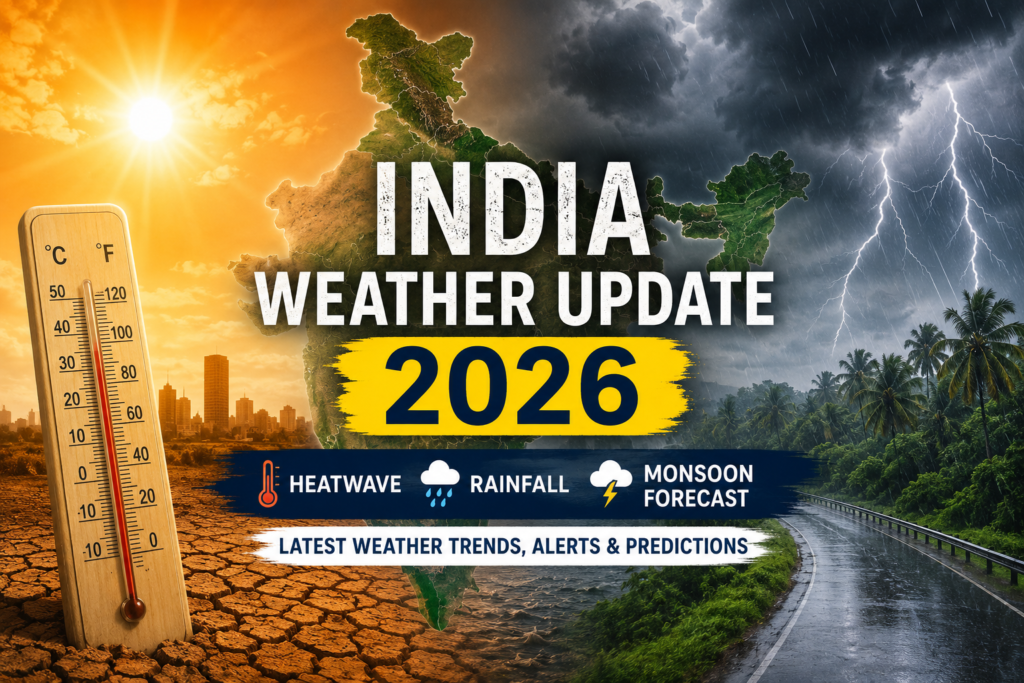
India’s weather has become one of the most discussed topics of 2026. From record-breaking temperatures across northern and central states to growing anticipation around the southwest monsoon, weather conditions are affecting millions of people, businesses, farmers, and policymakers. As climate patterns continue to evolve, understanding the country’s heatwave trends, rainfall forecasts, and monsoon predictions has become more important than ever.
The year 2026 has already witnessed extreme weather events in several parts of India. Major cities have reported unusually high temperatures, while weather experts continue to monitor rainfall patterns that could influence agriculture, water resources, and economic activity. With the monsoon season approaching, citizens across the country are closely following weather updates to prepare for what lies ahead.
- Heatwave Conditions Continue Across India
Heatwave Conditions Continue Across India
One of the most significant weather stories of 2026 has been the intense heat experienced across multiple regions. States including Rajasthan, Gujarat, Delhi, Haryana, Uttar Pradesh, and Madhya Pradesh have recorded temperatures well above seasonal averages. In several locations, daytime temperatures have crossed the 45-degree Celsius mark, creating difficult conditions for residents and workers.
Heatwaves are no longer isolated events. Over the past decade, India has seen a noticeable increase in both the frequency and duration of extreme heat conditions. Urban areas are particularly vulnerable due to the urban heat island effect, where concrete structures and limited green spaces cause cities to retain more heat than surrounding rural regions.
The impact of these heatwaves extends far beyond discomfort. Higher temperatures increase electricity demand as households and businesses rely more heavily on cooling systems. Water consumption also rises significantly during prolonged heat spells, putting additional pressure on already strained water supplies in many regions.
Health experts have repeatedly warned about the risks associated with extreme heat exposure. Heat exhaustion, dehydration, and heatstroke become more common during periods of intense heat, especially among children, senior citizens, and outdoor workers. As a result, state governments have issued advisories encouraging citizens to remain hydrated and avoid direct sunlight during peak afternoon hours.
Understanding the Role of Climate Change
Climate scientists increasingly point to global climate change as a major factor behind India’s changing weather patterns. Rising global temperatures are contributing to more frequent and severe heatwaves, irregular rainfall patterns, and extreme weather events.
India is particularly vulnerable to climate-related challenges due to its large population, diverse geography, and dependence on agriculture. Small changes in temperature and rainfall can have significant consequences for food production, water availability, and economic stability.
Experts suggest that future summers may become even hotter if global emissions continue to rise. This has led to increased discussions about sustainable development, renewable energy, and climate adaptation strategies. Cities are exploring ways to increase green cover, improve water management, and develop infrastructure capable of withstanding extreme weather conditions.
Monsoon 2026: Why It Matters So Much
The southwest monsoon is often described as the lifeline of India’s economy. Nearly half of India’s agricultural land depends directly on rainfall, making monsoon performance a crucial factor for farmers and businesses alike.
Each year, the monsoon influences crop production, food prices, rural incomes, and overall economic growth. A strong and well-distributed monsoon generally supports agricultural productivity, while weak or uneven rainfall can create challenges for farming communities.
As India enters the monsoon season of 2026, weather agencies and climate experts are closely monitoring atmospheric conditions. Farmers across the country are preparing for sowing activities and hoping for favorable rainfall that can support crops such as rice, cotton, soybean, sugarcane, and pulses.
The arrival of the monsoon is also eagerly anticipated by urban residents. Beyond agriculture, rainfall helps replenish reservoirs, improve groundwater levels, and provide relief from the intense summer heat that affects much of the country.
Rainfall Forecast for 2026
Rainfall distribution remains one of the most important aspects of India’s weather outlook. While total seasonal rainfall is important, experts emphasize that the timing and geographic distribution of rainfall often matter even more.
Certain regions may experience above-average rainfall, while others could face temporary deficits. Coastal areas, northeastern states, and parts of southern India typically receive substantial rainfall during the monsoon season. However, local weather conditions and atmospheric disturbances can create significant variations from one year to another.
Meteorologists continue to study ocean temperatures, wind patterns, and global climate indicators that influence India’s monsoon system. These factors play a critical role in determining how rainfall is distributed across different states throughout the season.
For farmers, accurate rainfall forecasts help guide decisions regarding crop selection, irrigation planning, and resource management. Businesses in sectors such as agriculture, logistics, retail, and insurance also rely heavily on weather projections to prepare for seasonal changes.
Impact on Agriculture and Food Prices
Agriculture remains highly dependent on weather conditions despite advancements in irrigation and farming technology. A favorable monsoon can boost crop production, increase rural incomes, and help stabilize food prices across the country.
Conversely, delayed rainfall or prolonged dry periods can reduce crop yields and increase pressure on food supply chains. This often leads to higher prices for essential commodities, affecting households nationwide.
Farmers are increasingly adopting weather-based planning strategies. Access to weather forecasts, satellite monitoring, and digital agricultural tools is helping rural communities make more informed decisions. Nevertheless, weather uncertainty remains one of the biggest challenges facing India’s agricultural sector.
Government agencies continue to invest in irrigation infrastructure, crop insurance programs, and climate-resilient farming practices to reduce weather-related risks and improve long-term agricultural sustainability.
How Weather Affects India’s Economy
Weather conditions have a direct influence on economic performance. Agriculture contributes significantly to employment and rural incomes, making rainfall patterns an important economic indicator.
Heatwaves can also affect productivity in industries that rely on outdoor labor, including construction, transportation, and manufacturing. Extreme temperatures may increase operational costs as businesses spend more on cooling, energy consumption, and worker safety measures.
The tourism industry is another sector closely tied to weather conditions. Popular destinations often experience fluctuations in visitor numbers based on seasonal weather patterns. Similarly, transportation networks can face disruptions during periods of heavy rainfall or extreme heat.
As climate-related weather events become more common, businesses are increasingly incorporating weather risk assessments into their planning and investment decisions.
Water Resources and Reservoir Levels
Water management remains one of India’s most pressing challenges. Many regions face periodic water shortages during summer months, making monsoon rainfall critical for replenishing reservoirs and groundwater supplies.
Reservoir levels play a vital role in supporting agriculture, drinking water systems, and hydroelectric power generation. Strong monsoon rainfall can improve water availability for months after the rainy season ends.
However, uneven rainfall distribution may create localized water stress even during years of normal overall rainfall. This highlights the importance of efficient water conservation practices and sustainable resource management strategies.
Cities and rural communities alike are investing in rainwater harvesting, groundwater recharge projects, and modern irrigation technologies to improve long-term water security.
Preparing for Extreme Weather Events
The increasing frequency of extreme weather events has encouraged governments, businesses, and communities to improve preparedness efforts. Early warning systems, weather monitoring technologies, and disaster management programs play a critical role in reducing risks associated with severe weather.
Citizens are also becoming more aware of the importance of weather preparedness. Monitoring weather forecasts, conserving water, maintaining emergency supplies, and following official advisories can help individuals respond more effectively to changing conditions.
Technology continues to improve forecasting accuracy, allowing authorities to issue more timely warnings regarding heatwaves, heavy rainfall, floods, and storms.
The Road Ahead for India’s Weather Future
India’s weather landscape is undergoing significant changes. Rising temperatures, shifting rainfall patterns, and increasing climate variability are creating new challenges and opportunities for the country.
The monsoon season of 2026 will be closely watched by farmers, businesses, policymakers, and citizens alike. While weather forecasts provide valuable guidance, adaptability and preparedness remain essential in an era of increasing climate uncertainty.
As India continues to modernize its weather monitoring systems and strengthen climate resilience initiatives, the ability to anticipate and respond to weather-related challenges will become increasingly important. Understanding weather trends is no longer just a matter of curiosity—it has become a critical component of economic planning, environmental sustainability, and everyday life.
FAQs
What is the weather forecast for India in 2026?
India is expected to experience a combination of heatwaves, seasonal rainfall, and monsoon activity, with regional variations in temperature and precipitation.
Why are heatwaves increasing in India?
Climate change, urbanization, and rising global temperatures are contributing to more frequent and intense heatwaves.
How important is the monsoon for India?
The monsoon supports agriculture, replenishes water resources, and plays a major role in economic growth.
Can weather conditions affect food prices?
Yes. Poor rainfall or extreme heat can impact crop production, leading to fluctuations in food prices.
How can people prepare for extreme weather?
Following weather updates, conserving water, staying hydrated, and following official advisories can help reduce weather-related risks.
What industries are most affected by weather changes?
Agriculture, tourism, transportation, construction, energy, and retail are among the sectors most influenced by weather conditions.