|
Getting your Trinity Audio player ready...
|

Kidney stones are no longer a rare health issue. Across the United States, Europe, and India, cases are rising sharply due to lifestyle changes, poor hydration habits, and modern diets. These small but extremely painful crystal deposits can disrupt daily life, work productivity, and long-term kidney health.
Medical experts now agree on one thing: most kidney stones are preventable. Simple daily habits—when done consistently—can significantly reduce the risk of stone formation and recurrence.
This guide explains proven prevention strategies in detail, based on medical insights and global health patterns, while answering the most searched questions people ask about kidney stones.

- Understanding Kidney Stones: Why They Form
- Hack #1: Drink Enough Water Every Single Day
- Hack #2: Reduce Salt and Increase Citrate Intake
- Hack #3: Control Oxalate-Rich Foods (Don’t Eliminate Them)
- Common Kidney Stone Prevention Questions (High-Search Topics)
- Additional Lifestyle Habits That Matter
- Regional Prevention Insights
Understanding Kidney Stones: Why They Form
Kidney stones develop when minerals and salts in urine become too concentrated and start crystallizing. Over time, these crystals grow and harden into stones.
The most common types include:
- Calcium oxalate stones (most common worldwide)
- Uric acid stones
- Struvite stones
- Cystine stones
Among these, calcium oxalate stones account for the majority of cases in all regions—US, EU, and India.
The root causes remain largely the same:
- Chronic dehydration
- High salt intake
- Excess oxalate-rich foods
- Poor dietary balance
- Sedentary lifestyle
Hack #1: Drink Enough Water Every Single Day
Why hydration is non-negotiable
Adequate hydration is the single most important factor in preventing kidney stones. When urine becomes concentrated, minerals stick together easily and form crystals. Diluted urine stops this process.
Experts recommend drinking at least 2.5 litres of water daily, and more if:
- You live in a hot climate
- You sweat heavily
- You exercise regularly
- You have a history of kidney stones
How to hydrate correctly
- Sip water consistently throughout the day
- Do not rely on thirst alone
- Aim for pale yellow or clear urine
- Increase intake during travel, workouts, or hot weather
Region-specific insight
- India: Dehydration is extremely common due to heat and humidity
- US & EU: Long indoor hours and caffeine consumption reduce hydration awareness
Water remains the most powerful and cost-effective preventive tool.
Hack #2: Reduce Salt and Increase Citrate Intake
The salt-stone connection
High sodium intake forces the kidneys to excrete more calcium into urine. More calcium in urine equals higher stone risk.
Daily salt intake should remain below 5 grams.
Major hidden salt sources:
- Packaged snacks
- Processed foods
- Restaurant meals
- Ready-to-eat items
Citrate: Nature’s stone blocker
Citrate naturally prevents calcium from binding with oxalate. It also slows crystal growth inside the kidneys.
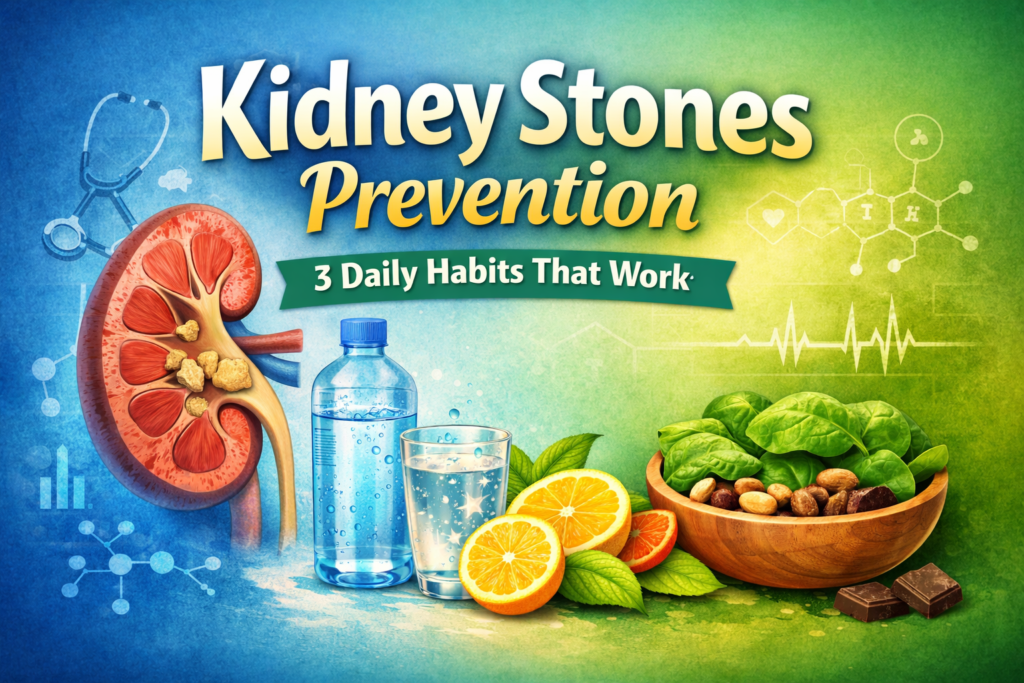
Citrate-rich foods include:
- Lemon
- Lime
- Orange
- Mosambi
- Kiwi
A simple habit like drinking lemon water daily can improve urinary chemistry significantly.
Hack #3: Control Oxalate-Rich Foods (Don’t Eliminate Them)
Oxalate is a naturally occurring compound found in many healthy foods. The issue arises when oxalate intake is high and hydration is low.
High-oxalate foods to watch
- Spinach
- Beetroot
- Sweet potato
- Nuts and seeds
- Chocolate
- Tea
- Sugary beverages
Smart consumption strategy
- Pair oxalate foods with calcium-rich foods
- Prefer cooked vegetables over raw
- Reduce excess sugar and sweetened drinks
You don’t need to avoid these foods completely—balance is the key.
Common Kidney Stone Prevention Questions (High-Search Topics)
Does drinking water really dissolve kidney stones?
Water does not dissolve stones instantly, but it:
- Prevents growth
- Helps small stones pass naturally
- Reduces recurrence
Is calcium bad for kidney stones?
No. Dietary calcium actually helps by binding oxalate in the gut and preventing absorption. The problem lies with excessive calcium supplements, not food-based calcium.
Can kidney stones come back?
Yes. Without lifestyle changes, recurrence rates are high. Hydration and diet discipline drastically reduce repeat episodes.
Are kidney stones more common in summer?
Yes. Higher temperatures increase dehydration, making summer the peak season for stone formation globally.
Additional Lifestyle Habits That Matter
Maintain healthy body weight
Obesity and metabolic disorders increase stone risk by altering urine composition.
Limit excess animal protein
High intake of red meat raises uric acid levels and lowers urinary citrate.
Stay physically active
Movement improves metabolism and hydration awareness.
Monitor urine color
Dark urine indicates dehydration. Pale yellow means you’re on track.
Regional Prevention Insights
United States
- High recurrence rate
- Excess soda and processed food consumption
- Lifestyle changes are more effective than medication for most people
Europe
- Balanced diets already reduce risk
- Consistent hydration remains the biggest challenge
India
- Climate-driven dehydration is the biggest trigger
- Seasonal water intake drops sharply in winter
- Traditional diets need calcium-oxalate balance
Final Takeaway: Prevention Is Simple, Not Easy
Kidney stones may be common—but they are largely preventable.
Daily habits that work everywhere in the world:
- Drink 2.5–3 litres of water daily
- Reduce salt intake
- Add citrate-rich fruits
- Balance oxalate foods
- Maintain an active lifestyle
Consistency—not medication—is the real solution.
Your kidneys don’t need shortcuts. They need discipline.