|
Getting your Trinity Audio player ready...
|
The wait is finally over. After months of anticipation, speculation, and countless fan theories, the official trailer of Ramayana has finally arrived, giving audiences their first comprehensive look at what is being described as one of the most ambitious Indian films ever made.
Directed by Nitesh Tiwari, the film brings together an exceptional cast led by Ranbir Kapoor as Lord Ram, Yash as Ravana, Sai Pallavi as Goddess Sita, and Sunny Deol as Lord Hanuman. From its breathtaking visuals and grand production design to its emotionally powerful storytelling, the trailer immediately establishes that Ramayana is aiming to redefine Indian mythological cinema on a global scale.
Within hours of its release, the trailer dominated social media platforms, with millions of viewers praising its cinematic scale, visual effects, background score, and faithful representation of one of India’s greatest epics. While every major character leaves a strong impression, one performance has become the biggest talking point—Yash’s transformation into Ravana.
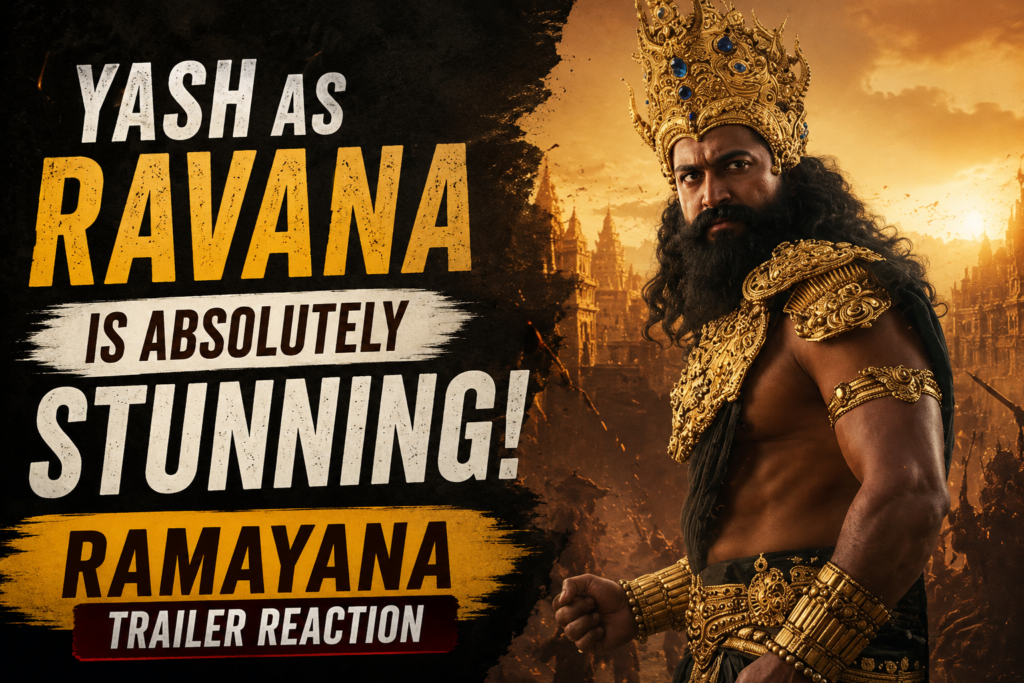
The KGF superstar appears almost unrecognisable, delivering a version of Ravana that feels regal, intelligent, intimidating, and deeply layered. His commanding screen presence has already sparked widespread discussion among fans, many of whom believe he could deliver one of the finest villain performances in Indian cinema.
At the same time, Ranbir Kapoor’s calm and composed portrayal of Lord Ram has received praise for capturing the dignity, compassion, and inner strength associated with one of Hinduism’s most revered figures.
The trailer doesn’t reveal the complete story, but it successfully introduces the central conflict between righteousness and evil while promising a visually spectacular adaptation of the timeless epic.
Let’s take a closer look at the biggest moments from the trailer and why Yash’s Ravana has become the highlight for audiences across the world.
A New Era for Indian Mythological Cinema
Indian cinema has explored mythological stories for decades, but Ramayana appears to raise the bar in every possible way. Rather than relying solely on grand sets and traditional storytelling, the trailer showcases a world built with cutting-edge visual effects, realistic environments, large-scale battle sequences, and cinematic production values designed for a global audience.
Every frame feels carefully crafted. From the dense forests of Ayodhya’s exile to the magnificent kingdom of Lanka, the attention to detail is remarkable. The architecture, costumes, lighting, and colour palette all contribute to creating a believable world that feels both ancient and timeless.
Unlike many mythological adaptations of the past, the trailer balances spectacle with emotion. Instead of overwhelming viewers with action alone, it focuses on the relationships between its central characters, allowing the emotional weight of the story to shine through.
This approach suggests that Ramayana is not simply trying to recreate a familiar tale but present it in a way that resonates with modern audiences while respecting the cultural and spiritual significance of the original epic.
Yash’s Ravana Steals the Spotlight
Although the trailer features several beloved characters, it is Yash’s entrance as Ravana that immediately captures everyone’s attention.
From his very first appearance, Yash commands the screen with extraordinary confidence. His towering physical presence, intense expressions, and measured dialogue create an image of a ruler who is both feared and respected.
Instead of portraying Ravana as a one-dimensional villain, the trailer hints at a far more layered interpretation. His body language reflects absolute authority, while his calm voice suggests intelligence rather than blind rage. This aligns closely with the descriptions found in the ancient epic, where Ravana is portrayed not only as a mighty warrior but also as a brilliant scholar, accomplished musician, and devoted follower of Lord Shiva.
The costume design further enhances the character’s grandeur. Rich royal attire, intricate armour, elaborate jewellery, and carefully designed hairstyles give Ravana the appearance of an emperor whose confidence comes from unmatched power and knowledge.
The cinematography adds another layer of impact. Many of Ravana’s scenes are framed with dramatic lighting and wide-angle shots that emphasise his dominance within the kingdom of Lanka. Even without lengthy dialogue, his presence leaves a lasting impression.
Fans across social media have praised Yash for bringing a fresh interpretation to one of Indian mythology’s most iconic characters. Rather than relying on exaggerated expressions or theatrical performances, he delivers controlled intensity that makes Ravana feel both majestic and dangerous.
If the trailer is any indication, Yash may be set to deliver one of the defining performances of his career.
Ranbir Kapoor Brings Grace to Lord Ram
While Yash dominates with power and intensity, Ranbir Kapoor impresses in a completely different manner.
His portrayal of Lord Ram is calm, composed, and deeply dignified. Every expression reflects compassion, discipline, humility, and unwavering determination—qualities that have always defined Lord Ram in the epic.
The trailer avoids unnecessary heroism or exaggerated action. Instead, it focuses on Ram’s quiet strength, allowing his character to inspire through wisdom rather than aggression.
Ranbir’s physical transformation is also noteworthy. His appearance, traditional attire, disciplined posture, and subtle expressions combine to create a respectful interpretation of one of India’s most revered figures.
Several emotional moments shared with Sai Pallavi’s Sita hint that the film will place significant emphasis on family, sacrifice, duty, and devotion—the emotional pillars that have made the Ramayana timeless across generations.
Rather than presenting Lord Ram as an invincible warrior from the beginning, the trailer suggests audiences will witness his journey through hardship, exile, personal loss, and ultimately the battle between righteousness and evil.
This grounded approach could help both younger audiences and long-time admirers connect more deeply with the character.
Sai Pallavi Looks Graceful as Goddess Sita
Another standout element of the trailer is Sai Pallavi’s portrayal of Goddess Sita.
Known for delivering emotionally authentic performances, Sai Pallavi appears perfectly suited for the role. The trailer presents Sita as graceful, compassionate, resilient, and deeply devoted, reflecting the qualities associated with her character throughout the epic.
Her scenes with Ranbir Kapoor convey warmth and emotional depth without relying on excessive dialogue. Their on-screen chemistry feels natural, making the relationship between Ram and Sita immediately believable.
The costume design complements her performance beautifully. Traditional attire, elegant jewellery, and subtle styling preserve the cultural authenticity of the character while enhancing the film’s visual richness.
Although the trailer reveals only glimpses of Sita’s journey, it strongly suggests that her emotional strength will remain one of the film’s central pillars, reminding audiences why she continues to be one of the most respected female figures in Indian literature and mythology.
As the trailer comes to an end, it becomes clear that Ramayana is not merely another mythological adaptation. It is an ambitious cinematic event that aims to honour one of India’s greatest epics through world-class filmmaking, powerful performances, and emotionally resonant storytelling.
Most importantly, Yash’s commanding portrayal of Ravana has already emerged as one of the trailer’s defining highlights, setting the stage for what promises to be an unforgettable clash between Lord Ram and the mighty king of Lanka.
Sunny Deol’s Hanuman Leaves a Powerful First Impression
Among the many memorable moments in the trailer, Sunny Deol’s portrayal of Lord Hanuman stands out as one of the most emotionally impactful. Although his screen time is limited, every frame featuring Hanuman carries an extraordinary sense of devotion, strength, and unwavering loyalty.
Known for his commanding screen presence and powerful dialogue delivery, Sunny Deol appears to have embraced the spiritual essence of Hanuman rather than focusing solely on physical might. His calm expressions, confident stance, and respectful body language immediately evoke the qualities associated with one of the most beloved characters in the Ramayana.
One particularly striking moment shows Hanuman preparing for battle with complete determination. Without revealing too much, the trailer hints at several iconic moments that audiences have eagerly awaited, including his journey across the ocean and his role in Lord Ram’s mission to rescue Sita.
The visual design of Hanuman is equally impressive. The filmmakers have chosen a realistic approach instead of excessive fantasy, allowing the character to feel grounded while still retaining his divine presence. Combined with modern visual effects, the result feels both authentic and cinematic.
Fans have responded positively to Sunny Deol’s casting, with many believing his personality and voice naturally suit the strength and devotion that define Lord Hanuman.
The Visual Effects Showcase a New Standard for Indian Cinema
One of the trailer’s biggest achievements is its remarkable visual presentation.
For years, audiences have hoped to see an Indian mythological film that could match the technical quality of major international productions while preserving the cultural authenticity of the original story. Based on the trailer, Ramayana appears determined to achieve exactly that.
Every location feels alive.
The forests of exile are filled with natural beauty, rivers reflect realistic lighting, ancient kingdoms feature intricate architecture, and the golden city of Lanka is presented on a breathtaking scale. Instead of relying on artificial-looking computer graphics, the trailer blends practical filmmaking with high-quality visual effects to create an immersive cinematic experience.
The battle sequences also appear significantly larger than those seen in previous Indian mythological films. Massive armies, detailed environments, realistic creature designs, and carefully choreographed action suggest that the filmmakers have invested heavily in creating a world worthy of the epic’s scale.
Lighting plays an equally important role throughout the trailer. Warm colours dominate scenes featuring Ayodhya and Lord Ram, symbolising hope and righteousness, while darker tones surround Ravana and Lanka, creating a visual contrast between the opposing forces without appearing exaggerated.
The attention to detail demonstrates the filmmakers’ commitment to delivering a world-class cinematic experience that can stand proudly alongside international fantasy epics.
A Powerful Background Score Elevates Every Scene
A trailer’s impact often depends as much on its music as its visuals, and Ramayana excels in this area.
The background score perfectly complements the emotional journey shown throughout the trailer. Gentle orchestral melodies accompany peaceful moments between Ram and Sita, while thunderous percussion and soaring choral arrangements build anticipation during scenes featuring Ravana and the coming war.
Rather than overwhelming viewers, the music enhances every emotion on screen.
As Ravana makes his entrance, the score shifts dramatically, introducing darker musical themes that reflect his commanding presence. In contrast, Lord Ram’s scenes are accompanied by uplifting compositions that evoke courage, hope, and spiritual strength.
This careful musical contrast helps establish the personalities of the central characters even before they speak.
If the complete soundtrack maintains the same quality demonstrated in the trailer, it has the potential to become one of the film’s greatest strengths.
Faithful to the Spirit of the Epic
Whenever a filmmaker adapts a story as culturally significant as the Ramayana, one question inevitably arises: Will it remain faithful to the original epic?
Based on the trailer, the answer appears promising.
Rather than attempting to modernise the story unnecessarily, the filmmakers seem focused on preserving its timeless values while presenting them through contemporary filmmaking techniques.
The trailer emphasises the central themes that have defined the Ramayana for centuries:
- Dharma (righteousness)
- Duty and sacrifice
- Devotion and loyalty
- Family values
- The triumph of good over evil
These themes remain universally relevant, allowing both Indian and international audiences to connect with the story regardless of cultural background.
The respectful portrayal of Lord Ram, Sita, Hanuman, and Ravana also reflects a clear intention to honour the original source material instead of reinventing it for dramatic effect.
While the complete film will ultimately determine how faithfully the story has been adapted, the trailer provides encouraging signs that the filmmakers understand the responsibility that comes with bringing such an iconic epic to the big screen.
Why Yash’s Ravana Has Become the Biggest Talking Point
Among all the praise directed towards the trailer, one discussion continues to dominate social media: Yash’s portrayal of Ravana.
There are several reasons why audiences have responded so positively.
First, Yash brings extraordinary screen presence. Every appearance feels powerful without becoming theatrical. His performance relies on subtle expressions, controlled dialogue delivery, and confident body language rather than exaggerated villainous behaviour.
Second, the character design successfully captures Ravana’s complexity. Instead of portraying him as pure evil, the trailer hints at his intelligence, royal authority, military brilliance, and spiritual knowledge—qualities that have always made Ravana one of mythology’s most fascinating antagonists.
Finally, Yash’s physical transformation deserves recognition. His appearance, hairstyle, beard, armour, and overall styling combine to create a version of Ravana that feels fresh while remaining respectful to traditional depictions.
Many fans have already begun comparing this interpretation with previous cinematic portrayals, with some calling it one of the most visually impressive versions ever created.
If the complete film delivers on the promise shown in the trailer, Yash’s Ravana could become one of the defining performances of modern Indian cinema.
A Global Vision for an Indian Epic
One aspect that becomes increasingly clear throughout the trailer is the film’s international ambition.
Ramayana is not simply being made for Indian audiences. Every element—from the cinematography and production design to the visual effects and large-scale action—suggests that the filmmakers aim to introduce this timeless epic to viewers around the world.
At the same time, the trailer never loses sight of its cultural roots.
Traditional costumes, authentic architecture, Sanskrit-inspired aesthetics, and emotionally grounded storytelling ensure that the film retains its Indian identity while embracing world-class filmmaking standards.
Finding this balance is extremely challenging, yet the trailer suggests that the creative team has approached the project with both confidence and respect.
For audiences who have long wished to see Indian mythology presented on a truly global cinematic scale, Ramayana appears ready to become that landmark production.
Hidden Details and Symbolism You May Have Missed
While the Ramayana trailer impresses with its breathtaking visuals and powerful performances, it also rewards attentive viewers with several subtle details that hint at the film’s deeper storytelling.
One of the most noticeable aspects is the contrast in visual language between Ayodhya and Lanka. The scenes featuring Lord Ram are filled with warm golden sunlight, natural landscapes, and peaceful surroundings that represent righteousness, harmony, and hope. In contrast, Ravana’s kingdom is presented with darker shades, towering architecture, dramatic lighting, and an atmosphere that reflects power, ambition, and impending conflict.
The filmmakers also use symbolism throughout the trailer. The recurring imagery of bows, arrows, fire, temples, and sacred forests reinforces the spiritual journey of the characters rather than focusing only on large-scale action.
Even the costume design tells a story. Lord Ram’s attire remains simple and dignified, reflecting humility and discipline despite his royal heritage. Ravana, on the other hand, is surrounded by elaborate armour, luxurious ornaments, and royal insignia that highlight his immense wealth, authority, and pride.
These visual choices demonstrate that the creative team has carefully considered every frame, allowing the trailer to communicate character development without relying heavily on dialogue.
Audience Reactions Have Been Overwhelmingly Positive
Within hours of its release, the Ramayana trailer became one of the most talked-about topics across social media platforms. Fans, film critics, and industry professionals praised the film’s grand scale, stunning visuals, and respectful adaptation of one of India’s most cherished epics.
The response has been particularly strong for Yash’s portrayal of Ravana. Viewers have described his performance as commanding, intense, and refreshingly different from previous cinematic interpretations. Many believe that his version captures both the intelligence and the intimidating authority traditionally associated with the King of Lanka.
Ranbir Kapoor has also received widespread appreciation for portraying Lord Ram with restraint and dignity. Rather than presenting the character as an action hero, the trailer focuses on his calm leadership, compassion, and unwavering commitment to dharma.
Sai Pallavi’s graceful screen presence as Sita and Sunny Deol’s powerful appearance as Hanuman have further strengthened positive reactions, with many viewers praising the casting choices across the board.
Film enthusiasts have also applauded the technical quality of the production. From cinematography and production design to visual effects and background score, audiences believe the trailer represents a significant milestone for Indian filmmaking.
Although expectations are naturally high, the overwhelmingly positive first response indicates that Ramayana has already succeeded in generating enormous excitement ahead of its theatrical release.
Why This Could Become a Landmark Film for Indian Cinema
Indian mythology has inspired countless films over the decades, but Ramayana appears determined to establish a new benchmark for cinematic storytelling.
The project combines respected performers, experienced filmmakers, cutting-edge visual effects, and one of the world’s greatest literary epics. More importantly, the trailer suggests that the filmmakers are approaching the story with sincerity rather than simply relying on spectacle.
If the complete film successfully balances emotional storytelling with technical excellence, it could influence how future mythological films are produced in India.
The movie also has the potential to introduce the timeless values of the Ramayana to younger generations and international audiences who may be unfamiliar with the epic. Themes such as truth, sacrifice, courage, loyalty, compassion, and the victory of good over evil remain universally relevant regardless of culture or language.
In many ways, Ramayana represents more than just another major film release—it reflects the growing confidence of Indian cinema in telling culturally significant stories on a global stage.
Final Verdict
The official Ramayana trailer delivers exactly what audiences hoped for—an emotionally rich, visually spectacular, and culturally respectful adaptation of one of India’s greatest epics.
Every major cast member leaves a lasting impression. Ranbir Kapoor brings dignity and quiet strength to Lord Ram, Sai Pallavi portrays Sita with grace and emotional depth, and Sunny Deol’s Hanuman radiates devotion and courage. Yet it is Yash who unexpectedly steals much of the spotlight. His portrayal of Ravana is commanding, intelligent, regal, and deeply intimidating, suggesting a performance that could become one of the defining villain roles in modern Indian cinema.
Beyond the performances, the trailer showcases remarkable production values, stunning visual effects, detailed world-building, and a powerful musical score that together create an experience unlike any previous mythological adaptation.
Most importantly, the trailer demonstrates a genuine respect for the spiritual and cultural significance of the Ramayana. Rather than relying solely on visual spectacle, it promises a story rooted in timeless values of righteousness, sacrifice, loyalty, and the triumph of good over evil.
If the complete film lives up to the promise shown in its first trailer, Ramayana has every opportunity to become not only one of the biggest Indian films ever produced but also a landmark achievement that introduces India’s greatest epic to audiences across the world.
For now, one thing is certain: the battle between Lord Ram and Ravana has never looked more spectacular, and Yash’s unforgettable first appearance has already ensured that this cinematic clash will remain one of the year’s most anticipated events.
FAQs
Who plays Ravana in Ramayana?
Kannada superstar Yash portrays Ravana, bringing a powerful and layered interpretation to one of Indian mythology’s most iconic characters.
Who is playing Lord Ram?
Ranbir Kapoor stars as Lord Ram, presenting a calm, disciplined, and emotionally grounded portrayal of the legendary prince of Ayodhya.
Who plays Sita in the film?
National Award-winning actress Sai Pallavi portrays Goddess Sita, emphasising compassion, resilience, and unwavering devotion.
Who plays Lord Hanuman?
Veteran actor Sunny Deol takes on the role of Lord Hanuman, whose courage and devotion are central to the Ramayana.
Who is directing Ramayana?
The film is directed by Nitesh Tiwari, known for acclaimed films such as Dangal and Chhichhore.
Why has Yash’s performance received so much attention?
The trailer presents Ravana as a complex emperor rather than a conventional villain. Yash’s commanding screen presence, physical transformation, and restrained performance have made him one of the trailer’s most discussed highlights.