|
Getting your Trinity Audio player ready...
|
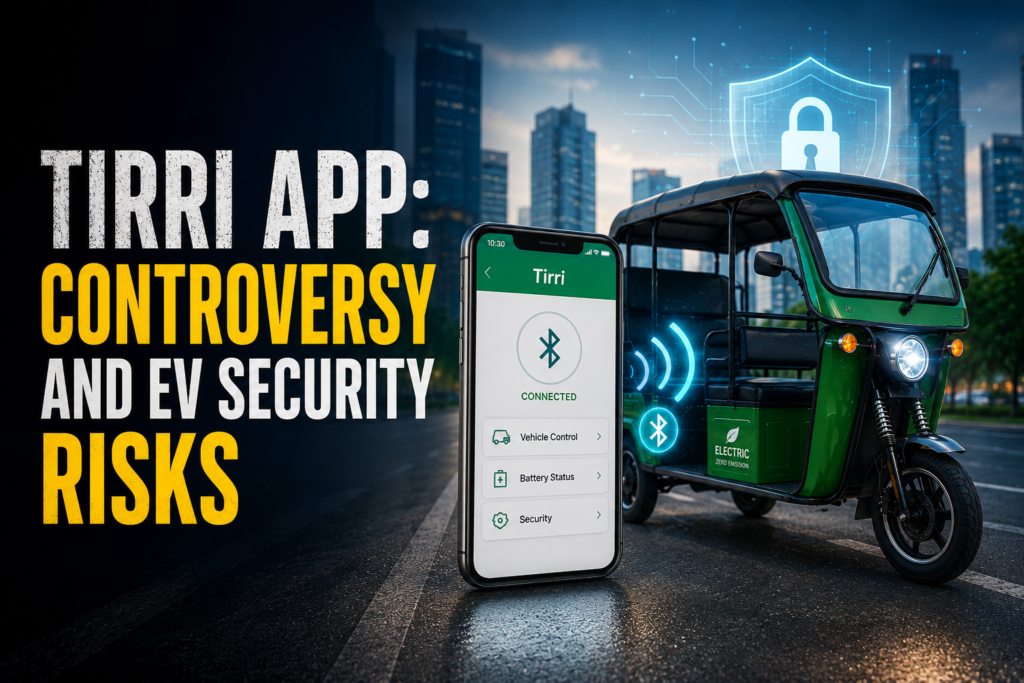
Electric vehicles are transforming transportation across India. From electric scooters and bikes to thousands of e-rickshaws operating in cities and villages, EV adoption is growing rapidly. However, a recent viral trend known as the “Tirri App” controversy has raised serious concerns about the cybersecurity of connected electric vehicles.
Videos circulating on social media have shown individuals allegedly using a mobile application to remotely stop certain e-rickshaws, commonly known as “tirris,” causing confusion, disruption, and potential safety risks. While many people initially believed that the app was hacking vehicles, the reality is more complex and highlights an important weakness in some low-cost EV battery systems.
This incident has sparked a nationwide discussion about EV security, battery management systems, and the future of connected mobility in India.
What Is the Tirri App?
The term “Tirri App” became popular after videos appeared online showing users connecting to nearby e-rickshaws and reportedly disabling them remotely. The app being discussed is generally linked to BAT BMS, a battery management application designed for monitoring and controlling lithium battery packs used in electric vehicles and energy storage systems.
Originally, BAT BMS was developed as a legitimate tool for battery owners. It allows users to monitor battery health, voltage, temperature, charging status, and other important parameters. Such applications are commonly used worldwide to manage lithium-ion batteries more efficiently.
The controversy emerged when users discovered that some battery systems could be accessed through Bluetooth without proper security controls, allowing unauthorized individuals to connect to nearby batteries and manipulate certain settings.
Why Is the Tirri App Affecting E-Rickshaws?
The issue does not affect every electric vehicle. Most reports indicate that the problem is primarily associated with certain budget e-rickshaws equipped with Bluetooth-enabled Battery Management Systems (BMS) that lack password protection or advanced security features.
A Battery Management System acts as the brain of a lithium battery. It controls charging, discharging, temperature monitoring, and overall battery safety.
In some low-cost battery packs:
- Bluetooth remains enabled by default.
- No authentication is required.
- No encryption is used.
- Critical controls remain accessible after connection.
If someone connects to such a battery through the app, they may be able to switch off battery discharge functions, which can stop power delivery to the vehicle. As a result, the e-rickshaw may suddenly stop operating.
How Does the Technology Work?
To understand the issue, it is important to understand how modern lithium batteries operate.
A Battery Management System continuously monitors:
- Battery voltage
- Cell balancing
- Temperature
- Charging cycles
- Current flow
- Safety protection mechanisms
Many manufacturers add Bluetooth functionality so vehicle owners can check battery health from a smartphone.
The problem arises when these Bluetooth connections are left unsecured. Instead of requiring a password or encrypted communication, some systems allow any nearby device to connect. Once connected, a user may gain access to functions intended only for the battery owner.
Experts emphasize that this is not a sophisticated hacking attack. Rather, it is a security design flaw where legitimate functionality is exposed without adequate protection.
Is Every EV Vulnerable?
No.
The viral videos have created the impression that all electric vehicles can be remotely controlled, but that is inaccurate.
Most modern electric cars, premium electric scooters, and branded EV manufacturers use secure communication protocols, encrypted systems, authentication layers, and advanced cybersecurity measures. The reported vulnerability mainly affects certain low-cost battery systems using unsecured Bluetooth-enabled BMS units.
Vehicles using:
- Secure BMS platforms
- Password-protected battery systems
- Encrypted Bluetooth communication
- Enterprise-grade EV software
are significantly less likely to face similar issues.
Why This Matters for India’s EV Industry
India has become one of the world’s fastest-growing EV markets. Government initiatives, lower operating costs, and increasing fuel prices have accelerated EV adoption across multiple segments.
E-rickshaws have played a major role in this transformation. Industry estimates suggest that more than a million electric rickshaws operate across the country, providing affordable transportation and employment opportunities.
As EVs become more connected, cybersecurity becomes just as important as battery capacity and driving range.
The Tirri App controversy highlights several critical concerns:
1. Cybersecurity Standards
Many battery manufacturers focus on affordability but may overlook cybersecurity protections. Stronger standards will be needed to ensure connected systems remain secure.
2. Consumer Awareness
Many vehicle owners are unaware that their batteries include Bluetooth connectivity. Drivers should understand how their battery systems operate and what security settings are available.
3. Regulatory Oversight
The incident has prompted discussions around stronger regulations for connected EV components, especially battery management systems used in commercial vehicles.
4. Industry Reputation
Negative viral trends can damage public confidence in electric mobility even when the issue affects only a small segment of vehicles.
EV Cybersecurity: A Growing Global Concern
The Tirri App controversy is not an isolated issue.
Globally, researchers have been studying cybersecurity risks related to electric vehicles and charging infrastructure for years. As vehicles become connected through mobile apps, cloud services, Bluetooth, Wi-Fi, and charging networks, cybersecurity threats become increasingly important. Academic studies have identified vulnerabilities in EV charging ecosystems and communication protocols, emphasizing the need for stronger security frameworks across the industry.
Modern EV ecosystems rely on communication between:
- Vehicles
- Battery systems
- Charging stations
- Mobile applications
- Cloud platforms
Every connection point must be secured to prevent unauthorized access.
How E-Rickshaw Owners Can Protect Their Vehicles
Owners can take several practical steps to reduce risk:
Enable Password Protection
If the BMS supports authentication, set a strong password immediately.
Disable Unnecessary Bluetooth Access
If Bluetooth monitoring is not required, disabling it can eliminate many potential risks.
Update Firmware Regularly
Manufacturers often release updates that address security weaknesses and improve reliability.
Choose Reputable Battery Suppliers
High-quality battery systems generally offer stronger cybersecurity features and better technical support.
Conduct Periodic Security Checks
Owners should verify whether unknown devices can connect to their battery systems.
The Bigger Lesson for the EV Industry
The Tirri App controversy serves as a reminder that the future of transportation is not only electric but also digital.
Battery capacity, charging speed, and range remain important, but cybersecurity is becoming equally critical. As EV adoption continues to expand, manufacturers, regulators, and consumers must work together to ensure connected vehicle systems are protected against misuse.
The incident has exposed weaknesses in certain battery management systems, but it has also created an opportunity for the industry to improve standards and build more secure electric mobility solutions.
Conclusion
The Tirri App itself was never designed to disrupt vehicles. The real issue lies in unsecured Battery Management Systems found in some low-cost e-rickshaw battery packs. The viral trend simply exposed vulnerabilities that already existed.
While the controversy has generated concern across India, it should be viewed as a cybersecurity wake-up call rather than a reason to lose confidence in electric vehicles. Most modern EVs remain secure, and manufacturers are increasingly investing in stronger protection mechanisms.
As India moves toward a cleaner and more connected transportation future, cybersecurity will become a fundamental part of EV safety. The Tirri App controversy may ultimately be remembered as the moment that pushed the industry to take connected vehicle security more seriously.
FAQs
What is the Tirri App?
The Tirri App is a term associated with a viral trend involving BAT BMS battery management software that can connect to certain Bluetooth-enabled battery systems.
Does the Tirri App affect all EVs?
No. Reports suggest the issue mainly affects some e-rickshaws using unsecured Bluetooth-enabled battery management systems.
Can the app really stop an e-rickshaw?
In vulnerable battery systems, users may be able to disable battery discharge functions, causing the vehicle to stop operating.
Is the app illegal?
The application itself is a legitimate battery management tool. However, unauthorized access to someone else’s vehicle systems may violate Indian cyber and criminal laws.
How can EV owners stay protected?
Using secure battery systems, enabling passwords, updating firmware, and disabling unnecessary Bluetooth access can significantly reduce risks.