|
Getting your Trinity Audio player ready...
|

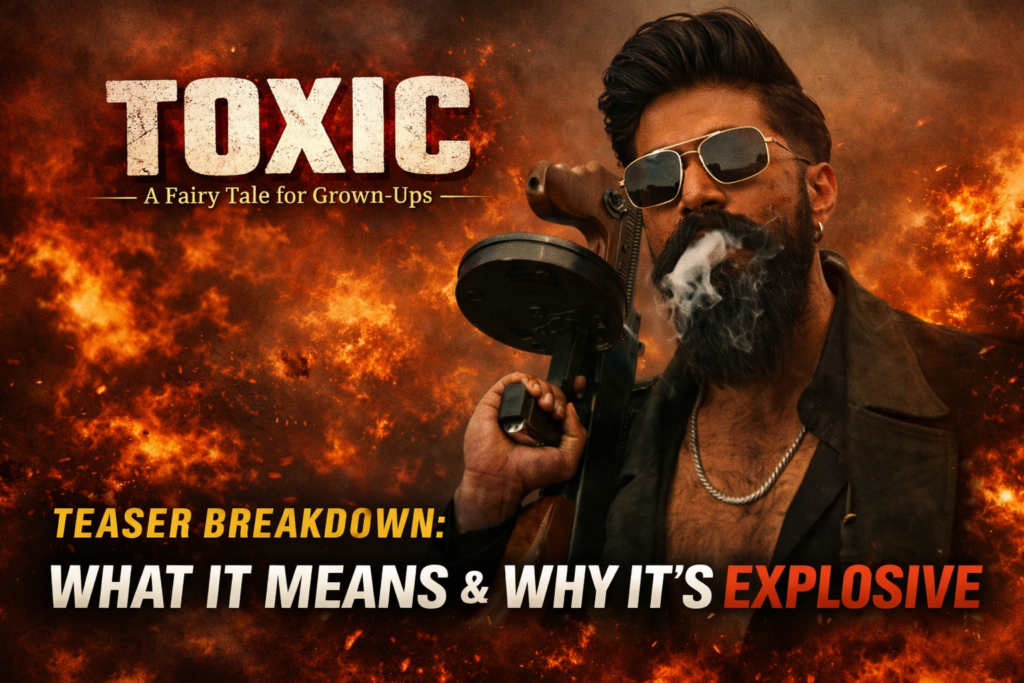
The Toxic teaser doesn’t try to be subtle. It doesn’t ease you in. It hits hard from the first frame and dares you to look away. That’s exactly why it has become one of the most discussed teasers in recent times.
Starring Yash in a raw, unapologetic avatar, Toxic: A Fairy Tale for Grown-Ups is clearly not aiming to be a safe or predictable film. The teaser makes that obvious. It sets a tone that is bold, chaotic, stylish, and emotionally intense.
But beyond the explosions and swagger, this teaser is doing something deeper. It’s creating curiosity. It’s dividing opinions. And most importantly, it’s forcing people to talk.

First Impressions: Shock, Power, and Presence
The teaser opens with high-intensity visuals that immediately pull the viewer into its world. Smoke, fire, sharp lighting, and rapid cuts dominate the screen. There is no slow build-up. The film announces itself loudly.
Yash’s entry as Raya is designed to feel larger than life. His body language, expressions, and screen presence are crafted to make him feel unstoppable. This is not a character who blends into the world. This is a character who bends the world around him.
The teaser focuses less on story and more on attitude. It wants you to feel the film before you understand it.
Why the Teaser Feels So Different
Most teasers try to introduce a story. Toxic does the opposite. It introduces a mood.
Instead of explaining who Raya is, the teaser shows what he represents. Chaos. Power. Defiance. Mystery.
This approach makes the teaser emotionally engaging but narratively vague. Some viewers love this. Others hate it. And that’s intentional.
A teaser that divides opinion spreads faster than one everyone agrees on.
The Visual Language of Toxic
Visually, Toxic is loud, aggressive, and stylized. It blends modern mass cinema energy with darker, grittier tones.
The camera work is dynamic. The lighting is dramatic. The frames are designed to look iconic rather than realistic.
This tells us one thing: the film isn’t trying to be grounded. It’s trying to be memorable.
This kind of visual design usually indicates a larger-than-life narrative, where symbolism matters more than realism.
Yash’s Character: More Than Just a Hero
From what we see, Raya is not a traditional hero. He feels dangerous. Unpredictable. Almost myth-like.
The teaser suggests that he is not someone who reacts to the world. He controls it.
This is important. Modern audiences are moving away from clean heroes. They want flawed, intense, morally grey characters. Toxic seems to be leaning into that shift.
Raya is being built as a force, not a man.
Why the Teaser Is Being Called “Toxic”
The title is not random. The teaser lives up to it.
- It doesn’t feel comforting.
- It doesn’t feel safe.
- It doesn’t try to please everyone.
- It feels confrontational.
The visuals, tone, and pacing create discomfort. That discomfort is intentional. It reflects a world where power is messy, emotions are raw, and control is unstable.
A “toxic” world is one where beauty and destruction exist together.
Audience Reactions: Love, Criticism, and Debate
This teaser has triggered intense discussions.
Some viewers praise it for being bold and fearless. They love Yash’s screen presence and the unapologetic tone.
Others criticize it for being over-stylized, confusing, or morally questionable.
And that’s exactly why it’s working.
If everyone liked it, it would be forgotten. If everyone hated it, it would fail. But when people argue, analyze, and debate—it stays alive.
Toxic has already won the attention war.
The Power of Mystery Marketing
One of the smartest things this teaser does is not explaining itself.
- We don’t know the full story.
- We don’t know the motivation.
- We don’t know the emotional arc.
This forces the audience to speculate.
Speculation creates engagement.
Engagement creates hype.
Hype creates demand.
This is classic psychological marketing—and Toxic executes it well.
Symbolism Over Storytelling
The teaser uses symbols instead of scenes.
Fire represents destruction.
Smoke represents confusion.
Slow-motion walks represent dominance.
Close-ups represent intensity.
These visual cues tell you how to feel, even if you don’t know why.
This is emotional storytelling.
Why Some People Feel Uncomfortable
Not all discomfort is bad.
This teaser makes some viewers uneasy because it doesn’t spoon-feed morality. It doesn’t tell you what’s right or wrong.
It just shows power.
And power without context can feel threatening.
That reaction proves the teaser is doing its job.
What This Teaser Suggests About the Film
Based on this teaser, we can expect:
A dark and intense narrative
A morally complex protagonist
High visual stylization
Controversial moments
Strong emotional conflict
This will not be a light film.
This will be a film that challenges.
The Risk of This Approach
This type of teaser is risky.
- If the final film doesn’t deliver depth, the teaser will be called misleading.
- If the story isn’t strong, the style will feel empty.
- If the emotions don’t connect, the visuals won’t matter.
Bold teasers demand bold storytelling.
Why Toxic Already Feels Like an Event Film
Event films don’t just release. They arrive.
Toxic feels like that.
It doesn’t ask for attention.
It demands it.
That’s rare.
Final Thoughts
The Toxic teaser is not meant to comfort you. It’s meant to disturb, provoke, and intrigue.
- It’s loud.
- It’s chaotic.
- It’s stylish.
- It’s controversial.
And that’s exactly why people can’t stop talking about it.
Whether you love it or hate it, one thing is undeniable:
This teaser did its job.