|
Getting your Trinity Audio player ready...
|
Fuel prices have once again become a major concern for millions of Indians. Whether you own a car, ride a bike, operate a business, or depend on public transportation, rising petrol and diesel prices affect almost every aspect of daily life.
In 2026, fuel prices have witnessed noticeable increases across several cities in India. As consumers struggle with higher transportation costs, many are asking the same question: Why are petrol and diesel prices rising again?
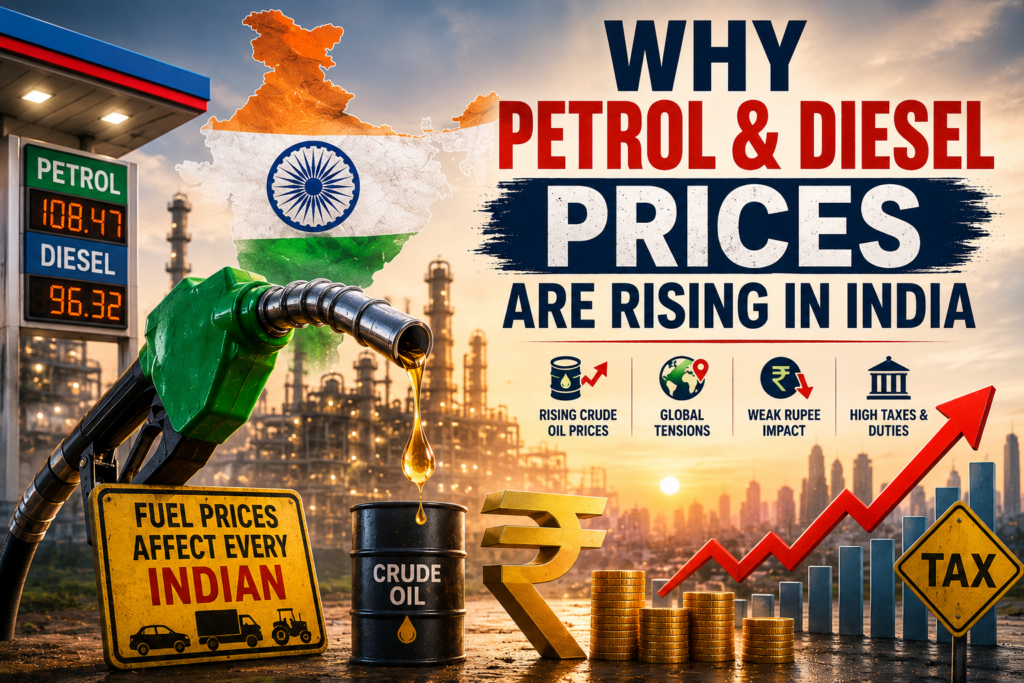
The answer lies in a combination of global events, crude oil market fluctuations, taxation policies, currency movements, and supply chain challenges. Understanding these factors can help explain why fuel prices remain volatile and what consumers can expect in the coming months.
- India's Dependence on Imported Crude Oil
- Rising Crude Oil Prices Across the World
- Impact of Middle East Tensions on Fuel Prices
- The Role of the Indian Rupee
- Government Taxes and Fuel Pricing
- How Rising Fuel Prices Affect Everyday Life
- Impact on Businesses
- Can Fuel Prices Increase Further?
- What Consumers Can Do to Reduce Fuel Expenses
- The Bigger Economic Picture
India’s Dependence on Imported Crude Oil
One of the biggest reasons fuel prices rise in India is the country’s dependence on imported crude oil.
India imports a significant portion of its oil requirements from international markets. Since crude oil serves as the primary raw material for petrol and diesel production, any increase in global oil prices directly impacts domestic fuel rates.
When international oil prices rise, Indian oil companies have to spend more money to purchase crude oil. These additional costs are eventually reflected in the retail prices paid by consumers.
Rising Crude Oil Prices Across the World
Global crude oil prices play a critical role in determining fuel costs in India.
Several factors can push crude oil prices higher:
- Geopolitical conflicts
- Supply disruptions
- Production cuts by oil-producing nations
- Increased global demand
- Economic recovery in major countries
In 2026, growing tensions in key oil-producing regions have created uncertainty in energy markets. Whenever investors fear disruptions in oil supply, crude prices tend to rise rapidly.
Since oil is traded globally, even events occurring thousands of kilometers away can significantly impact fuel prices in India.
Impact of Middle East Tensions on Fuel Prices
The Middle East remains one of the world’s most important oil-producing regions.
Any conflict, military activity, or disruption in this region can affect global oil supplies. In recent months, concerns regarding shipping routes and energy security have pushed crude oil prices upward.
Many oil tankers carrying crude oil to Asian countries pass through strategic maritime routes. If these routes face disruptions, transportation costs increase and global oil markets react immediately.
As a result, countries like India that rely heavily on imported oil experience higher fuel costs.
The Role of the Indian Rupee
Another important factor affecting fuel prices is the value of the Indian rupee against the U.S. dollar.
Crude oil is purchased in dollars. If the rupee weakens against the dollar, Indian companies need more rupees to buy the same amount of oil.
Even if global crude prices remain unchanged, a weaker rupee can increase import costs and push fuel prices higher.
This is why exchange rates often have a direct impact on petrol and diesel pricing in India.
Government Taxes and Fuel Pricing
Taxes form a significant portion of fuel prices in India.
The final price consumers pay includes:
- Crude oil cost
- Refining charges
- Transportation expenses
- Dealer commissions
- Central taxes
- State taxes
While global crude oil prices influence fuel costs, taxation policies also play a major role in determining retail prices.
Any change in tax rates can either increase or decrease the final price paid by consumers.
How Rising Fuel Prices Affect Everyday Life
Many people assume fuel price increases only affect vehicle owners. In reality, the impact extends throughout the economy.
Higher diesel prices increase transportation costs for:
- Food products
- Consumer goods
- Agricultural supplies
- E-commerce deliveries
- Industrial materials
As logistics costs rise, businesses often pass these expenses on to consumers.
This leads to higher prices for everyday products and contributes to inflation.
Impact on Businesses
Businesses across multiple industries feel the effects of rising fuel costs.
Sectors most affected include:
Transportation and Logistics
Truck operators, delivery companies, and logistics providers face higher operating expenses when diesel prices rise.
Manufacturing
Manufacturers spend more on transporting raw materials and finished goods.
Agriculture
Farmers rely on diesel-powered equipment and transportation services. Rising fuel costs can increase agricultural expenses and affect food prices.
Tourism and Travel
Airlines, bus operators, taxi services, and travel companies often face higher operational costs during periods of rising fuel prices.
Can Fuel Prices Increase Further?
The future direction of petrol and diesel prices depends on several factors:
- Global crude oil prices
- International conflicts
- Currency exchange rates
- Government taxation policies
- Global economic growth
- Oil production levels
If crude oil prices continue to rise globally, Indian consumers may see additional fuel price increases.
However, if supply conditions improve and geopolitical tensions ease, prices could stabilize.
What Consumers Can Do to Reduce Fuel Expenses
While fuel prices are beyond individual control, consumers can take steps to reduce their fuel consumption.
Use Public Transport
Using buses, metros, and shared transportation can significantly reduce fuel expenses.
Maintain Vehicles Regularly
Well-maintained vehicles consume less fuel and perform more efficiently.
Avoid Unnecessary Trips
Planning travel routes and combining errands can reduce fuel consumption.
Consider Electric Vehicles
Electric vehicles are becoming increasingly popular as an alternative to traditional fuel-powered transportation.
Practice Fuel-Efficient Driving
Smooth acceleration and maintaining steady speeds can improve fuel efficiency.
The Bigger Economic Picture
Fuel prices are often considered a key indicator of economic health.
When fuel costs rise sharply, businesses face higher expenses, consumers spend more on transportation, and inflationary pressures increase across the economy.
Governments and policymakers closely monitor fuel prices because they influence economic growth, consumer spending, and overall market stability.
For a country like India, managing fuel costs remains an important economic challenge.
Conclusion
The rise in petrol and diesel prices in India during 2026 is driven by a combination of global crude oil market trends, geopolitical tensions, currency fluctuations, taxation policies, and supply chain challenges.
While consumers feel the immediate impact at fuel stations, the effects extend far beyond transportation, influencing inflation, business operations, and household budgets.
As global energy markets continue to evolve, fuel prices will remain one of the most closely watched economic indicators in India. Understanding the factors behind these price increases helps consumers make informed decisions and prepare for future changes in the energy landscape.