|
Getting your Trinity Audio player ready...
|

Lohri is one of the most vibrant and joyful festivals of North India, especially celebrated in Punjab, Haryana, Himachal Pradesh, and parts of Delhi. People mark this festival in mid-January with bonfires, folk songs, dancing, and heartfelt celebrations. However, Lohri is more than just music and fun—it is deeply connected to nature, harvest, and gratitude.
Essentially, Lohri celebrates the end of winter and the arrival of longer, warmer days. At the same time, it honors the hard work of farmers and the promise of a new agricultural season.
The Seasonal Significance of Lohri
First and foremost, Lohri celebrates the winter solstice phase. During this time, the Sun begins its northward journey, bringing more daylight and warmth.

For farming communities, this change holds great importance. Winter crops like wheat grow during this season, and farmers eagerly wait for their harvest. Lohri marks the near completion of the Rabi crop cycle.
Therefore, people light bonfires to symbolize the return of warmth, hope, and new beginnings.
Lohri and Agricultural Life
Agriculture forms the backbone of Lohri.
Farmers sow wheat in winter and harvest it in spring. Lohri falls right in the middle of this waiting period. As a result, the festival becomes a moment of anticipation, gratitude, and prayer.
People thank nature for protecting their crops from frost and harsh weather. They also pray for a healthy harvest in the coming months.
Thus, Lohri stands as a celebration of faith in nature’s cycle.
The Spiritual Meaning of Lohri
Beyond farming, Lohri carries deep spiritual symbolism.
The bonfire represents the Sun’s energy. It stands for light, warmth, and life. People circle the fire, offer food, and pray for prosperity.
Moreover, the act of offering sesame seeds, jaggery, peanuts, and popcorn into the fire reflects gratitude. These items also have warming properties, making them ideal for winter consumption.
Through these rituals, Lohri teaches humility and thankfulness.
Folk Stories Associated With Lohri
Interestingly, Lohri is also connected to folklore.
One of the most popular legends is that of Dulla Bhatti, a Punjabi hero who helped poor girls get married and protected them from exploitation. People still sing songs praising his bravery during Lohri celebrations.
Because of these stories, Lohri also symbolizes justice, courage, and kindness.
How Lohri Is Celebrated
Lohri celebrations begin after sunset.
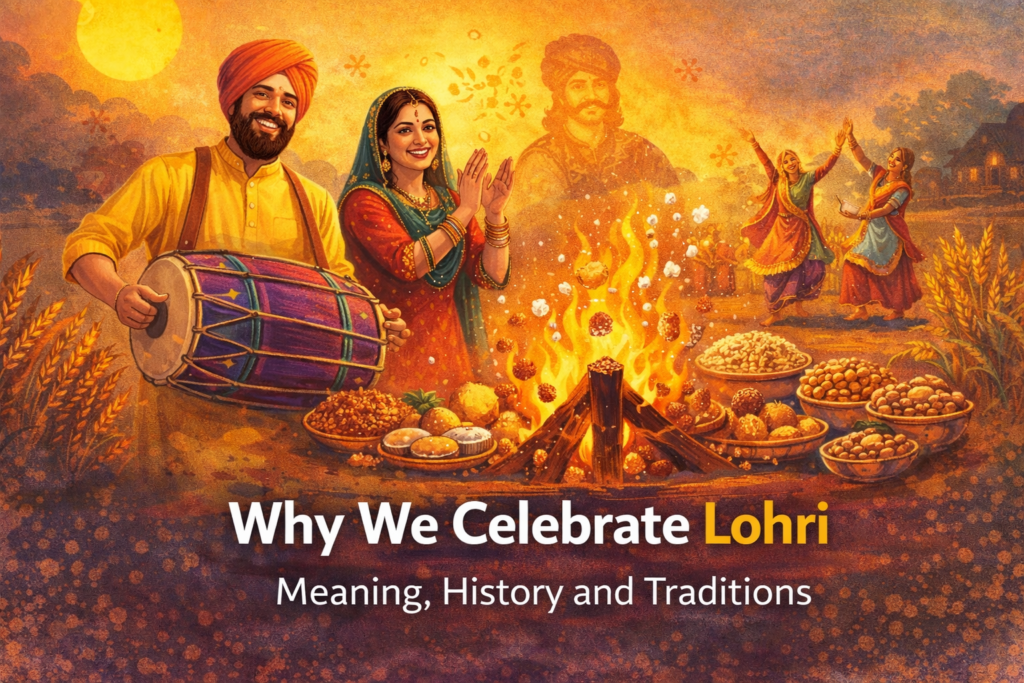
People gather around a bonfire, sing folk songs, clap, and dance. Children throw offerings like peanuts, puffed rice, and sweets into the fire.
Meanwhile, families exchange greetings and share traditional foods.
This shared experience strengthens bonds and spreads joy.
Traditional Foods of Lohri
Food plays a major role in Lohri.
Popular Lohri treats include:
Rewari
Gajak
Peanuts
Popcorn
Til sweets
Jaggery-based snacks
These foods are rich in energy and warmth, perfect for winter.
More importantly, sharing these items promotes generosity and togetherness.
Lohri and New Beginnings
Lohri holds special importance for newlyweds and newborns.
Families celebrate the first Lohri after marriage or childbirth with extra joy. They invite relatives, distribute sweets, and offer prayers for happiness and good fortune.
Thus, Lohri becomes a symbol of fresh starts and blessings.
Cultural Importance of Lohri
Lohri reflects the soul of Punjabi culture.
Bhangra and Gidda dances fill the air. Dhol beats create an atmosphere of excitement. People wear colorful clothes and celebrate with open hearts.
Unlike quiet festivals, Lohri bursts with life and laughter.
It brings people out of their homes and into shared spaces, strengthening social harmony.
Why Lohri Still Matters Today
In modern times, people often live far from farms and natural cycles. They forget how seasons affect life.
However, Lohri reconnects people with nature.
It reminds them that warmth is precious, food is valuable, and community is essential.
As people face fast-paced urban lives, Lohri encourages them to slow down, gather, and celebrate together.
Environmental Lessons From Lohri
Although traditional, Lohri carries strong environmental values.
- It respects natural cycles.
- It celebrates sunlight.
- It honors crops.
- It promotes gratitude for resources.
These values align perfectly with modern sustainability goals.
Lohri Across Regions
While Lohri is most famous in Punjab, similar winter harvest festivals exist elsewhere.
Makar Sankranti in North India
Pongal in Tamil Nadu
Magh Bihu in Assam
Uttarayan in Gujarat
All these festivals share one common message: thank nature, celebrate harvest, and welcome change.
Life Lessons From Lohri
Lohri teaches simple yet powerful lessons:
Celebrate change.
Share happiness.
Respect nature.
Honor hard work.
Value relationships.
These lessons remain relevant in every generation.
Conclusion
Lohri is not just about bonfires and music.
- It is about warmth—both physical and emotional.
- It celebrates the Sun, the soil, and the soul.
- It teaches people to be thankful, hopeful, and united.
In a world that often rushes ahead, Lohri invites everyone to pause, gather, and celebrate life