|
Getting your Trinity Audio player ready...
|

Makar Sankranti is one of the most ancient and widely celebrated festivals in India. Unlike many Indian festivals that follow the lunar calendar, Makar Sankranti is based on the solar calendar and usually falls on January 14 every year. This festival marks the transition of the Sun into the zodiac sign of Capricorn, known as “Makara” in Sanskrit.
This celestial movement is considered extremely auspicious in Indian culture because it signifies the end of the harsh winter phase and the beginning of longer, warmer days. It is believed that from this day onward, positive energy increases on Earth.
Astronomical Significance
Makar Sankranti is linked directly to the Sun’s movement. On this day, the Sun begins its northward journey, known as Uttarayan. In Hindu belief, this phase is considered favorable for spiritual growth, prosperity, and new beginnings.

It is believed that people who die during Uttarayan attain salvation. This belief makes Makar Sankranti deeply spiritual, not just cultural.
Agricultural Importance
India has always been an agrarian society. Makar Sankranti is celebrated as a harvest festival in many parts of the country. Farmers express gratitude for a successful crop season and pray for prosperity in the coming year.
This festival symbolizes:
- End of the winter harvest season
- Beginning of a new agricultural cycle
- Celebration of abundance
- Gratitude toward nature
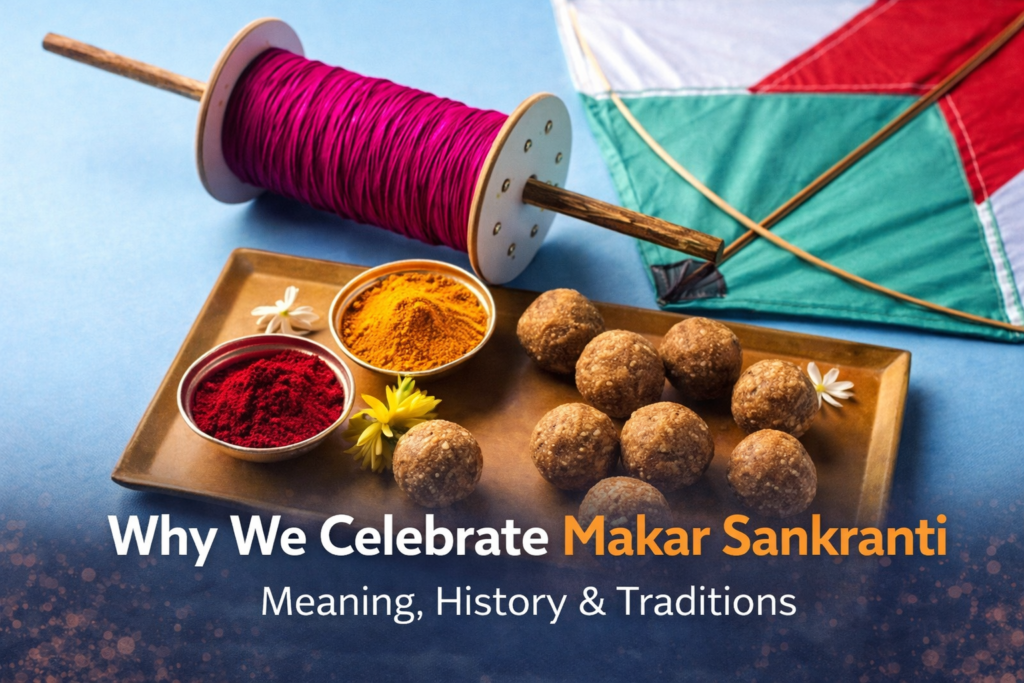
Food plays a major role in Sankranti celebrations. Dishes made from freshly harvested crops, especially sesame seeds and jaggery, are prepared. These ingredients are believed to generate warmth and energy during winter.
Spiritual Meaning
Makar Sankranti represents the victory of light over darkness, knowledge over ignorance, and hope over despair. It encourages people to:
- Let go of past negativity
- Start fresh
- Be kind and generous
- Focus on spiritual upliftment
Donations are a key ritual on this day. People donate food, clothes, money, and essentials to the poor. Charity on Makar Sankranti is believed to bring divine blessings.
Cultural Traditions Across India
Though Makar Sankranti is one festival, it is celebrated in many regional forms:
- In Gujarat and Rajasthan, people fly colorful kites, symbolizing freedom and joy.
- In Maharashtra, people exchange sweets made of sesame and jaggery and say, “Til gul ghya, god god bola,” which means “Accept these sweets and speak sweetly.”
- In Uttar Pradesh and Bihar, people take holy dips in rivers like Ganga and perform rituals.
- In South India, the festival is celebrated as Pongal.
- In Punjab, it is observed as Lohri.
Why Til and Jaggery Are Important
Sesame seeds and jaggery are not chosen randomly. According to Ayurveda:
- Sesame keeps the body warm
- Jaggery boosts immunity
- Both symbolize sweetness in relationships
Sharing these sweets teaches people to forget bitterness and start the new phase of life with kindness.
Social Importance
Makar Sankranti brings families and communities together. People visit each other’s homes, exchange food, and celebrate with music and joy. It strengthens social bonds and promotes unity.
In today’s fast-paced life, festivals like Sankranti remind us to pause, reconnect with roots, and express gratitude.
Modern-Day Relevance
Even in modern times, Makar Sankranti remains deeply relevant. It encourages sustainable living, respect for nature, and appreciation for farmers. It also reminds us that change is natural and every ending leads to a new beginning.
Conclusion
Makar Sankranti is more than just a festival—it is a celebration of life, light, renewal, and gratitude. It blends science, spirituality, and culture beautifully. It teaches us to welcome change with positivity, to respect nature, and to share joy with others.