|
Getting your Trinity Audio player ready...
|

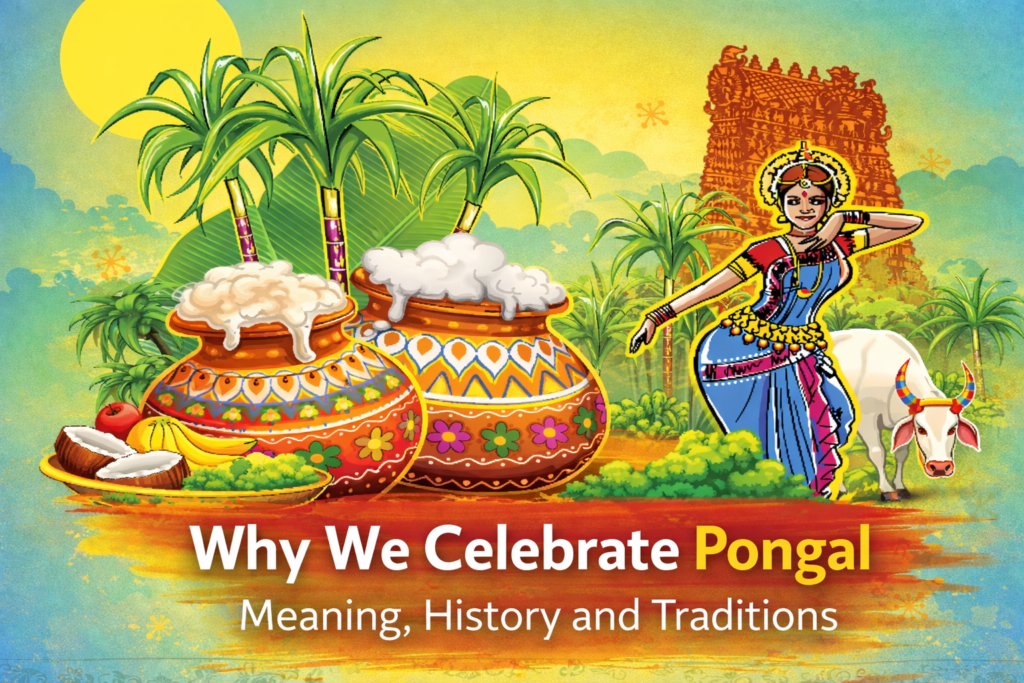
Pongal stands as one of the most meaningful harvest festivals of India, especially in Tamil Nadu. Every year in mid-January, people celebrate Pongal with joy, gratitude, and devotion. Unlike many festivals that focus only on rituals, Pongal honors everyday life. It recognizes the role of nature, farmers, animals, and the Sun in sustaining human existence.
The word “Pongal” means “to boil over.” This phrase perfectly reflects the spirit of the festival. Just as milk overflows from a pot, people wish for happiness, prosperity, and success to overflow in their lives. More importantly, Pongal teaches gratitude—not just to God, but also to nature and the people who feed the nation.
The Agricultural Heart of Pongal
At its core, Pongal celebrates agriculture. Farmers work tirelessly throughout the year, depending on rainfall, sunlight, soil, and seasons. When they finally harvest their crops, Pongal arrives as a moment of relief and joy.

Instead of rushing ahead, Pongal encourages people to pause. It asks them to look back, reflect, and say thank you. Farmers thank the Earth for fertility, the Sun for warmth, and water for life. Families prepare fresh food using newly harvested rice, symbolizing renewal and abundance.
Moreover, Pongal reminds society that food does not appear magically. Behind every grain lies hard work, patience, and hope. Therefore, this festival strengthens respect for farmers and rural communities.
Spiritual Meaning of Pongal
Beyond agriculture, Pongal carries deep spiritual meaning. It teaches humility. It reminds people that no success comes alone. Humans depend on nature, animals, and one another.
During Pongal, people worship the Sun God. They believe the Sun brings life, energy, and growth. Without sunlight, crops cannot grow, and life cannot flourish. Hence, honoring the Sun becomes an act of acknowledging nature’s generosity.
At the same time, Pongal encourages people to release ego and embrace gratitude. Instead of asking for more, the festival teaches contentment with what one already has.
The Four Days of Pongal and Their Meaning
Pongal unfolds over four days. Each day carries a special lesson and purpose.
Bhogi Pongal
First, Bhogi Pongal marks a fresh beginning. On this day, people clean their homes and discard old belongings. This ritual symbolizes emotional and mental renewal.
Instead of holding onto the past, Bhogi teaches people to move forward. It inspires them to let go of negativity, bad habits, and regrets.
As a result, people welcome positivity into their lives.
Thai Pongal
Next comes Thai Pongal, the main day of celebration. Families prepare a sweet dish called Pongal using rice, milk, and jaggery. They cook it outdoors in clay pots.
When the milk boils over, everyone cheers. This joyful moment represents abundance, success, and happiness.
Furthermore, people offer the dish to the Sun God before sharing it with family and neighbors. Through this ritual, they express gratitude for the harvest and blessings.
Mattu Pongal
After that, Mattu Pongal honors cattle. Farmers depend on cows and bulls for ploughing fields, transporting crops, and producing milk.
On this day, people decorate their animals, feed them special food, and worship them. They treat cattle not as tools, but as companions in farming.
Through Mattu Pongal, society learns to respect animals and recognize their contribution to human survival.
Kaanum Pongal
Finally, Kaanum Pongal focuses on social bonds. Families visit relatives, go on picnics, and spend time together.
This day highlights the importance of relationships. While success matters, human connection matters even more.
Thus, Pongal ends on a note of unity and joy.
Cultural Importance of Pongal
Pongal does not belong only to temples or rituals. It belongs to homes, fields, and hearts.
Villages decorate entrances with colorful kolam designs. People wear new clothes. Traditional songs and dances fill the air.
Most importantly, food takes center stage. Families cook together, share meals, and invite neighbors. Through these acts, Pongal strengthens social harmony.
In contrast to festivals that focus on display, Pongal celebrates simplicity.
Why Pongal Still Matters Today
In modern life, people often forget where food comes from. Supermarkets hide the struggles of farmers. Technology distances humans from nature.
However, Pongal reconnects people to their roots.
It reminds them that food requires sunlight, soil, water, and human effort. It teaches respect for natural resources.
As climate change and environmental issues rise, Pongal’s message becomes even more relevant.
Environmental Lessons from Pongal
Pongal promotes sustainable living without preaching.
People use clay pots, banana leaves, natural decorations, and fresh produce. They avoid waste. They share food.
Through simple actions, Pongal teaches eco-conscious habits.
Thus, it proves that ancient traditions often carry modern solutions.
Social Equality Through Pongal
One of Pongal’s strongest messages is equality.
Everyone celebrates—rich and poor, rural and urban, young and old.
People share food freely. They welcome guests warmly. They help the needy.
In a world divided by status, Pongal unites.
Similar Harvest Festivals Across India
Although Pongal is famous in Tamil Nadu, many regions celebrate harvest festivals.
Punjab celebrates Lohri.
Gujarat celebrates Uttarayan.
North India celebrates Makar Sankranti.
Assam celebrates Magh Bihu.
Different names, same emotion—gratitude for harvest and life.
Life Lessons from Pongal
Pongal teaches powerful lessons:
Gratitude brings peace.
Sharing multiplies joy.
Nature deserves respect.
Simplicity brings happiness.
Community strengthens life.
These lessons remain timeless.
Conclusion
Pongal is more than a festival. It is a philosophy of life.
It teaches people to pause, appreciate, and reconnect—with nature, family, and themselves.
In a world chasing more, Pongal teaches contentment.
In a world moving fast, Pongal teaches patience.
And in a world that often forgets gratitude, Pongal reminds us to say thank you.