
|
Getting your Trinity Audio player ready...
|

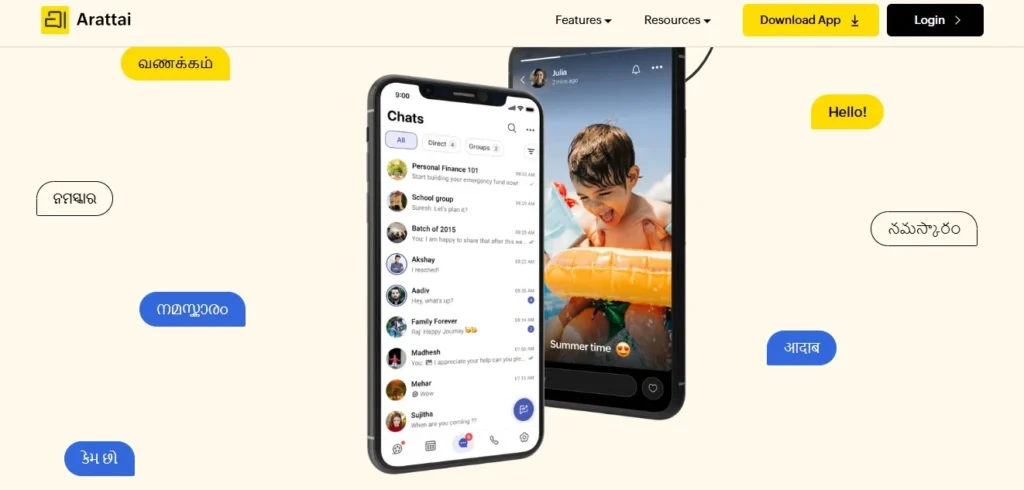
In September 2025, Zoho made a dramatic splash in the Indian tech ecosystem when its messaging app Arattai shot up the rankings across app stores. With daily sign‑ups surging from roughly 3,000 to 350,000 in just three days, this homegrown app captured the attention of users, media, and policymakers alike.
But what is Arattai, what makes it unique, and can it genuinely challenge incumbents like WhatsApp or Telegram? In this post, we’ll dive deep into the origins, features, strengths, limitations, and future prospects of Zoho’s ambitious messaging platform.
What Is Arattai — Name, Origins & Intent
“Arattai” is a Tamil word meaning “chat,” “banter,” or “casual conversation” — aptly capturing its intended role as a messaging platform. Zoho first launched Arattai in 2021, not as a head‑on challenger to WhatsApp, but more as an experimental, privacy‑aware messaging alternative.

Over time, the app remained relatively under the radar — until recent nationwide buzz, political endorsement (especially under the “Swadeshi / Made in India” narrative), and an explosive growth phase in 2025 propelled it into the spotlight.
Zoho’s founder, Sridhar Vembu, has repeatedly emphasized that the app is built in India, for India, and with privacy as a priority.
One interesting point: although many users expressed concern when the Play Store listed a U.S. address for Arattai’s developer contact, Zoho clarified this is a compliance artifact — the app is indeed engineered and maintained by its Indian teams.
Key Features & Differentiators
To understand how Arattai positions itself, let’s examine what it offers:
1. Multi‑device Support & Cross‑Platform Sync
Arattai allows users to sign in across up to five devices simultaneously (smartphones, tablets, desktops). Messages, contacts, and settings sync automatically for a seamless experience.
2. WhatsApp Chat Import
One of the early pain points for any switching user is losing chat history. Arattai lets users export chats from WhatsApp and import them — both for individual and group conversations.
3. Audio/Video Calls, Texting & Media Sharing
Arattai covers the basics: one-on-one and group messaging, voice notes, media (photos, videos, files), and audio/video calls.
Voice and video calls are end-to-end encrypted out of the box.
4. Channels, Broadcast & Stories
It supports broadcast channels, public/private channels, and story-like features, giving users more expressive and broadcast-style communication options.
5. Android TV App
One unique differentiator: Arattai offers a dedicated Android TV app, something WhatsApp does not currently provide. This lets users use their messaging on a large screen.
6. Focus on Interoperability & Open Standards
Rather than being a closed silo, Zoho has partnered with iSpirt (an Indian technology think tank) to publish and adopt open messaging protocols. The vision is interoperability, e.g., users can talk across platforms (Arattai ↔ WhatsApp or Telegram).
This is reminiscent of how email or UPI (for payments) operates — open, not walled. As Vembu puts it, “We do not want to be a monopoly ever.”
The Surge: What Triggered the 100× Growth?
The surge in Arattai’s adoption in September 2025 was dramatic:
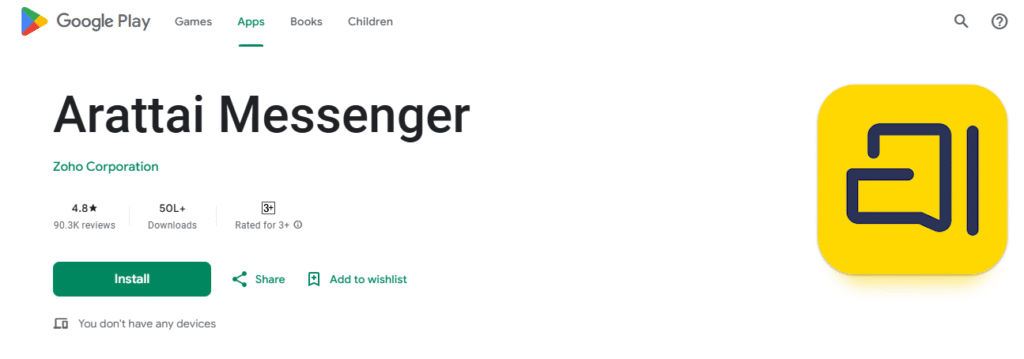
- Daily sign-ups jumped from ~3,000 to ~350,000 in just three days — a 100× jump.
- The app shot to #1 in social networking categories across Indian app stores, temporarily surpassing WhatsApp.
- Government ministers (e.g. Dharmendra Pradhan) publicly endorsed the app, urging citizens to adopt Indian alternatives.
Arattai instant messaging app developed by @Zoho is free, easy-to-use, secure, safe and ‘Made in India’.
— Dharmendra Pradhan (@dpradhanbjp) September 24, 2025
Guided by Hon’ble PM Shri @narendramodi ji’s call to adopt Swadeshi, I appeal to everyone to switch to India-made apps for staying connected with friends and family.… pic.twitter.com/Tptgbzgivg
- Zoho scrambled to scale its infrastructure, adding more servers and planning new data centers (e.g. in Odisha) to cope with demand.
This rapid growth created its own challenges — users reported delays in OTPs, syncing issues, call dropouts, and intermittent lag as servers struggled to keep pace. — Zoho publicly acknowledged these and said they were working to stabilize systems.
Strengths & Opportunities
What gives Arattai a genuine chance — if the team executes well — are several strengths:
1. Local Trust & Data Sovereignty
In a climate where many users worry about data harvesting, surveillance, and foreign jurisdiction access, a messaging app built and hosted in India—storing user data in domestic servers—has strong appeal. Zoho states that Indian user data is stored within India across centers (Mumbai, Delhi, Chennai), with plans for more regional expansion.
2. Emphasis on Privacy & Anti‑Spyware Positioning
Zoho markets Arattai as “spyware-free” and privacy-first. While current defaults may not yet match mature encryption standards (more on this below), the positioning resonates with users seeking alternatives to big tech.
3. Interoperability & Open Standards
By pushing for open messaging protocols and interoperability, Arattai could attract users who dislike closed systems locked into specific platforms. This could break down barriers and reduce switching friction.
4. Platform Versatility
Supporting multiple devices, letting you import chats, and offering Android TV support shows the app is striving for flexibility — something power users will appreciate.
Challenges & Criticisms
That said, Arattai also faces serious headwinds:
1. Incomplete End‑to‑End Encryption (E2EE)
One of the most-cited critiques: text chats are not end-to-end encrypted by default. While calls are encrypted, standard chats currently reside in transit encryption, and the app offers “secret chat” mode to enable E2EE.
Privacy-focused users argue this is a significant shortcoming compared to WhatsApp, Signal, and other secure messaging apps. (mint) Zoho has said full E2EE support is “actively under development.”
2. Network Effects & Stickiness
Switching from WhatsApp is nontrivial. Most people use it because everyone else is on it — family, friends, workplace groups. Breaking that inertia is one of the biggest obstacles for any new messenger.
3. Performance & Stability
Rapid scaling under intense growth has exposed server instability — OTP delays, sync issues, occasional crashes or lags — eroding user trust if such issues persist.
4. Name, Branding & Regional Acceptance
Some users complain the Tamil name “Arattai” is unfamiliar or hard to pronounce in non‑Tamil regions. This might affect brand recall and adoption in parts of India. To be fair, many global brands adopt names without meaning in local languages — adoption is what matters.
5. Monetization & Sustainability
Currently, Arattai does not monetize or monetize via ad targeting. But sustaining infrastructure, scaling, and development over the long term will require a business model that aligns with user trust. Zoho’s success as a privately held company gives it some leeway in long-term bets, but pressure may mount.
Future Roadmap & What to Watch
Here’s what the tech community and users should keep an eye on:
- Full Encryption for All Chats — When and how robustly it’s rolled out will be a make-or-break for privacy-conscious users.
- Better Stability & Scalability — Infrastructure upgrades, new data centers (like the planned one in Odisha) will be key.
- Wider Interoperability Adoption — If Arattai truly enables cross-platform communication (with WhatsApp, Telegram etc.), that could lower user friction to try it.
- Innovative Features — It needs a “killer feature” beyond privacy or nationalism. TV app capability is a start; what about augmented communication, AI, or unique content integration?
- User Retention & Network Expansion — Getting initial downloads is different from retaining users going forward. Building incentives, hooks, and seamless adoption will matter.
- Monetization Strategy — but Respecting User Trust — Any move toward ads, premium plans, or business integrations must not compromise privacy or experience.
- Regional Adaptation & Localization — Especially in India, with many languages and user expectations, localization and UX adjustments will drive adoption across states.
Should You Switch to Arattai?
If you care about data sovereignty, privacy, and supporting a homegrown alternative, Arattai is worth installing and testing. Its ability to import WhatsApp chats, cross-device sync, and evolving roadmap make the switch less painful. But keep in mind: at present, chat encryption is not fully locked down, and stability may wobble under heavy load.
If your primary concern is privacy and using a mature, fully encrypted messenger, you might continue with Signal, Telegram, or others while watching Arattai’s evolution.
Conclusion
Zoho’s Arattai is more than just another messaging app — it is a statement. In an era of growing concern over big-tech dominance, data sovereignty, and digital trust, Arattai appeals to users who want a locally built, privacy-first communication platform. Its meteoric 100× growth in days speaks to latent demand and the power of narrative—“Made in India with privacy in mind.”
However, the real test lies ahead. Can it retain users, improve encryption, scale reliably, and bridge the network-effect barrier? Will it differentiate enough beyond the “patriotic switch” narrative and deliver sustained value?
If Zoho plays its cards right — emphasizing trust, performance, openness, and clever differentiation — Arattai could become a serious contender in India’s messaging landscape. And even if it doesn’t unseat WhatsApp entirely, it may push incumbents to be more transparent, open, and accountable — which is a win for users either way.


Pingback: Arattai vs WhatsApp vs Telegram : Best Messaging App Comparison