|
Getting your Trinity Audio player ready...
|
Navratri is one of the most vibrant and spiritually significant Hindu festivals celebrated across India and beyond. It symbolizes the triumph of good over evil and honors the divine feminine energy, Goddess Durga, in her nine forms. The word Navratri literally translates to “nine nights,” during which devotees engage in fasting, prayers, rituals, dance, and music.
What is Navratri?
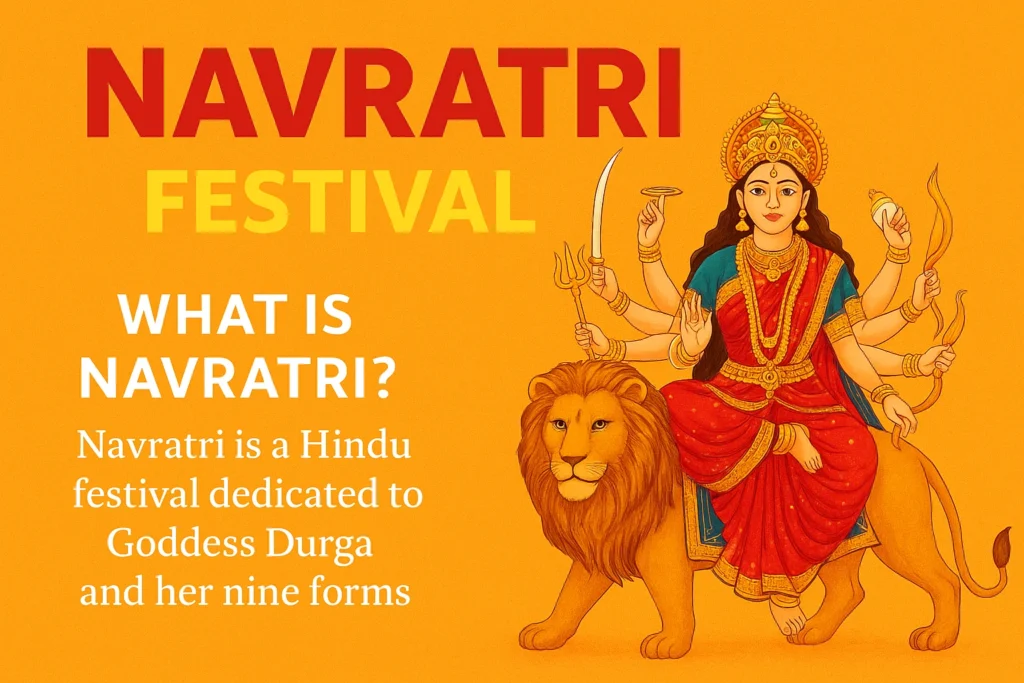
Navratri is a Hindu festival dedicated to Goddess Durga and her nine avatars, known as Navadurga. Each day of the festival is devoted to one form of the Goddess, and devotees seek her blessings for prosperity, health, and protection from evil forces. The festival culminates with Dussehra (Vijayadashami), marking Lord Rama’s victory over Ravana and the Goddess Durga’s triumph over Mahishasura.
When Did Navratri Start?
The origins of Navratri date back thousands of years and are rooted in Hindu mythology. According to scriptures, the festival commemorates Durga Mata’s battle with Mahishasura, a demon king who terrorized the heavens. After a fierce fight that lasted nine days and nights, Goddess Durga defeated him on the tenth day, symbolizing the victory of light over darkness.
Where is Navratri Celebrated?
Navratri is celebrated with great enthusiasm all over India, though the customs vary from region to region:
- Gujarat – Famous for Garba and Dandiya Raas, colorful dance forms performed during the nine nights.
- West Bengal – Celebrated as Durga Puja, with grand pandals and beautifully decorated idols of Goddess Durga.
- Maharashtra – Devotees participate in fasting, pujas, and cultural programs.
- North India (UP, Delhi, Punjab, Haryana) – Known for Ramlila performances and the burning of Ravana effigies on Dussehra.
- South India (Tamil Nadu, Karnataka, Andhra Pradesh, Kerala) – Celebrated with Bommai Golu (doll displays), devotional songs, and temple rituals.
Navratri is also celebrated by Indian communities abroad in countries like the USA, UK, Canada, and Australia.
FAQs About Navratri
1. How many times is Navratri celebrated in a year?
There are four Navratris in a year – Chaitra Navratri, Ashadha Navratri, Sharad Navratri, and Magha Navratri. Of these, Sharad Navratri (September–October) and Chaitra Navratri (March–April) are the most widely celebrated.
2. Why do people fast during Navratri?
Fasting is believed to detoxify the body, improve concentration in prayers, and show devotion to Goddess Durga.
3. What are the nine forms of Goddess Durga worshipped?
Shailaputri, Brahmacharini, Chandraghanta, Kushmanda, Skandamata, Katyayani, Kalaratri, Mahagauri, and Siddhidatri.
4. Is Navratri only about fasting?
No. Along with fasting, Navratri involves cultural festivities, music, dance, temple visits, and community gatherings.
Popular Temples to Visit During Navratri
If you want to experience the spiritual energy of Navratri, visiting these temples can be truly divine:
- Vaishno Devi Temple (Jammu & Kashmir) – One of the most revered Shakti Peeths in India.
- Dakshineswar Kali Temple (Kolkata, West Bengal) – Dedicated to Goddess Kali, a fierce form of Durga.
- Ambaji Temple (Gujarat) – A major pilgrimage site during Navratri, famous for grand Garba celebrations.
- Chamunda Devi Temple (Himachal Pradesh) – Known for its powerful spiritual aura.
- Meenakshi Amman Temple (Madurai, Tamil Nadu) – Celebrated with traditional rituals and doll exhibitions.
- Kamakhya Temple (Assam) – One of the most important Shakti shrines, visited by thousands during Navratri.
Final Thoughts
Navratri is not just a festival – it is a celebration of faith, unity, devotion, and culture. Whether you participate by fasting, dancing Garba, attending Durga Puja pandals, or visiting temples, Navratri brings people together in devotion and joy.
So this Navratri, embrace the festive spirit, honor Goddess Durga, and celebrate the victory of good over evil. 🌸🙏