|
Getting your Trinity Audio player ready...
|
The introduction of Bharat Taxi in the Indian mobility space signals a major shift in how ride services may operate in the coming decade. The model is built as a cooperative instead of a corporate aggregator, placing control and earning power directly in the hands of drivers. This fresh structure promises transparency in pricing, improved service quality, and more predictable experiences for riders. The pilot launch is scheduled for November twenty twenty-five in Delhi, with a moderate starting fleet and a plan to expand the service to multiple cities within a short period.
The idea behind this initiative is simple: to reduce friction between drivers and platforms, eliminate sudden surge-based fare spikes for riders, and ensure a fairer system for both sides. The approach challenges the long-established aggregator model where high commissions, complex pricing, and uneven policy enforcement became common complaints.
Why This Cooperative Model Matters
This model puts drivers at the center. Instead of surrendering a large commission on every ride, drivers join as members of the cooperative and pay a small periodic fee. In return, they retain ownership in the service and keep the majority of their earnings. This improves morale, reduces pressure to chase surge hours, and encourages better service behavior because drivers are genuine stakeholders, not just service providers.
For commuters, the biggest benefit is predictable rates. Without aggressive surge pricing or fluctuating algorithms, passengers can expect a cost structure that feels consistent. The idea is not to undercut existing platforms on every route but to offer fair, reliable transport at honest prices. The cooperative believes that when both sides feel respected, trust builds naturally.
Launch Timeline and Expansion Plan
The rollout begins with a pilot phase in Delhi. The initial fleet consists of a few hundred driver-owner vehicles. This controlled testing phase is intended to refine app performance, booking flow, customer support handling, driver onboarding systems, and fare calculations. Once the pilot completes smoothly, the service will expand to additional major Indian cities within the same quarter.
There is an ambitious long-term vision behind this initiative. The cooperative aims to bring together a very large number of drivers nationally by the year twenty thirty. The plan also includes encouraging the adoption of fuel-efficient vehicles, especially CNG and electric models, to reduce operating costs and align with the broader push toward cleaner urban mobility. If implemented well, this service can gradually become one of the largest driver-owned mobility networks in the country.
Official Launch of Bharat Taxi
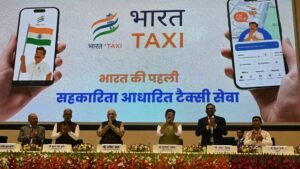
Union Home and Cooperation Minister Amit Shah officially launched Bharat Taxi, India’s first cooperative-led ride-hailing platform, marking a significant step toward strengthening the cooperative movement in the digital mobility sector. The launch event took place at Vigyan Bhavan in New Delhi on February 5, 2026, in the presence of several senior leaders and officials.
Also present at the occasion were Minister of State for Cooperation Krishan Pal Gurjar and Union Minister of State for Cooperation & Civil Aviation Murlidhar Mohol, along with other dignitaries. The initiative aims to empower drivers by giving them direct ownership and a larger share of earnings, reducing dependence on private aggregators, and ensuring more transparent fare structures for both drivers and passengers.
Speaking at the launch, Amit Shah emphasized that Bharat Taxi reflects the government’s broader vision of “Sahkar Se Samriddhi” (prosperity through cooperation). The platform is designed to operate on a cooperative model where drivers are not just service providers but stakeholders, enabling better income stability, social security benefits, and long-term financial inclusion. With technology-driven operations and a cooperative ownership structure, Bharat Taxi aims to expand gradually across major cities, offering affordable and reliable transport while redefining India’s ride-hailing ecosystem with a balance of profitability and social empowerment.
Fare Structure and Pricing Indicators
While the cooperative will refine exact fares for each region based on local transport rules and market conditions, a few early pricing patterns are already visible. In many cities, rental packages are available where travelers can book a car for a fixed duration and distance. For example, an eight-hour city rental for a common sedan may start at a modest range, and similar packages for premium vehicles differ accordingly.
Outstation travel also follows a transparent per-kilometre format. Sedan-type cars generally follow a mid-range per-kilometre rate, while multi-utility vehicles and premium categories are priced proportionately higher. These rates may vary by state, fuel type, and the final fare guidelines issued after launch.
Unlike conventional aggregators, the cooperative intends to avoid major price fluctuations during peak hours, weather changes, late-night travel, or festival periods. The intention is to build trust and predictability by following a fair-fare framework that is clearly disclosed to both drivers and riders.
Operational Features and Technology Framework
The service integrates multiple digital solutions to strengthen user experience and maintain operational consistency. Drivers complete an onboarding process that verifies their identity, checks vehicle documents, and puts them through training modules aligned with local transport regulations. The app offers live ride tracking, SOS access, transparent trip history, and a simple fare breakdown that removes hidden charges.
On the backend, the cooperative follows a democratic governance model. Drivers join as members with voting rights, and they collectively decide major policies, financial rules, service standards, and long-term strategies instead of relying on a centralised private authority. This shared decision-making builds stronger ownership among drivers and directly improves service quality for riders.
The technology platform also supports digital payments, app-based bookings, rental packages, and outstation trip planning. As the service expands, it will add more features such as advanced safety tools, insurance benefits, and roadside assistance.
The Value It Brings to Drivers
Drivers often face uncertainty under commission-based aggregator systems. A cooperative approach reverses this burden. By paying a small fixed membership fee instead of losing a percentage of every ride, earnings become more stable. Drivers also gain representation in decision-making, improving their overall working environment.
Vehicle maintenance, fuel cost patterns, and driver-support systems are better aligned when the platform and the driver share common goals. With the cooperative model, the emphasis shifts from squeezing margins to strengthening service quality and long-term sustainability.
The Value It Brings to Riders
Riders get a more predictable and professional experience. Standardized pricing rules help avoid confusion during peak demand. The absence of surge pricing makes travel cost-effective. Because drivers are shareholders rather than contractors, service professionalism tends to be higher. Passengers can expect cleaner vehicles, more polite interactions, and fewer sudden cancellations.
The overall experience is designed to feel more reliable than what many users encounter today. This is particularly important for airport transfers, business trips, late-night rides, and long-distance travel where uncertainty can cause stress.
What This Means for India’s Mobility Landscape
This approach represents a fresh challenge to the long-dominant aggregator model in India. The idea behind Bharat Taxi has already caught public attention because it appeals to both sides of the marketplace. For once, a ride service is trying to bridge the gap between driver welfare and rider convenience instead of choosing one over the other.
If the service succeeds in its early phases, it can push established players to adopt fairer pricing, lower commissions, and improved driver-support systems. It may even influence future mobility regulations and encourage more cooperative-style ventures in other service sectors.
Bharat Taxi App – Frequently Asked Questions (FAQs)
1. What is the Bharat Taxi App?
Bharat Taxi is a cooperative-led ride-hailing platform that connects passengers with verified drivers for safe, affordable, and reliable transportation across India.
Official Website: https://bharattaxiapp.com
2. How do I download the Bharat Taxi App?
You can download the app from the Google Play Store or Apple App Store by searching “Bharat Taxi.” OR scan below QR code OR download from below links.
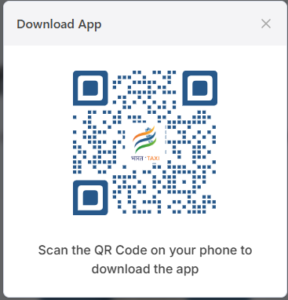
Android App Link: https://play.google.com/store/apps/details?id=in.mobility.bharatTaxi&hl=en_IN
Apple App Link: https://apps.apple.com/cd/app/bharat-taxi/id6753614379
3. How do I book a ride?
Open the app, enter your pickup and drop location, choose your ride type, confirm booking, and your driver will be assigned instantly.
4. Is Bharat Taxi available in my city?
Bharat Taxi is being rolled out across major cities in India. Check the app or website to see if services are available in your area.
5. What types of rides are available?
The app offers multiple ride options such as economy, premium, and possibly shared rides, depending on city availability.
6. How are fares calculated?
Fares are calculated based on distance, time, and demand. The estimated fare is shown before you confirm your ride.
7. What payment methods are accepted?
You can pay via UPI, debit/credit cards, net banking, or cash (availability may vary by location).
8. Are drivers verified?
Yes, all drivers undergo background verification and document checks to ensure passenger safety.
9. Can I schedule a ride in advance?
Yes, the app allows you to pre-book rides for a future date and time.
10. How can I cancel a ride?
You can cancel the ride directly from the app. Cancellation charges may apply depending on timing.
11. Is there a customer support service?
Yes, Bharat Taxi provides in-app customer support to help with ride issues, payments, or complaints.
12. Can I share my trip details for safety?
Yes, you can share live ride tracking with family or friends directly from the app.
13. How can drivers join Bharat Taxi?
Drivers can register through the driver section in the app or on the official website by submitting required documents.
14. Are there any offers or discounts?
Promotional offers and discounts may be available periodically. Check the app for current deals.
15. What makes Bharat Taxi different from other ride apps?
Bharat Taxi is a cooperative-driven platform focused on fair earnings for drivers, transparent pricing, and reliable service for passengers.
Closing Thoughts
The rise of Bharat Taxi shows that India is ready for a new kind of mobility model guided by fairness, transparency, and driver ownership. The journey will not be easy, and scaling a cooperative across a country as large and complex as India will require discipline, technology strength, and constant adaptation. But the foundation is strong, the timing is right, and the purpose is meaningful.
If executed well, this can become more than a ride service — it can become a national case study on how cooperative structures can solve modern-day service challenges while empowering the very people who keep the system running.