|
Getting your Trinity Audio player ready...
|
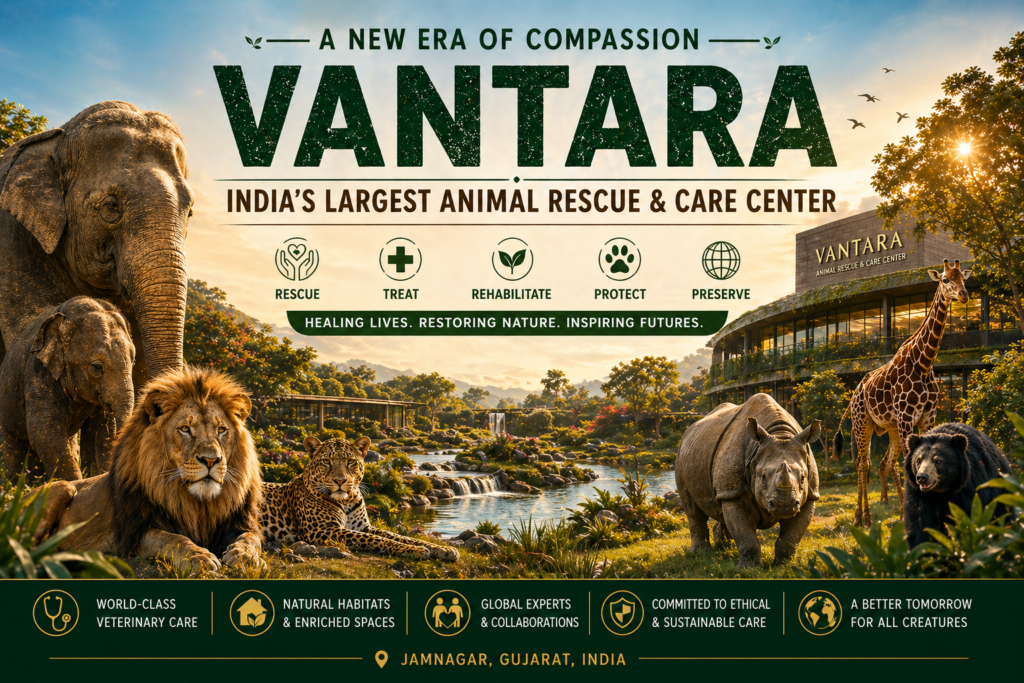
India has seen many wildlife conservation initiatives over the years, but few match the scale, ambition, and execution of Vantara. Located in Gujarat, this massive animal rescue and rehabilitation project is redefining how injured, endangered, and displaced animals are treated and protected.
Backed by Reliance Industries and driven by a vision of large-scale conservation, Vantara is not just a facility—it is a statement about the future of wildlife care in India.
- What Is Vantara?
What Is Vantara?
Vantara is one of the largest animal rescue, rehabilitation, and conservation centers in the world. It is situated in Jamnagar, Gujarat, and focuses on rescuing animals from:
- Illegal captivity
- Abuse and exploitation
- Injuries in the wild
- Threatened ecosystems
The project operates on a simple but powerful principle:
Rescue, rehabilitate, and release wherever possible.
Who Is Behind Vantara?
The initiative is spearheaded by Anant Ambani, with strong backing from Reliance Industries.
Unlike traditional CSR projects, Vantara is built as a long-term ecological commitment, not a short-term publicity effort.
Scale and Infrastructure: Massive by Any Standard
Vantara is not a typical zoo or sanctuary. It operates at an entirely different level.
Key Highlights
- Spread across thousands of acres
- Advanced veterinary hospitals
- Specialized enclosures for different species
- Climate-controlled habitats for exotic animals
This is one of the few places in the world where large-scale wildlife care meets cutting-edge medical infrastructure.
Advanced Animal Healthcare Facilities
One of the most impressive aspects of Vantara is its medical ecosystem.
Facilities Include:
- ICU units for animals
- MRI and CT scan machines
- Surgical theaters
- Dedicated quarantine zones
This level of medical support is rare even in global wildlife centers.
Types of Animals Rescued
Vantara houses and treats a wide range of species, including:
- Elephants rescued from captivity
- Big cats like lions and leopards
- Exotic birds
- Reptiles and marine species
Many of these animals come from illegal wildlife trade networks, making their rehabilitation even more critical.
Focus on Ethical Treatment
Unlike traditional zoos, Vantara emphasizes:
- Large natural habitats
- Minimal human interference
- Psychological well-being of animals
This approach aligns with global conservation standards.
Global Collaboration and Impact
Vantara is not limited to India. It collaborates with:
- International wildlife organizations
- Conservation experts
- Rescue networks
This allows it to handle cross-border rescue operations and support global biodiversity efforts.
Why Vantara Matters Today
Wildlife faces unprecedented threats:
- Habitat destruction
- Climate change
- Illegal poaching
Projects like Vantara are crucial because they:
- Provide safe rehabilitation spaces
- Reduce pressure on natural ecosystems
- Support endangered species survival
This is not optional anymore—it is necessary.
Criticism and Controversy
No large project is free from scrutiny.
Some critics argue:
- Transparency in operations should improve
- Long-term release strategies need clarity
- Large-scale captivity, even for rescue, raises ethical questions
These are valid discussions and important for improving such initiatives.
The Bigger Vision
What sets Vantara apart is its ambition.
It aims to:
- Become a global benchmark for wildlife rescue
- Train professionals in animal care
- Expand conservation awareness
If executed well, this project can position India as a leader in wildlife conservation.
Economic and Environmental Impact
Beyond conservation, Vantara contributes to:
1. Employment
- Veterinarians
- Animal caretakers
- Researchers
2. Tourism Potential
It can become a major eco-tourism attraction.
3. Environmental Awareness
Educates the public about biodiversity and sustainability.
Final Verdict
Vantara is one of the most ambitious wildlife projects India has ever seen.
It is:
- Large-scale
- Technologically advanced
- Globally relevant
But its long-term success will depend on:
- Transparency
- Ethical practices
- Sustainable conservation outcomes
Conclusion
Vantara is more than a rescue center—it represents a shift in how we approach wildlife conservation.
With backing from Reliance Industries and leadership from Anant Ambani, it has the potential to redefine animal care at a global level.
The real test, however, lies ahead.
Because in conservation, intent is not enough—execution and impact decide everything.