|
Getting your Trinity Audio player ready...
|
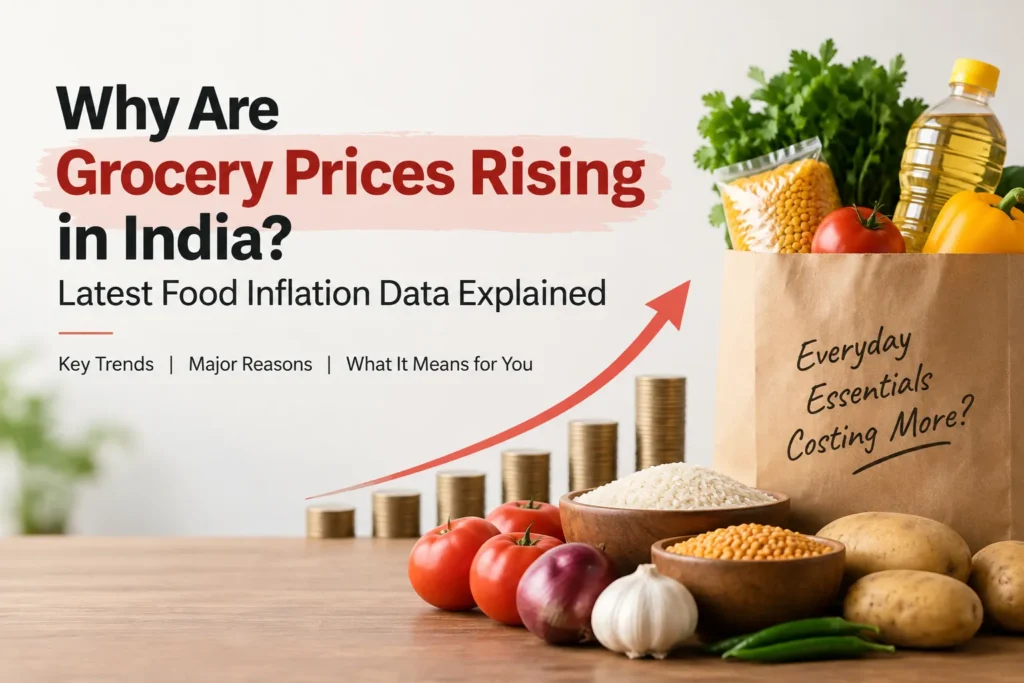
Grocery prices remain an important concern for Indian households as food inflation continues to put pressure on everyday expenses. The latest government data shows that food inflation increased in August 2026, raising questions about the cost of essential items such as vegetables, cooking oil, pulses and other household staples.
According to the Ministry of Statistics and Programme Implementation (MoSPI), India’s retail inflation reached 4.82% in August 2026, compared with 4.45% in July. Food inflation also increased from 5.52% to 5.95% during the same period.
These figures highlight the growing importance of food prices in India’s household budgets.
Latest Food Inflation in India: August 2026
The latest Consumer Price Index (CPI) release provides a snapshot of inflation across rural and urban India.
| Inflation Category | July 2026 | August 2026 |
| Retail inflation (CPI) | 4.45% | 4.82% |
| Food inflation (CFPI) | 5.52% | 5.95% |
Source: Ministry of Statistics and Programme Implementation (MoSPI). August figures are provisional.
The data shows that both retail and food inflation increased in August. Food inflation remained higher than overall retail inflation, reflecting continued price pressure across the food category.
Why Are Essential Grocery Items Becoming Costlier?
Several factors can influence grocery prices in India. Weather conditions, agricultural production, transportation expenses and international commodity prices can all affect the cost of bringing food products to consumers.
1. Weather Conditions and Agricultural Supply
India depends heavily on agricultural production for its food supply. Irregular rainfall, extreme weather and changes in crop yields can affect the availability of vegetables, grains and other essential food items.
When supply falls short of demand, market prices can increase.
2. Rising Cooking Oil Costs
Cooking oil is a regular purchase for many Indian households. India relies significantly on imported edible oils, which makes domestic prices sensitive to international market movements and import costs.
Changes in global prices or import expenses can therefore affect the amount consumers pay for cooking oil.
3. Transportation and Distribution Costs
Food products travel through several stages before reaching consumers, from farms to wholesale markets and retail shops.
Changes in fuel, transportation, storage and distribution expenses can affect the final selling price of essential groceries.
4. Seasonal Demand and Supply Changes
Demand for certain food products can increase during festivals and other seasonal periods. At the same time, agricultural supply can fluctuate throughout the year.
These changes can create temporary price increases for selected grocery items.
Are All Grocery Prices Increasing in India?
No. Rising food inflation does not mean every grocery item becomes more expensive.
Some products may experience price increases while others become cheaper. Prices can also vary between states, cities, wholesale markets and local retailers.
Consumers should therefore distinguish between the overall inflation rate and the actual prices of individual products.
How Does Rising Food Inflation Affect Indian Households?
Higher food prices can increase monthly household expenses, particularly for families that spend a large share of their budgets on groceries.
Consumers may respond by adjusting their shopping habits, comparing prices between retailers, choosing seasonal produce or changing the quantities of certain products they purchase.
Even when inflation slows, grocery prices do not necessarily return to their earlier levels. A lower inflation rate simply means prices are increasing at a slower pace, or potentially falling if inflation turns negative.
What Should Consumers Watch Next?
The next monthly CPI release from MoSPI will provide updated information about India’s retail and food inflation.
Consumers should also watch agricultural supply conditions, seasonal vegetable prices and changes in edible oil costs to understand how grocery expenses may change.
The official inflation data provides a national overview, but local market prices remain important for understanding the actual cost of household shopping.
Conclusion
Grocery prices in India remain an important economic concern as food inflation increased to 5.95% in August 2026, according to MoSPI. Retail inflation also rose to 4.82% during the month.
Weather conditions, agricultural supply, transportation expenses and international commodity prices can influence food costs. However, price movements differ across products and regions.
The coming months will provide more information about whether food inflation continues to rise or begins to ease.
Official data source: Ministry of Statistics and Programme Implementation (MoSPI) – August 2026 CPI Release