|
Getting your Trinity Audio player ready...
|
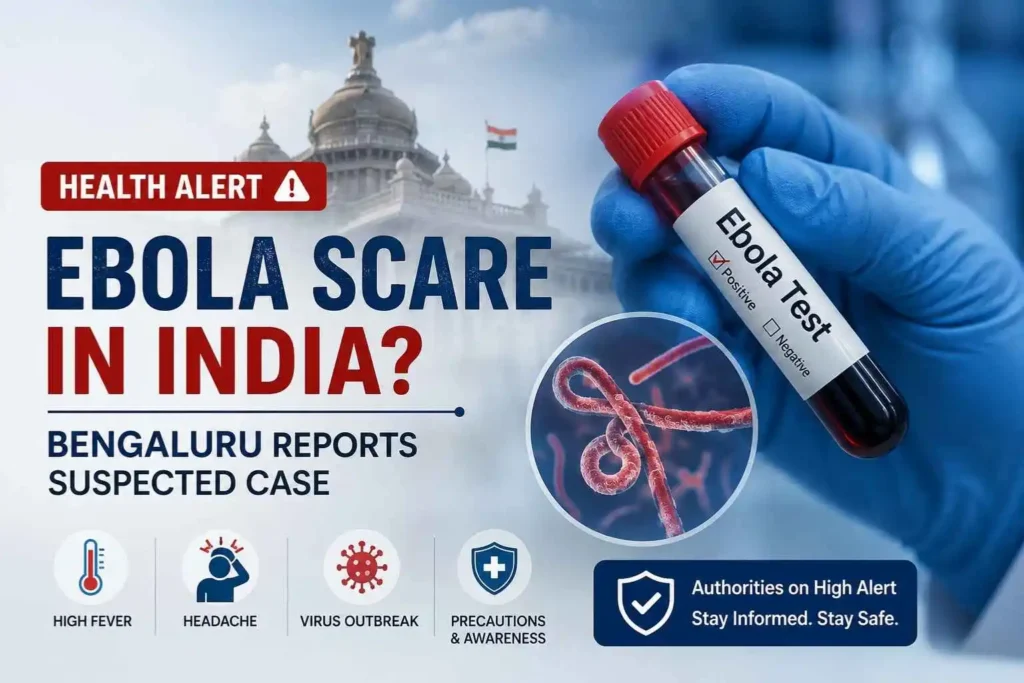
BENGALURU: The reported isolation of a woman in Karnataka after she returned from Uganda has sparked concern across India with her undergoing tests to rule out infection by the highly contagious Ebola virus. The development comes in the backdrop of rising cases of Ebola transmission in certain parts of Africa, leading to Karnataka and health authorities across the country to ramp up surveillance systems coupled with emergency preparedness plans.
Though officials made it clear today that there has been no positive case of Ebola in India till now, the incident once again drew global attention towards the killer Ebola Virus Disease (EVD) and brought into sharp focus alertness regarding infectious disease at international airports and healthcare facilities.
In this article, we will analyse what happened with the Bengaluru case, how Ebola spreads, its signs/symptoms, the current outbreak situation in other countries and whether India needs to concern about it.
- What Happened in Bengaluru?
What Happened in Bengaluru?
A 28-year-old woman was isolated after she showed mild symptoms of viral infections such as body aches. She had recently travelled from Uganda to Bengaluru and later approached the Infectious Disease Hospital after experiencing mild symptoms. Doctors collected her blood samples for laboratory testing as part of standard safety procedures.
An official said, “The woman was cautiously made to give details and processed at a government-run infectious disease hospital in Bengaluru. Karnataka health authorities quickly increased airport screening and monitoring measures by strengthening airport screening and contact-tracing measures.
Officials clarified that the case is currently being treated only as a precautionary suspected infection and no confirmed case of Ebola has been reported, in India so far.
Why Is Ebola Becoming a Global Concern Again?
This latest alarm is associated with an Ebola outbreak in the DRC and Uganda involving the Bundibugyo type of virus. The suspected cases and deaths are on the rise in affected areas, prompting the World Health Organisation (WHO) to declare the outbreak a Public Health Emergency of International Concern.
Reports suggest hundreds of suspect cases as well as many deaths have already been in Central Africa. Health experts are most alarmed because there is no generally available-and-much-approved vaccine or targeted treatment for this Bundibugyo strain at the moment.
A number of nations have overturned travel advisories and enhanced wellness observing for worldwide explorers showing up from impacted states, as the episode unfolded, including India.
What Is Ebola Virus Disease (EVD)?
Ebola Virus Disease is a deadly disease caused by the virus in the genus Ebolavirus. The illness first gained recognition in 1976 near the Ebola River, which runs through modern-day Democratic Republic of Congo.
Ebola has been associated with high-fatality outbreaks particularly in parts of the world where healthcare systems are already weak. The virus is transmitted via physical contact with infected bodily fluids (blood, saliva, sweat, vomit, urine) and contaminated surfaces and instrumentation.
Ebola, unlike airborne diseases like COVID-19, does not pass through run-of-the-mill air. Well, in reality close physical contact is the thing that makes infections really dangerous.
Common Symptoms of Ebola
Ebola symptoms commonly cause between 2 to 21 days of the virus being allowing for through the skin. Initial symptoms mimic other viral illnesses, and this complicates early diagnosis.
Initial Symptoms Include:
- Fever
- Severe headache
- Muscle pain
- Fatigue and weakness
- Sore throat
- Body aches
Advanced Symptoms May Include:
- Vomiting
- Diarrhea
- Stomach pain
- Skin rash
- Internal and external bleeding
- Organ failure in severe cases
Health specialist have said that the key to preventing outbreaks is early detection followed by isolation.
Is India at Risk of an Ebola Outbreak?
Currently, Indian health authorities say the threat of an Ebola epidemic in India is low. But, with increased international travel comes the potential for imported infections.
India has seen its share of dealing with infectious disease outbreaks, COVID-19, Nipah virus, monkeypox and swine flu. From new surveillance networks to airport screening protocols, laboratory testing capabilities, and rapid response teams.
Just after the Bengaluru accident, Karnataka authorities as in advance advertised:
- Airport health screening
- Contact tracing systems
- Isolation preparedness
- Hospital infection control measures
- Training for healthcare workers
Special monitoring systems have also been set up through the Integrated Disease Surveillance Programme (IDSP).
Government Advisory and Public Response
Travelers from nations where Ebola has been accounted for have been asked by the Karnataka Health Department to watch out for their wellbeing for 21 days. Authorities also urged the public not to panic and take only verified information from recognised health authorities.
Social media concern grew quickly after details of the suspected case appeared online. Soon enough, global outbreak, airport security and health care preparedness started to top the digital charts. While some online communities fretted over pests capable of crossing borders, others urged calm until lab confirmation could be obtained.
Misinformation during scolding situations can lead to unnecessary panic: Experts Medical investigators are still emphasizing that suspected case often does not translate to epidemic.
How India Handles Suspected Ebola Cases
India has strict guidelines to handle suspected cases of Ebola, as per international health practices.
Standard Response Measures Include:
- Immediate isolation of suspected patients
- Laboratory testing through authorized facilities
- Wearing of protection masks and PPE suits by medical personnel
- Contact tracing and monitoring
- Public health advisories
- Coordination with airport authorities
Specimens from suspected cases are commonly sent to specialised laboratories for confirmatory testing. Karnataka health authorities said testing facilities and emergency medical systems are being kept on alert following recent global health concerns.
Why the Bengaluru Case Matters
Though the suspected case may later turn out to be negative, the Bengaluru incident underscores how tightly coupled global public health has become. In the age of modern travel networks, diseases that arise in one area can rapidly evolve into a global issue.
The incident is also an indication that:
- Strong international health monitoring is now more important than ever.
- International airport screening is crucial
- High public awareness contributes to early reporting
- Healthcare preparedness saves lives
According to experts, swift action coupled with openness makes it much less likely that fear will lead people to be worried — or untracedly even overreact in such situations.
Can Ebola Be Prevented?
Yes, you can greatly reduce the transmission of Ebola with proper preventive measures.
Prevention Tips:
- Keep away from direct contact with infected bodily liquid
- Practice proper hand hygiene
- Wear protection in healthcare settings
- Avoid contact with infected animals
- You are advised to observe travel warnings in outbreak areas
- Report symptoms immediately after international travel
Travellers to affected countries should monitor themselves for symptoms and consult a doctor if they experience feeling unwell within 21 days of risk of exposure.
Global Health Experts Continue Monitoring Situation
The ongoing Ebola outbreak in Africa and its potential spread abroad is being monitored closely by the World Health Organization and other national health agencies. PIC: Several countries have intensified surveillance at airports and hospitals as a precaution.
Globally, the risk is still low outside of affected regions but health experts have cautioned that some outbreaks can snowball rapidly when reporting is delayed or healthcare infrastructure weak.
Meanwhile, the Indian authorities are still focused on being prepared rather than in a panic mode.
Final Thoughts
Hence, even as the world continues to be on its guard against outbreaks of infectious diseases ever since COVID-19 breakout, a suspected case of Ebola in Bengaluru has naturally evoked concern among people. So far, however, health authorities have said that no Ebola case had been officially detected in India.
This situation illustrates the need for rapid disease detection, international coordination and public health preparedness in a fast-connected world.
Although there is no cause for alarm at this point, the Bengaluru episode serves as a reminder that vigilance, awareness and responsible communication with the public continues to form a crucial defence mechanism against emergent health threats.