|
Getting your Trinity Audio player ready...
|
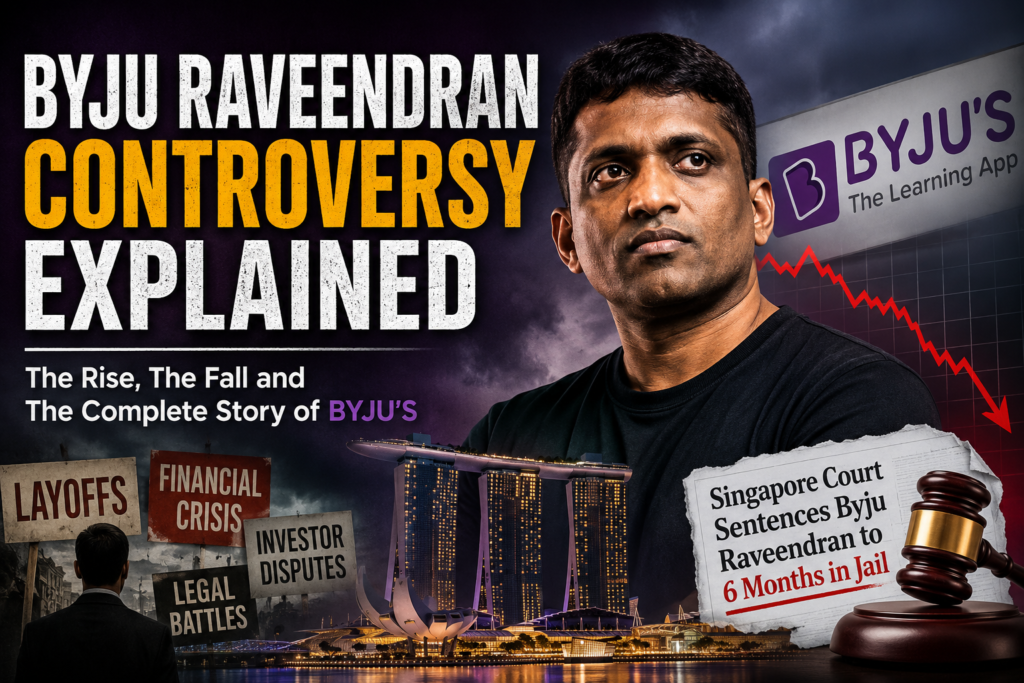
India’s startup ecosystem has witnessed many success stories over the last decade, but very few stories are as dramatic as the rise and fall of BYJU’S. Once considered India’s biggest edtech company and one of the world’s most valuable startups, BYJU’S is now struggling with legal battles, financial problems, investor disputes, and global controversy.
The latest developments involving founder Byju Raveendran have once again placed the company in the headlines. Reports related to legal proceedings in Singapore have sparked massive discussions across the business and startup world. As a result, many people are now asking the same question — what exactly happened to BYJU’S?
Here is the complete story behind the BYJU Raveendran controversy and how one of India’s largest startups entered a massive crisis.
- The Beginning of BYJU’S Success
The Beginning of BYJU’S Success
BYJU’S was founded in 2011 by Byju Raveendran, a teacher-turned-entrepreneur who wanted to make learning easier through technology. The company started as an online education platform offering recorded classes, exam preparation material, and interactive learning programs for students.
Over time, BYJU’S became extremely popular among students and parents across India. The company used aggressive marketing campaigns, celebrity endorsements, and digital expansion to dominate the edtech industry.
The COVID-19 pandemic played a major role in accelerating the company’s growth. Since schools and coaching institutes were closed during lockdowns, millions of students shifted toward online learning platforms. BYJU’S benefited heavily from this sudden demand.
At its peak, the company achieved:
- A valuation of nearly $22 billion
- Millions of paid users
- International expansion
- Sponsorship deals with major sports events
- Acquisitions of several education companies
For many people, BYJU’S represented the future of education in India.
What Triggered the BYJU’S Controversy?
Although the company appeared successful publicly, several financial and operational issues were developing internally.
The biggest problem started when BYJU’S aggressively expanded its business through expensive acquisitions. The company acquired multiple education platforms and startups within a short period. While these acquisitions increased the company’s size, they also increased financial pressure.
At the same time, concerns started growing about:
- Rising company debt
- Heavy spending
- Delayed financial reporting
- Employee layoffs
- Revenue management
- Investor dissatisfaction
Many analysts later argued that the company focused too heavily on growth instead of building a sustainable business model.
Delayed Financial Reports Created Panic
One of the biggest turning points in the controversy was the delay in releasing the company’s financial statements.
Investors, regulators, and financial experts became concerned when BYJU’S failed to publish audited financial reports on time. When the results were finally released, they showed massive financial losses.
This created serious trust issues between the company and its investors.
The delayed reporting raised several questions:
- Was the company hiding financial problems?
- Was the business growing too fast without proper controls?
- Were investors receiving accurate information?
As concerns increased, some investors started reducing the company’s valuation dramatically.
Layoffs and Employee Concerns
As financial pressure increased, BYJU’S started laying off employees across different departments.
Thousands of workers reportedly lost their jobs during the restructuring phase. Many former employees also shared concerns online regarding:
- Work pressure
- Sales targets
- Internal management
- Delayed salaries in some cases
The layoffs damaged the company’s public image significantly because BYJU’S was once considered one of India’s fastest-growing employers.
The situation became even more difficult when the edtech industry slowed down after the pandemic. Once schools reopened, online learning demand reduced compared to lockdown years.
Legal Problems Started Across Multiple Countries
Soon, the company’s problems expanded beyond India.
BYJU’S became involved in multiple legal disputes involving:
- Lenders
- Investors
- Loan agreements
- Financial obligations
- Asset disclosures
Several cases reportedly emerged in India, the United States, and Singapore.
One of the major controversies involved disputes related to large loan amounts borrowed by the company. Lenders accused the company of failing to meet certain financial obligations and disclosure requirements.
These legal battles increased pressure on the company’s operations and reputation.
Singapore Court Controversy
The controversy became much bigger after reports emerged regarding legal proceedings involving Byju Raveendran in Singapore.
According to reports, the Singapore court took action related to non-compliance with court orders connected to ownership and asset disclosure matters.
The case reportedly involved:
- Financial disclosures
- Ownership-related documents
- Legal obligations linked to lenders
This development quickly became national news because it directly involved the founder of one of India’s biggest startups.
The controversy attracted massive attention on social media, business news platforms, and startup communities.
Byju Raveendran’s Response
Byju Raveendran responded to the allegations by denying wrongdoing.
According to statements released publicly, he claimed:
- The matter was being presented unfairly
- Discussions with lenders were ongoing
- The company was attempting to resolve disputes
- Certain reports created a misleading narrative
His response divided public opinion. While some people believed the company was being targeted unfairly during a difficult financial period, others argued that startups must remain accountable for financial transparency and governance.
Why Did BYJU’S Collapse?
The downfall of BYJU’S did not happen because of a single reason. Instead, multiple factors contributed to the crisis.
1. Aggressive Expansion
BYJU’S expanded extremely fast by acquiring several companies in a short time. While this increased market presence, it also created huge financial pressure.
2. Excessive Spending
The company spent heavily on:
- Advertising
- Sponsorships
- Acquisitions
- Marketing campaigns
This increased operational costs significantly.
3. Weak Financial Discipline
Delayed audits and financial reporting damaged investor confidence. Transparency became a major issue.
4. Post-Pandemic Slowdown
The online education boom reduced after schools reopened. Demand for digital learning platforms slowed down considerably.
5. Debt Pressure
The company reportedly borrowed large amounts of money during expansion. Repayment pressure later created financial stress.
6. Governance Concerns
Investor trust weakened because of management and compliance-related controversies.
Impact on India’s Startup Ecosystem
The BYJU’S crisis has become one of the biggest lessons for India’s startup ecosystem.
For years, startups were heavily focused on:
- High valuations
- Rapid growth
- Investor funding
- Market dominance
However, the BYJU’S controversy highlighted the importance of:
- Financial transparency
- Sustainable growth
- Proper governance
- Responsible expansion
Many experts now believe the startup ecosystem is becoming more cautious after witnessing the collapse of such a large company.
Investors are now paying greater attention to profitability and business fundamentals instead of only focusing on growth numbers.
Is BYJU’S Still Operating?
Yes, BYJU’S still operates in some capacity, but the company continues to face serious financial and legal challenges.
The future of the company remains uncertain as restructuring efforts continue. Although the brand still has recognition in the education sector, rebuilding investor trust may take years.
The company’s valuation has already fallen dramatically compared to its peak years.
Final Thoughts
The BYJU Raveendran controversy is not just about one company. It represents a major moment in India’s startup journey.
BYJU’S was once celebrated as a symbol of innovation, ambition, and digital education success. However, rapid expansion, financial pressure, legal disputes, and governance concerns eventually pushed the company into crisis.
The story serves as a powerful reminder that long-term business success requires more than fast growth and billion-dollar valuations. Transparency, financial discipline, and sustainable management are equally important.
As the legal and financial developments continue, the BYJU’S story will likely remain one of the most talked-about business controversies in India for years to come.