|
Getting your Trinity Audio player ready...
|

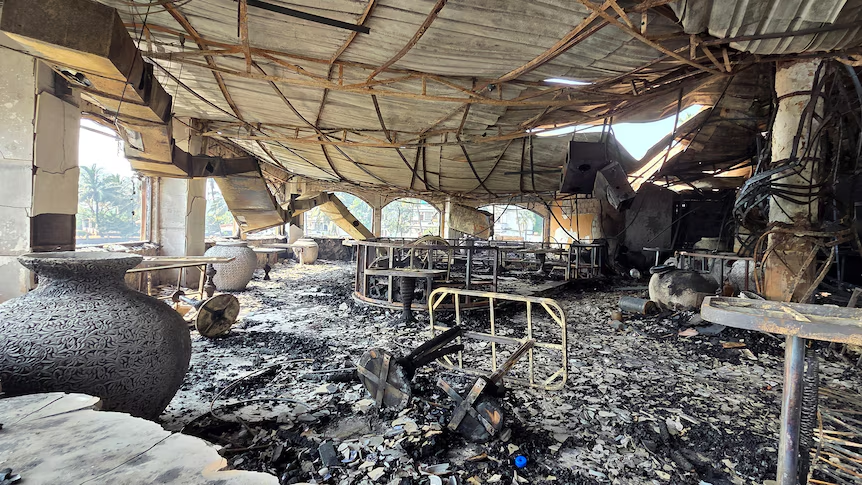
Goa — a land known for tourism, nightlife, beaches, and music — woke up to one of its darkest news stories in years. A night of music, energy, and celebration at Arpora’s popular nightclub, Birch by Romeo Lane, descended into chaos, panic, and death. A fire broke out inside the club shortly before midnight, resulting in 25 deaths and dozens injured. What happened that night wasn’t just an accident — it was a chain reaction of negligence, shortcuts, and greed.
This wasn’t a tragedy fueled by fate. It was avoidable.
How the Fire Started
The exact trigger is still under investigation, but early reports and eyewitness accounts agree on one point: the spark came from inside the club during peak rush hours. Some suggest electrical short-circuiting. Others claim indoor fireworks or decorative flame elements ignited flammable decor. Either way — the club was packed, loud music was on, and the environment was chaotic.

Within seconds, flames spread across the interior because the nightclub was decorated with materials that were anything but fire-safe. Artificial fiber decor, drapes, soundproofing foam, bamboo-style structures — everything acted like fuel.
Once smoke started filling the air, panic set in — and everything collapsed into confusion.
Why the Fire Turned Deadly
A fire isn’t what kills instantly — lack of preparedness does.
The biggest reason so many lives were lost was poor evacuation planning.
Some horrifying facts emerged after the disaster:
- There was only one usable exit for guests.
- The fire alarm system didn’t function properly.
- Emergency lights were either missing or insufficient.
- Staff reportedly had no evacuation training.
- The layout was maze-like, with hidden or blocked pathways.
- The basement area — where many victims were found — had no emergency exit at all.
By the time the fire grew large, the smoke was thick, oxygen dropped, and most victims died from suffocation, not burns.
People rushed in the wrong direction, some ran downstairs instead of out — purely because there was no guidance, no signage, and no trained personnel controlling the crisis.
The Victims
Among the dead were:
- Tourists on vacation
- Young locals
- Staff members working in the kitchen
- People who came to celebrate birthdays and anniversaries
- Friends who had come for a night out
- Workers trying to escape but blocked by fire and heat
One of the most heartbreaking realities is that most of the staff didn’t survive — because they were deep inside the building, near trapped areas like storage rooms and basements.
Many bodies were later found piled on top of each other — a terrifying reminder of desperation and chaos.
Delay in Rescue
The tragedy worsened because of response limitations.
The club wasn’t located in an easily accessible market or roadside area — it was set inside a narrow road near salt-pan regions. Fire trucks struggled to reach the exact spot on time due to:
- Narrow lanes
- Congestion
- Poor access roads
- Vehicles blocking paths
And when rescue teams finally got there, they faced another issue:
There was no proper hydrant system or firefighting infrastructure inside the club.
Firefighters worked against time — and time was already lost.
Legal and Administrative Failures
After the fire, investigations revealed a truth many suspected:
This nightclub should not have been operating at all.
Reports indicate:
- Construction permissions were unclear.
- Fire safety audit approvals were outdated or missing.
- Previous notices were issued, including demolition-related orders.
- The club was allegedly renovated without proper compliance.
- Capacity limits were exceeded.
It exposes a painful reality:
Entertainment venues in India often operate faster than regulation catches up — and sometimes, regulation intentionally looks away.
A Systemic Problem, Not a One-Time Disaster
This incident isn’t just about one nightclub. It’s a warning for the entire nightlife and hospitality ecosystem.
Across India — and especially in tourism-rich regions — many restaurants, lounges, shacks, and clubs prioritize theme aesthetics over safety. Fire escape routes are often blocked by furniture. Safety drills are unheard of. Indoor fireworks are treated as entertainment, not risk.
And customers?
We enjoy the vibe so much, we never question —
- Where is the exit?
- Is there fire equipment?
- Is this place overcrowded?
- Are these decorations flammable?
We trust — blindly.
And that blind trust cost 25 people their lives.
Who Is Responsible?
Responsibility does not fall on one party.
It is shared across:
- Club owners who prioritized profit over safety
- Authorities who issued permits without strict inspection
- Staff untrained in crisis handling
- Event planners who used unsafe effects indoors
- Regulatory bodies who ignored earlier violations
Everyone was responsible. That’s why everyone failed.
What Happens Now?
The aftermath has triggered:
- Criminal charges against owners and management
- Investigation by forensic and disaster response teams
- Suspension of operations of similar properties for inspection
- Public outrage and demand for strict licensing enforcement
But outrage fades. Real change rarely comes unless tragedy repeats — and unfortunately, in India, tragedies often repeat.
The Lesson Nobody Wanted — But Everyone Needed
Goa is famous for nightlife — and nightlife will continue. Tourism won’t stop. Clubs won’t shut forever.
But from now on — they must change.
Nightlife needs:
- Mandatory safety audits
- Strict occupancy limits
- Trained emergency response staff
- Fire-resistant interiors
- Accessible exits and signage
- Functional alarm systems
- Regular drills and compliance checks
Fun cannot outweigh life.
A party should never become a morgue.
Final Words
25 people left home with excitement — dressed up, ready to enjoy music, drinks, and memories.
They never returned.
Their story shouldn’t disappear after headlines fade.
This fire is more than a disaster — it’s a mirror showing how fragile life becomes when safety is treated as optional.
Goa — and India — must learn from this.