|
Getting your Trinity Audio player ready...
|
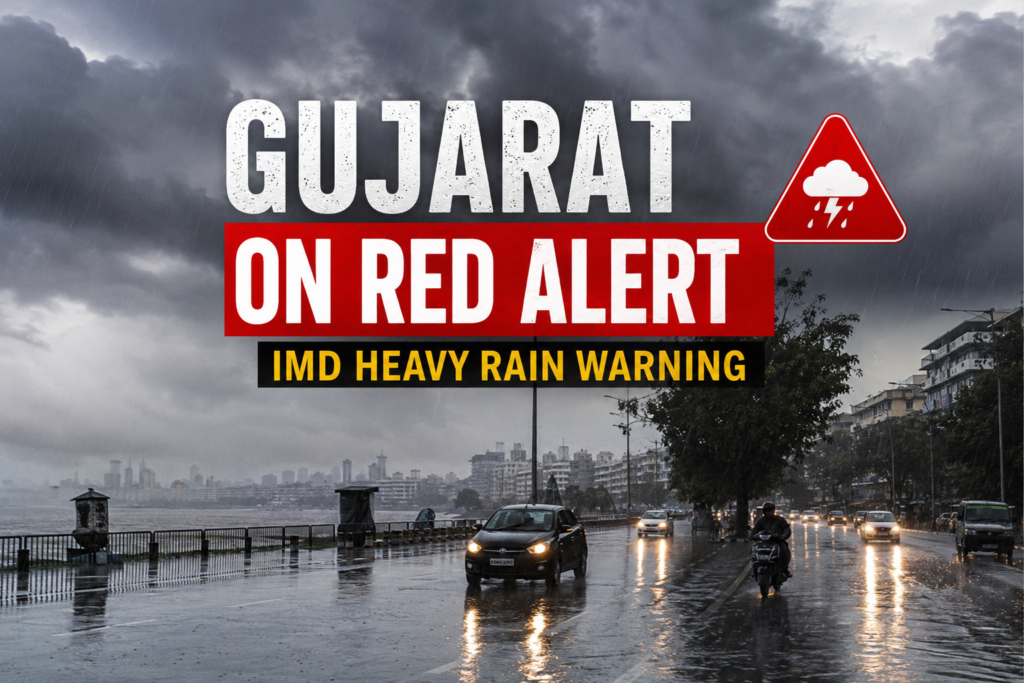
The India Meteorological Department (IMD) has issued a Red Alert for several districts in Gujarat after relentless monsoon rainfall triggered widespread flooding, waterlogging, and emergency rescue operations. Continuous heavy to extremely heavy rain over the past few days has disrupted normal life across South, Central, and parts of North Gujarat, forcing thousands of residents to move to safer locations while authorities remain on high alert.
Several districts, including Ahmedabad ,Gandhinagar ,Surat, Valsad, Navsari, Bharuch, Tapi, Dang, Vadodara, Narmada, Anand, Kheda, Panchmahal, Dahod, and Chhota Udepur, are expected to receive intense rainfall over the next 24 to 48 hours. The IMD has warned that the current weather system may continue to bring heavy rainfall, increasing the chances of flash floods, overflowing rivers, traffic disruptions, and damage to infrastructure.
The Gujarat Government has activated emergency response teams, including the National Disaster Response Force (NDRF), State Disaster Response Force (SDRF), local police, and fire departments, to assist people stranded in flood-affected areas. Helicopters have also been used in some locations to rescue residents trapped by rising floodwaters.
Why Has Gujarat Been Placed Under a Red Alert?
A Red Alert is the highest level of weather warning issued by the India Meteorological Department. It is declared when extremely severe weather conditions are expected and immediate action is required to protect lives and property.
According to meteorologists, the current spell of intense rainfall is being driven by a combination of an active southwest monsoon, a well-marked low-pressure system over western India, and strong moisture-laden winds from the Arabian Sea. These conditions have created a favourable environment for prolonged heavy rainfall across Gujarat.
The IMD has advised residents living in flood-prone and low-lying areas to remain alert, avoid unnecessary travel, and closely follow official weather updates as conditions may change rapidly.
Districts Under IMD Red Alert
The latest weather bulletin places multiple districts under a Red Alert due to the possibility of heavy to extremely heavy rainfall.
| City / District | Alert Level | Expected Weather | Main Risk |
|---|---|---|---|
| Ahmedabad | 🔴 Red Alert | Extremely heavy rainfall | Urban flooding, waterlogging |
| Gandhinagar | 🔴 Red Alert | Heavy to very heavy rainfall | Waterlogging, traffic disruption |
| Surat | 🔴 Red Alert | Extremely heavy rainfall | Flooding, overflowing drains |
| Vadodara | 🔴 Red Alert | Heavy to extremely heavy rainfall | Urban flooding |
| Bharuch | 🔴 Red Alert | Heavy rainfall | River overflow, flooding |
| Anand | 🔴 Red Alert | Heavy rainfall | Waterlogging |
| Kheda | 🔴 Red Alert | Heavy rainfall | Local flooding |
| Mahisagar | 🔴 Red Alert | Heavy rainfall | Flash flood risk |
| Panchmahal | 🔴 Red Alert | Heavy rainfall | Road disruption |
| Dahod | 🔴 Red Alert | Heavy rainfall | Waterlogging |
| Chhota Udepur | 🔴 Red Alert | Extremely heavy rainfall | Flash floods |
| Narmada | 🔴 Red Alert | Heavy rainfall | River level rise |
| Tapi | 🔴 Red Alert | Extremely heavy rainfall | Flood-like conditions |
| Navsari | 🔴 Red Alert | Extremely heavy rainfall | Urban & river flooding |
| Valsad | 🔴 Red Alert | Extremely heavy rainfall | Severe flooding |
| Dang | 🔴 Red Alert | Heavy rainfall | Landslides, flash floods |
The Red Alert also extends to the Union Territories of Daman and Dadra & Nagar Haveli, where extremely heavy rainfall is likely.
South Gujarat Faces the Worst Impact
South Gujarat has emerged as the worst-affected region during the current monsoon spell. Districts such as Valsad, Navsari, Surat, and Tapi have recorded exceptionally heavy rainfall within a short period, leading to severe flooding in residential areas, overflowing rivers, submerged roads, and stranded vehicles.
In Valsad, several roads disappeared under floodwater after continuous rain. Rescue teams used boats and helicopters to evacuate people trapped in inundated villages. Similar situations were reported from Navsari and Surat, where residential colonies experienced knee-deep to waist-deep waterlogging.
Thousands Shifted to Safer Locations
The state administration has intensified rescue and relief efforts as floodwaters continue to rise in several districts.
According to official reports:
- More than 22,000 people have been evacuated from vulnerable areas.
- Around 1,200 people have been rescued through emergency operations.
- NDRF teams have been deployed in multiple districts.
- Relief camps have been established for displaced families.
- Continuous monitoring is underway in flood-prone villages and urban areas.
Chief Minister Bhupendra Patel has reviewed the situation with senior officials and sought additional support from the central government to strengthen rescue operations in severely affected districts.
Schools and Colleges Remain Closed
Considering the deteriorating weather conditions, district administrations have announced the closure of schools and colleges in several parts of Gujarat as a precautionary measure.
Educational institutions in districts including Vadodara, Surat, Vapi, Dahod, and Narmada have suspended classes due to heavy rainfall and waterlogging. Parents have been advised to monitor announcements issued by their respective district administrations before sending children to school.
Transportation and Daily Life Disrupted
Heavy rainfall has significantly affected transportation across Gujarat.
Major disruptions include:
- Waterlogged national and state highways
- Diversion of traffic in flood-affected areas
- Delayed train services
- Flight delays due to poor visibility
- Temporary closure of village roads
- Slow movement of public transport
Authorities have requested commuters to avoid travelling unless absolutely necessary and to check official traffic advisories before beginning any journey.
Rivers Flowing Above Danger Levels
Continuous rainfall has caused water levels to rise rapidly in several rivers across Gujarat. Officials are closely monitoring dams and reservoirs to prevent sudden flooding downstream.
Residents living near riverbanks have been advised to stay alert, avoid entering flooded areas, and cooperate with local authorities if evacuation becomes necessary. Emergency teams remain stationed in vulnerable regions where river levels continue to increase.
Impact on Agriculture
The ongoing rainfall presents both opportunities and challenges for Gujarat’s agricultural sector.
Positive Impact
- Improved reservoir storage
- Better groundwater recharge
- Adequate water availability for Kharif crops
- Improved irrigation prospects
Negative Impact
- Flooded agricultural fields
- Crop damage due to prolonged waterlogging
- Soil erosion
- Delayed farming activities
- Damage to vegetable and horticulture crops
Agriculture officials are assessing crop losses in the worst-hit districts while monitoring rainfall patterns for further developments.
Why Is Gujarat Receiving Such Intense Rainfall?
Weather experts explain that several atmospheric systems are working together to produce the current spell of heavy rainfall.
These include:
- Active southwest monsoon
- Strong low-pressure area
- Moisture-rich winds from the Arabian Sea
- Favourable upper-air circulation
- Monsoon trough positioned close to Gujarat
This combination has created ideal conditions for prolonged rainfall, resulting in repeated downpours over the same districts.
Safety Tips During the Red Alert
Residents should follow these important precautions:
- Stay indoors during periods of intense rainfall.
- Avoid driving through flooded roads or underpasses.
- Do not cross overflowing rivers or streams.
- Keep emergency medicines, drinking water, and food supplies ready.
- Charge mobile phones and power banks.
- Follow official updates issued by IMD and district administrations.
- Move vehicles to higher ground if flooding is expected.
- Keep important documents in waterproof bags.
- Switch off electrical appliances if water enters your home.
- Contact emergency services immediately if assistance is required.
Travel Advisory
People planning to travel within Gujarat should take extra precautions.
Before travelling:
- Check the latest IMD weather forecast.
- Verify train and flight schedules.
- Avoid unnecessary travel to flood-prone districts.
- Carry emergency supplies.
- Keep alternative travel routes ready.
- Follow instructions issued by local authorities.
Conclusion
Gujarat is currently facing one of the most intense phases of the 2026 monsoon season, with persistent heavy rainfall creating flood-like conditions across several districts. The IMD’s Red Alert highlights the seriousness of the weather system and the need for immediate public caution. Rescue teams continue to evacuate residents, restore essential services, and monitor vulnerable regions as rainfall persists.
While the monsoon is essential for agriculture and water resources, extreme weather events such as these demonstrate the importance of disaster preparedness, timely warnings, and community awareness. Residents are advised to stay updated through official IMD bulletins and district administration announcements until weather conditions improve.
FAQs
Why has the IMD issued a Red Alert in Gujarat?
The IMD has issued a Red Alert because multiple districts are expected to receive heavy to extremely heavy rainfall, increasing the risk of flash floods, urban flooding, and disruption to public services.
Which districts are worst affected?
Valsad, Navsari, Surat, Tapi, Bharuch, Vadodara, Ahmedabad, Narmada, and several surrounding districts are among the worst affected by heavy rainfall and flooding.
Are schools closed in Gujarat?
Yes. Authorities have announced temporary closure of schools and colleges in several districts, including Surat, Vadodara, Vapi, Dahod, and Narmada, due to heavy rainfall.
Is it safe to travel?
Travel should be avoided unless absolutely necessary. Heavy rainfall has caused flooding, traffic congestion, waterlogging, and delays in transportation across several districts.
What should residents do during a Red Alert?
Residents should stay indoors, avoid floodwaters, monitor official weather updates, keep emergency supplies ready, and follow evacuation instructions if issued by local authorities.