|
Getting your Trinity Audio player ready...
|

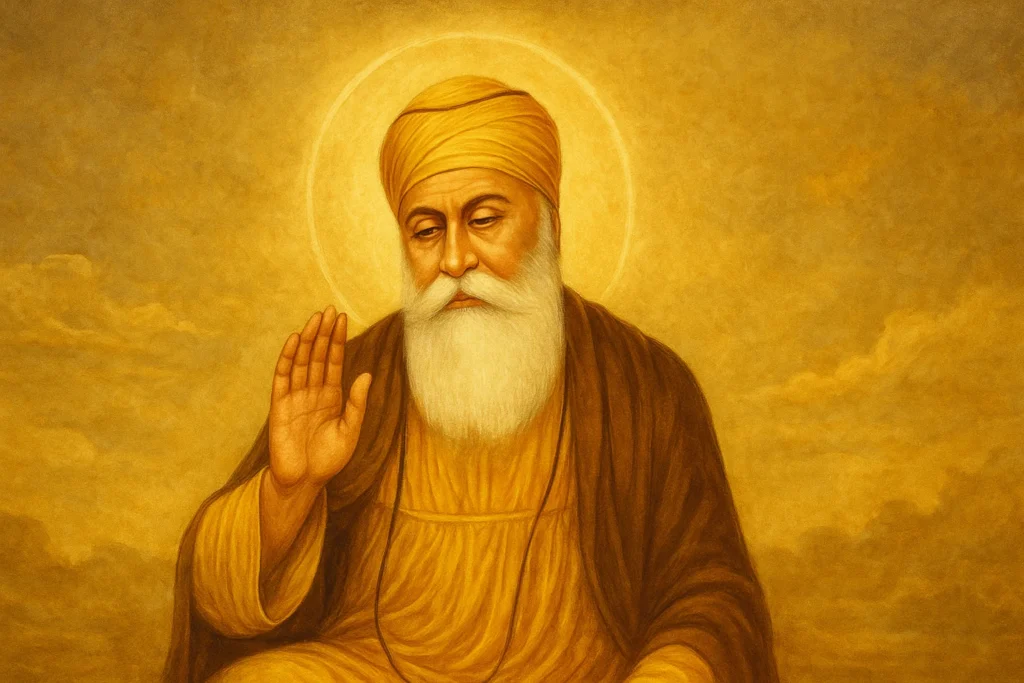
Throughout history, there have been spiritual teachers who did not seek followers, fame, or power—only to awaken humanity to love, equality, and truth. Guru Nanak Dev Ji, the founder of Sikhism and the first Sikh Guru, was one such enlightened soul. Born in 1469 in a small village called Talwandi (now Nankana Sahib, Pakistan), his teachings continue to resonate deeply across the world, transcending religion, culture, and time.
A Messenger of Equality
During an era divided by caste, gender inequality, and social hierarchy, Guru Nanak stood firmly for justice and human dignity. His message was simple yet revolutionary:
“Na koi Hindu, na koi Musalman”
(No one is Hindu, no one is Muslim – we are all human.)
This was not a rejection of faith, but a reminder that at the core of every religion lies the same divine essence. He emphasized oneness—Ik Onkar, meaning There is One God who resides in all creation.

Teachings That Transformed Society
Guru Nanak’s life was a living expression of his words. He traveled across India, the Middle East, and beyond, engaging in dialogues with kings, scholars, and common people. His message focused on three guiding principles:
- Naam Japna (Remember the Divine): Cultivate mindfulness and connect to the inner spirit.
- Kirat Karni (Earn an Honest Living): Work with integrity and dignity.
- Vand Chakna (Share with Others): Care for the community and uplift those in need.
These values were not just spiritual, but deeply practical for creating a fair and compassionate society.
Langar: The Kitchen of Equality
One of Guru Nanak’s greatest contributions was the tradition of Langar—a free community kitchen where everyone, regardless of background, sits together and eats the same meal. This simple practice broke barriers of caste and class, reminding everyone of their shared humanity.
Even today, Sikh gurdwaras worldwide serve millions of meals daily, purely through volunteer service and goodwill.
A Legacy of Light
Guru Nanak did not write sermons for worship; he gifted humanity with a path toward peaceful living. His hymns, compiled later in the Guru Granth Sahib, continue to inspire millions to lead lives rooted in love, service, humility, and truth.
As we look at the world today—full of divisions, noise, and unrest—Guru Nanak’s message feels more relevant than ever:
“Recognize the entire human race as one.”
Quick Info About Guru Nanak
- Full Name: Guru Nanak Dev Ji
- Born: 15 April 1469, Talwandi (now Nankana Sahib, Pakistan)
- Parents: Mehta Kalu Ji (father), Mata Tripta Ji (mother)
- Founder of: Sikhism
- Known For: Teaching equality, peace, service, and the oneness of God (Ik Onkar)
- Key Principles:
- Naam Japna — Remember and connect with the Divine
- Kirat Karni — Work honestly and with integrity
- Vand Chakna — Share with others, especially those in need
- Major Contribution: Started the tradition of Langar (free community kitchen) for all, regardless of caste, religion, or status.
- Message: “Recognize the whole human race as one.”
- Passed Away: 22 September 1539 in Kartarpur Sahib
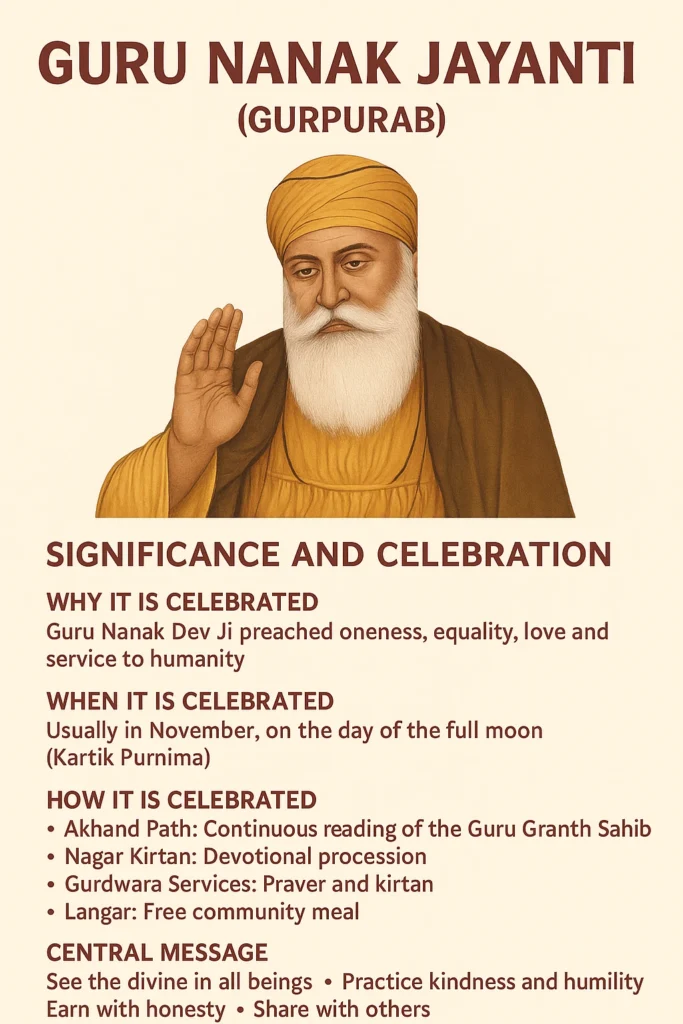
Guru Nanak Jayanti (Gurpurab): Significance and Celebration
Guru Nanak Jayanti, also known as Gurpurab, marks the birth anniversary of Guru Nanak Dev Ji. It is one of the most sacred festivals in Sikhism and is celebrated by Sikhs and people of many faiths around the world.
Why It Is Celebrated
Guru Nanak Dev Ji preached the message of oneness, equality, love, and service to humanity at a time when society was divided by caste, religion, and discrimination. His teachings continue to inspire millions to live with peace and compassion.
When It Is Celebrated
Guru Nanak Jayanti usually falls in November, on the day of the full moon (Kartik Purnima) according to the lunar calendar. The date changes each year.
How It Is Celebrated
The celebration begins a few days earlier with:
- Akhand Path: A continuous 48-hour reading of the Guru Granth Sahib.
- Nagar Kirtan: A devotional procession led by the Panj Pyare (Five Beloved Ones), with singing of hymns and traditional Sikh martial arts (Gatka).
- Gurdwara Services: People gather to pray, sing kirtan (devotional music), and listen to teachings.
- Langar: A free community meal open to everyone, symbolizing equality and service (seva).
Central Message
Guru Nanak Jayanti reminds us to:
- See the divine in all beings
- Practice kindness and humility
- Earn with honesty
- Share with others
- Stand for equality and justice
“Ik Onkar – There is One Creator, present in all.”
Conclusion
Guru Nanak Dev Ji’s teachings were not meant only for Sikhs. They are a universal call to awaken the soul, to treat each other with respect, and to live in harmony with nature and the divine. His life reminds us that true spirituality is not found in rituals, but in love, compassion, and service to humanity.