|
Getting your Trinity Audio player ready...
|

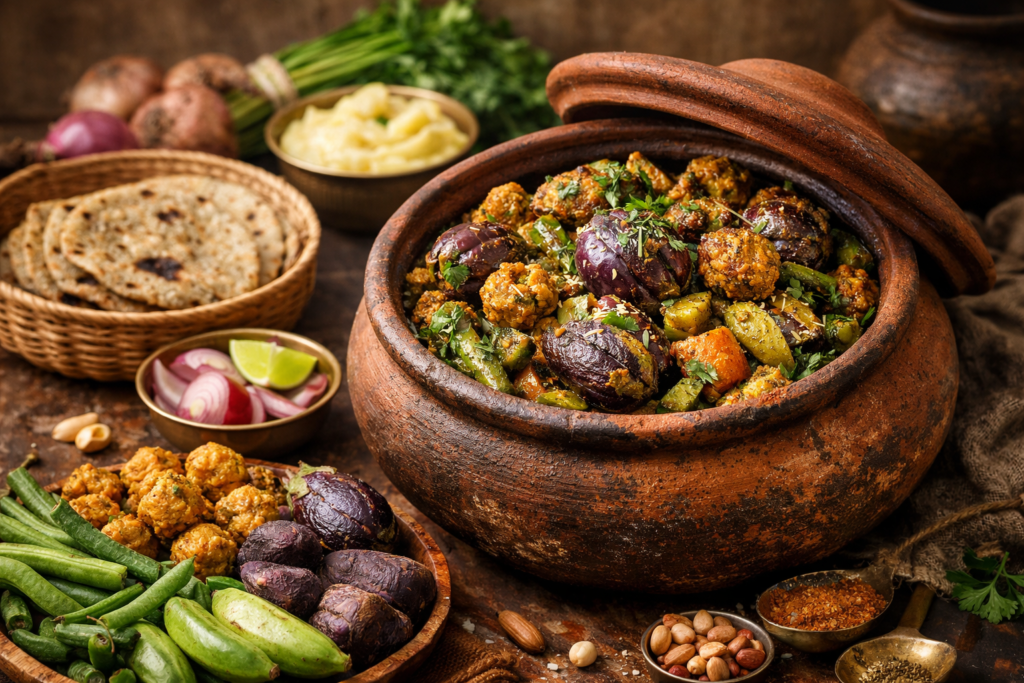
Undhiyu is not just food. It is Gujarati winter culture on a plate. Traditionally cooked upside down in an earthen pot, Undhiyu represents abundance, seasonality, and patience. Unlike fast recipes, this dish rewards slow cooking and careful layering of flavors.
Today, you can recreate the same authentic taste at home, even without a traditional clay pot. The key lies in ingredients, timing, and technique—not shortcuts.
What Makes Gujarati Undhiyu Authentic
Authentic Undhiyu stands apart because of three non-negotiables:

• Only winter vegetables are used
• Fresh green masala, not readymade spice mixes
• Slow cooking that allows flavors to blend naturally
When these elements come together, Undhiyu delivers depth, aroma, and texture that no quick curry can match.
Essential Ingredients for Traditional Undhiyu
Winter Vegetables
• Purple yam (kand)
• Sweet potatoes
• Baby brinjals
• Raw bananas
• Muthia (fenugreek dumplings)
• Surti papdi (flat beans)
Green Masala (Heart of Undhiyu)
• Fresh coriander leaves
• Green garlic (or garlic + spring onion greens)
• Green chilies
• Ginger
• Fresh grated coconut
• Roasted peanut powder
• Sesame seeds
• Lemon juice
• Sugar (balanced, never overpowering)
• Salt
Tempering
• Peanut oil
• Ajwain
• Asafoetida
Step-by-Step: How to Make Authentic Gujarati Undhiyu
Step 1: Prepare the Green Masala
Blend coriander, green garlic, chilies, ginger, coconut, peanut powder, sesame seeds, lemon juice, sugar, and salt.
The paste should be coarse—not smooth. This texture creates depth while cooking.
Step 2: Make Soft Muthia
Mix chopped methi leaves with wheat flour, gram flour, spices, and oil.
Shape small dumplings and steam them lightly, then shallow-fry until golden.
This prevents them from breaking later.
Step 3: Prepare Vegetables
Peel and cut vegetables into large chunks.
Make deep slits in brinjals, bananas, and potatoes.
Stuff the green masala generously inside each piece.
Step 4: Layer the Undhiyu (Critical Step)
In a heavy-bottomed pot:
- Heat peanut oil
- Add ajwain and asafoetida
- Layer papdi at the bottom
- Add stuffed vegetables
- Spread remaining masala
- Place muthia on top
Do not stir at this stage.
Step 5: Slow Cook Without Disturbing
Cover and cook on low flame for 45–60 minutes.
Let steam and natural moisture do the work.
Gently turn only once, near the end.
Modern Kitchen Method (Without Clay Pot)
No traditional pot? No problem.
• Use a thick kadai or pressure cooker
• Avoid pressure whistles—steam cook only
• Keep flame low throughout
• Never rush the process
Taste remains authentic when patience is respected.
Common Mistakes to Avoid
• Overcooking vegetables until mushy
• Using frozen or summer vegetables
• Excess sugar that kills balance
• Stirring repeatedly
• Using ready-made masala
Authentic Undhiyu is about control, not speed.
Serving the Right Way
Serve Undhiyu hot with:
• Poori
• Bajra roti
• A bowl of shrikhand
• Fresh onion salad
This combination is classic, balanced, and unbeatable.
Why Homemade Undhiyu Beats Restaurant Versions
Restaurant Undhiyu often compromises on vegetables and slow cooking. At home, you control:
• Ingredient freshness
• Oil quality
• Sweet–spice balance
• Cooking time
The result is cleaner, richer, and deeply satisfying.
Frequently Asked Questions
Can I make Undhiyu without muthia?
Yes, but muthia adds texture and absorbs flavors beautifully.
Is Undhiyu spicy?
Traditionally, it is balanced—not overly spicy.
Can Undhiyu be reheated?
Yes. In fact, it tastes even better the next day.
Is Undhiyu vegan?
Absolutely. It is naturally plant-based.
Final Thoughts
Making authentic Gujarati Undhiyu at home is an experience, not just a recipe. When done right, it reflects tradition, seasonality, and culinary wisdom passed down through generations.
If you respect the process, Undhiyu will reward you—every single time.