|
Getting your Trinity Audio player ready...
|

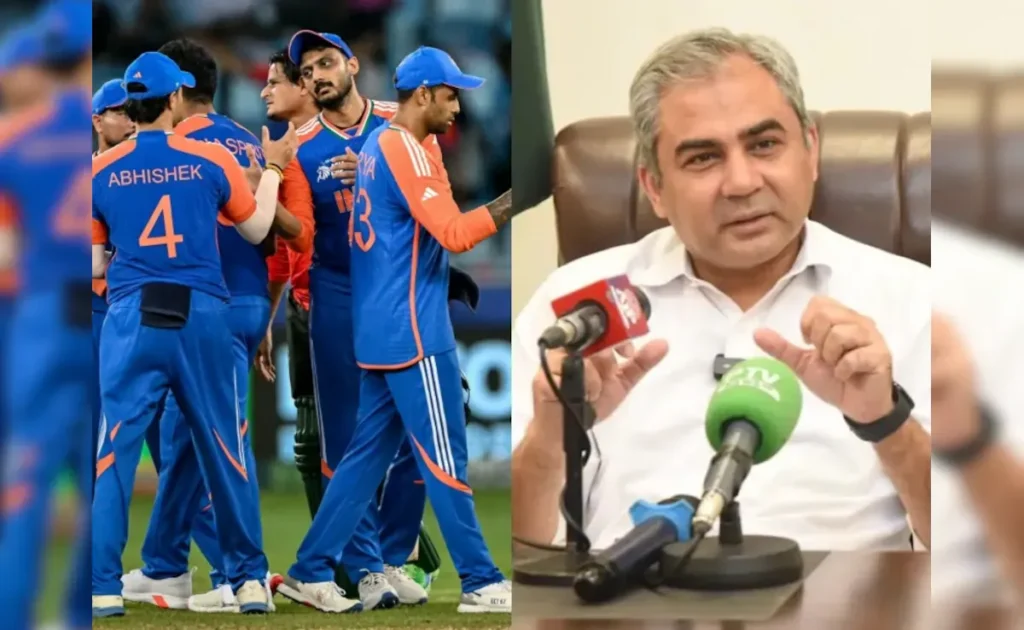
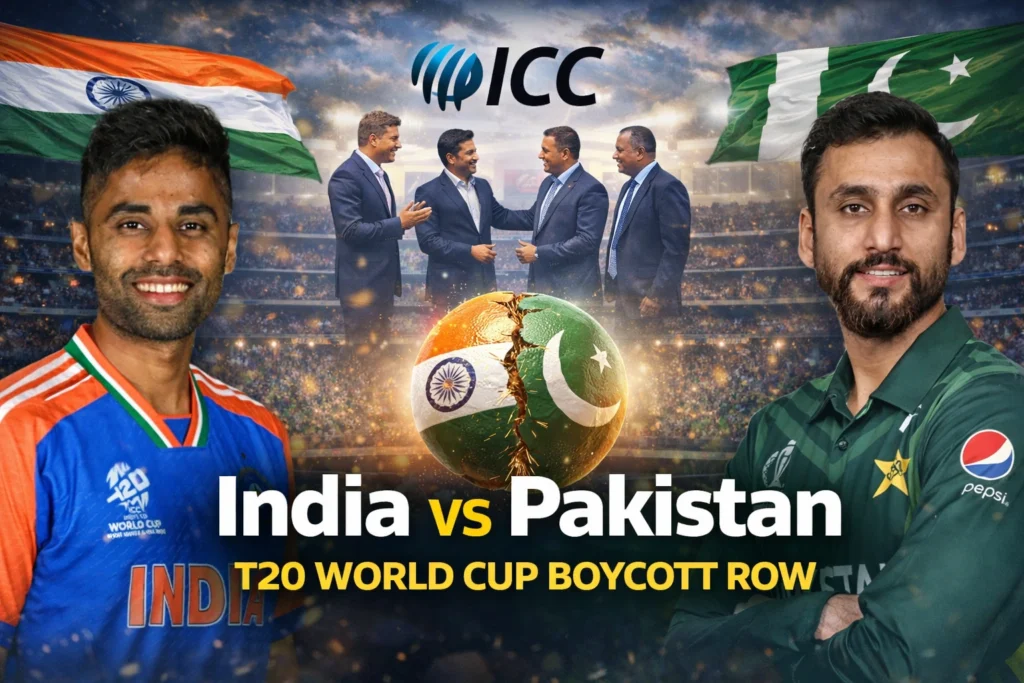
The India vs Pakistan T20 World Cup boycott controversy has once again thrown international cricket into turmoil. What began as speculation has now escalated into a full-blown administrative and political standoff, with the Pakistan Cricket Board (PCB) officially placing three major demands before the International Cricket Council (ICC). This development has added a dramatic twist to one of the most sensitive rivalries in world sport.
The issue is no longer just about a single match. Instead, it has become a test of governance, neutrality, and the ICC’s ability to manage global cricket amid geopolitical tensions.
- Background: Why India vs Pakistan Matches Are Always Sensitive
- What Triggered the Latest Boycott Row?
- PCB’s Three Key Demands to ICC
- ICC’s Dilemma: Cricket vs Politics
- Impact on the T20 World Cup
- Players Caught in the Middle
- Fans React: Frustration and Fatigue
- Bigger Picture: A Defining Moment for World Cricket
Background: Why India vs Pakistan Matches Are Always Sensitive
The India vs Pakistan cricket rivalry is unmatched in intensity, viewership, and revenue generation. However, bilateral cricket between the two nations has remained suspended for years due to political and diplomatic tensions. As a result, ICC tournaments like the T20 World Cup remain the only platform where fans expect to see these two teams face off.

Nevertheless, even ICC events have not been immune to controversy. Every major tournament now brings renewed debates over venues, participation, security, and neutrality.
What Triggered the Latest Boycott Row?
The current controversy surfaced after reports suggested uncertainty over India’s participation in Pakistan-hosted events and the future of India–Pakistan matches in ICC tournaments. These reports sparked backlash within Pakistan’s cricket administration, forcing the PCB to take a firm stand.
Rather than issuing vague statements, the PCB chose a direct route by formally communicating its concerns to the ICC. This decisive move changed the tone of the debate and raised the stakes significantly.
PCB’s Three Key Demands to ICC
The Pakistan Cricket Board has reportedly outlined three non-negotiable demands to the ICC, making it clear that selective participation will not be tolerated.
1. Equal Treatment for All Member Nations
The PCB has demanded that the ICC ensure uniform rules for all cricketing nations, regardless of their financial power or influence. According to Pakistan, no team should be allowed to pick and choose matches or venues based on political preferences.
This demand directly challenges the perception that powerful boards receive preferential treatment in global cricket.
2. Written Clarity on Tournament Participation
Secondly, the PCB has asked the ICC for written assurance regarding participation policies. If India chooses not to play Pakistan in any ICC event, the PCB wants clarity on whether such a decision violates ICC regulations.
This move aims to prevent last-minute withdrawals, which can disrupt tournament schedules, broadcasters, and sponsors.
3. Compensation and Revenue Protection
Perhaps the most critical demand relates to financial losses. India vs Pakistan matches generate massive global revenue through broadcasting rights, sponsorships, and advertising. The PCB has insisted that if such matches do not take place, affected boards must be compensated.
This demand introduces a financial accountability angle that the ICC can no longer ignore.
ICC’s Dilemma: Cricket vs Politics
The ICC now finds itself in an uncomfortable position. On one hand, it claims to operate independently of politics. On the other hand, it must manage tournaments involving nations with complex diplomatic relationships.
If the ICC sides with one board, it risks alienating others. However, delaying a clear decision could weaken its authority and damage trust among member nations.
This situation highlights a long-standing issue in world cricket: governance inconsistency.
India’s Stand: Silence Speaks Volumes
Interestingly, the Board of Control for Cricket in India (BCCI) has not issued a detailed public response. Traditionally, India maintains that government clearance is required for bilateral or multilateral engagements involving Pakistan.
While this stance is not new, its implications during ICC tournaments are far-reaching. Silence, in this case, has only fueled speculation and intensified the controversy.
Impact on the T20 World Cup
The potential fallout of this dispute could be massive:
- Match schedules may require restructuring
- Broadcasters could face revenue losses
- Fans may miss the biggest fixture of the tournament
- ICC’s credibility could suffer
An India vs Pakistan clash is often the most-watched match of any T20 World Cup. Its absence would not only hurt viewership numbers but also diminish the tournament’s global appeal.
Players Caught in the Middle
While administrators debate policies, players remain silent victims of the situation. Cricketers from both teams have consistently expressed their desire to compete on the field rather than be sidelined by off-field issues.
For many players, an India–Pakistan match represents the pinnacle of their careers. Denying them that opportunity affects not just competition but also legacy.
Fans React: Frustration and Fatigue
Cricket fans across the world have reacted with frustration. Many believe the sport is paying the price for unresolved political tensions. Social media discussions reveal a growing sentiment that cricket administrators must find long-term solutions instead of repeating the same cycle every tournament.
The boycott row has once again exposed how fragile international cricket governance remains.
What Happens Next?
The ICC is expected to hold internal discussions with both boards before making any formal announcement. However, the PCB’s firm stance suggests that backing down may not be an option this time.
If the ICC fails to respond decisively, this controversy could set a dangerous precedent, encouraging future disputes across other tournaments.
Bigger Picture: A Defining Moment for World Cricket
This episode is more than a rivalry issue. It is a defining moment for the ICC’s leadership. The organization must now prove whether it can enforce neutrality, protect smaller boards, and safeguard the integrity of global tournaments.
The India vs Pakistan T20 World Cup boycott row has exposed fault lines that can no longer be ignored.
Final Thoughts
Cricket thrives on competition, passion, and unity. However, repeated controversies like this threaten to overshadow the sport itself. The PCB’s three demands have forced the ICC into a corner, making inaction impossible.
Whether this standoff leads to reform or further division will shape the future of international cricket. One thing is certain — the world is watching, and the next move will matter more than ever.