|
Getting your Trinity Audio player ready...
|

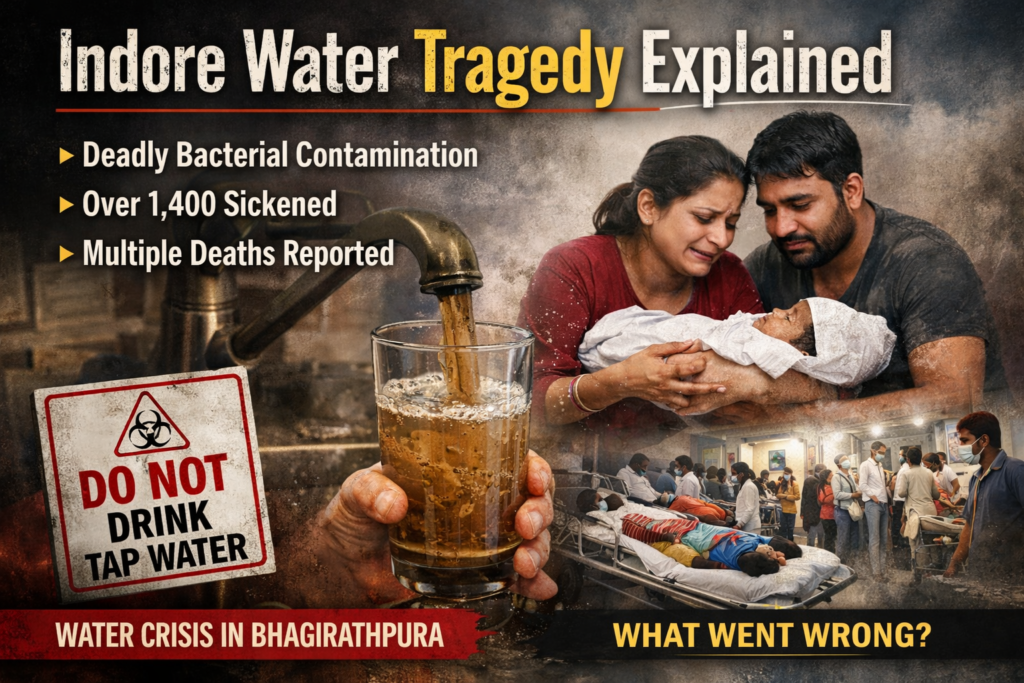
Indore, once celebrated as India’s cleanest city, is now witnessing one of its darkest public health failures. In early January 2026, a severe drinking water contamination crisis shook the Bhagirathpura area, exposing thousands to dangerous bacteria and leading to multiple deaths, including infants.
What makes this tragedy unbearable is one harsh truth — this disaster was completely preventable.
How the Crisis Began
Initially, residents in Bhagirathpura noticed something unusual. The tap water smelled foul and tasted strange. Soon after, people started falling sick. Diarrhoea, vomiting, fever, and dehydration spread rapidly across households.

However, despite repeated complaints, authorities failed to act immediately. As a result, the situation escalated from isolated illness to a full-scale health emergency within days.
Lab Report Confirms Bacterial Contaminations
Eventually, laboratory tests confirmed what residents already feared. The municipal drinking water contained harmful bacteria, making it unfit for human consumption.
Because of this contamination:
- More than 1,400 residents fell ill
- At least four deaths were officially confirmed
- Several others remain hospitalized and under observation
Most importantly, this confirmation ended all speculation. The cause was not seasonal illness or poor hygiene — the water itself was deadly.
The Most Heartbreaking Loss: A 5-Month-Old Baby
Among all the reported deaths, one incident shook the nation.
A five-month-old infant lost his life after consuming packaged milk mixed with contaminated tap water. The mother could not breastfeed, so the family prepared milk using the water supplied to their home — water they believed was safe.
Sadly, that single act of trust proved fatal.
This incident highlights the most painful reality of the crisis:
Even basic caregiving became dangerous because clean water was not ensured.
Why Did This Happen?
Investigations revealed a series of systemic failures:
- Sewage leaked into the drinking water pipeline
- Infrastructure maintenance was delayed
- Early warning signs were ignored
- Water quality checks were inadequate
As a result, contaminated water continued flowing into homes for days. Consequently, infections spread unchecked, especially among children, elderly residents, and low-income families.
Delayed Response Made It Worse
Although authorities eventually advised residents to stop using tap water, the warning came too late.
By the time emergency measures began:
- Hospitals were overcrowded
- Families had already lost loved ones
- Panic had spread throughout the locality
Clearly, delay turned negligence into disaster.
Impact on the Community
The Bhagirathpura area now tells a story of fear and grief.
- Homes stand silent as families remain hospitalized
- Daily wage earners lost income due to illness
- Children and elderly suffered the most severe symptoms
Moreover, trust in basic civic services has collapsed. When drinking water becomes unsafe, no amount of cleanliness branding can protect lives.
Lessons the Indore Water Tragedy Teaches Us
This tragedy sends a powerful message:
- Clean water is not optional — it is a fundamental right
- Early complaints must never be ignored
- Regular water testing saves lives
- Infrastructure neglect kills silently
- Accountability matters more than awards
Indore’s experience proves that even developed cities remain vulnerable if governance fails at the ground level.
What Residents Must Do Immediately
Until authorities fully secure the supply:
- Avoid drinking tap water
- Boil water before use
- Use safe alternatives for infants and elderly
- Seek medical help at the first sign of symptoms
Prevention at the household level can reduce risk, but systemic reform is the only long-term solution.
Final Words
The Indore water tragedy is not just a local incident — it is a national warning. When essential services fail, the weakest pay the highest price.
A city can win awards for cleanliness, but true progress is measured by how well it protects its people. Clean water should never become a gamble.
The lives lost demand more than sympathy.
They demand change, responsibility, and action — now.