|
Getting your Trinity Audio player ready...
|
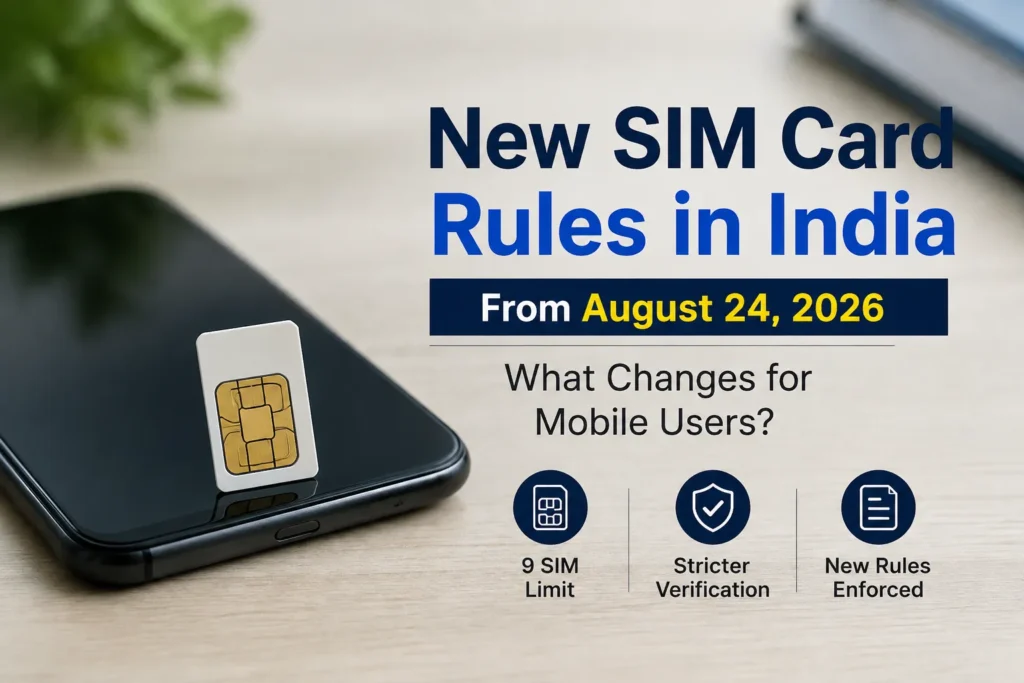
New SIM Card Rules 2026: Mobile users in India will see stricter enforcement of SIM card limits from August 24, 2026. The Department of Telecommunications (DoT) has directed telecom operators to prevent subscribers from obtaining additional mobile connections once they have reached the maximum permitted limit.
The move is aimed at improving the identification of mobile subscribers, preventing misuse of mobile connections and making it harder to use SIM cards registered through fraudulent or suspicious identities.
What Is Changing From August 24, 2026?
The most important change is related to the maximum number of mobile connections an individual can have.
Under the latest DoT directive, a person who already has nine mobile connections registered in their name will not be allowed to obtain another connection.
Telecom service providers have been instructed to put technical and organisational systems in place from August 24 to identify subscribers who are attempting to obtain a connection beyond the permitted limit.
This means that users who already have nine SIM connections under their name may be refused when they try to take an additional mobile number.
Is the 9-SIM Limit New?
Not exactly.
The important distinction is that August 24 is primarily about stricter enforcement of the existing limit, rather than suddenly reducing the number of SIM cards an individual is allowed to have from some higher number to nine.
The DoT’s latest direction requires telecom companies to actively identify subscribers who have already reached the prescribed limit and stop them from getting another connection.
So, if you have one, two, three or a few mobile connections registered in your name, there is generally no reason to panic because of this particular change.
How Many SIM Cards Can One Person Have in India?
For an individual subscriber, the applicable limit is nine mobile connections.
Once a subscriber has reached this limit, telecom operators are required to prevent the person from obtaining an additional mobile connection.
The rule is intended to improve accountability and traceability of mobile connections and reduce the possibility of SIM cards being misused for fraudulent or illegal activities.
What Happens If You Already Have 9 SIM Cards?
If nine mobile connections are already registered in your name, you may not be able to purchase another SIM connection.
When you apply for an additional number, the telecom operator will be required to identify that you have already reached the permitted limit and inform you that another connection cannot be issued.
The DoT has directed telecom companies to use the Digital Intelligence Platform (DIP) to help identify subscribers who have reached the maximum permitted number of connections.
What Is the Digital Intelligence Platform?
The Digital Intelligence Platform (DIP) is a system used by the Department of Telecommunications to help telecom operators identify and manage information relating to mobile connections.
Under the latest instructions, telecom companies will use information available through the platform to identify subscribers who have already reached the maximum permitted number of mobile connections.
The system is intended to make verification more effective and reduce the possibility of people obtaining additional SIM cards beyond the prescribed limit.
Will SIM Verification Become Real-Time?
Yes, but the transition is not immediate.
The latest reports indicate that the initial verification mechanism will be implemented from August 24, while telecom operators have been directed to streamline their integration with the Digital Intelligence Platform.
The November 30, 2026 deadline is important because telecom operators are expected to move towards a more streamlined, real-time verification process by then.
This should make it easier for operators to determine whether a subscriber is already at the permitted connection limit when applying for another number.
Will Existing SIM Cards Stop Working on August 24?
No, not simply because the new enforcement begins.
The August 24 change primarily concerns the issuance of new mobile connections to people who have already reached the permitted limit.
Having a normal number of active SIM cards does not mean your existing connection will suddenly stop working on August 24.
However, users who have unusually large numbers of connections registered in their name should verify which numbers are actually associated with their identity.
What Should Mobile Users Do?
Most users do not need to take any immediate action.
However, it is a good idea to check how many mobile connections are registered under your name.
This is particularly important if:
- You have previously purchased SIM cards and forgotten about some of them.
- You have lost an old SIM card.
- You have stopped using an old mobile number.
- You suspect that someone may have obtained a SIM using your identity documents.
- You have multiple numbers registered under your name.
Checking your registered connections can help you identify numbers that you no longer recognise.
How to Check SIM Cards Registered in Your Name?
Users in India can use the government’s Sanchar Saathi services to check mobile connections associated with their identity.
The service is designed to help subscribers identify mobile connections issued in their name and report numbers that they do not recognise.
If you find an unfamiliar mobile connection associated with your identity, you should report it through the appropriate government/telecom channel rather than ignoring it.
Why Is the Government Tightening SIM Rules?
The main objective is to improve mobile subscriber verification and prevent misuse of telecom connections.
A SIM card registered using someone else’s identity can potentially be misused for scams, impersonation, fraudulent communications and other unlawful activities.
By making telecom operators actively check the number of connections associated with a subscriber, the government aims to improve traceability and reduce the misuse of mobile numbers.
The DoT’s latest directive specifically focuses on preventing subscribers from obtaining connections beyond the permitted limit.
What If Someone Has More Than 9 Connections Already?
This is an important distinction.
The August 24 instruction specifically requires telecom operators to prevent a subscriber who has already reached the prescribed limit from getting another mobile connection.
Therefore, users should not interpret the announcement as meaning that every person with more than nine existing connections will automatically lose all their numbers on August 24.
The DoT’s system already contains information about subscribers who have connections beyond the prescribed limit, and the latest measures are focused on identifying and controlling further issuance.
Users with multiple connections should nevertheless verify their numbers and follow any communication received from their telecom operator or authorities.
Does This Rule Apply to Jio, Airtel, Vi and BSNL?
The requirement applies to telecom service providers, so it is not limited to one particular private operator.
Telecom operators are expected to implement the required systems to identify subscribers who have reached the permitted limit and prevent additional connections from being issued.
Therefore, the rule is relevant whether your mobile connection is with a major private operator or another licensed telecom provider.
What About eSIM Users?
The August 24 directive is about the number of mobile connections registered to a subscriber, rather than simply whether the connection uses a physical SIM card.
Therefore, switching from a physical SIM to an eSIM should not be viewed as a way to bypass the subscriber connection limit.
The important factor is the mobile connection registered under the subscriber’s identity.
Will Normal Mobile Users Be Affected?
For most users, the impact should be minimal.
Someone who has one or two personal mobile numbers is unlikely to notice any major change in day-to-day mobile usage because of this particular rule.
The biggest impact will be on people who:
- Have a large number of mobile connections.
- Frequently obtain new SIM cards.
- Have several unused connections registered in their name.
- Need additional numbers after reaching the permitted limit.
For ordinary mobile users, the change mainly means stricter verification when applying for additional connections.
New SIM Card Rules From August 24: Key Points
| Rule | Details |
| Effective from | August 24, 2026 |
| Maximum permitted connections | 9 for an individual subscriber |
| What changes | Stricter enforcement of the connection limit |
| 9 SIMs already registered? | Additional connection can be denied |
| Verification platform | Digital Intelligence Platform (DIP) |
| Real-time integration target | November 30, 2026 |
| Existing normal SIMs | Not automatically disconnected just because of August 24 |
| Purpose | Better subscriber identification and prevention of misuse |
| eSIM | Does not provide a way around the subscriber limit |
Frequently Asked Questions
1. What is the new SIM card rule from August 24, 2026?
From August 24, telecom operators must prevent subscribers from obtaining additional mobile connections once they have reached the prescribed maximum limit of nine connections.
2. How many SIM cards can one person have in India?
An individual subscriber can have up to nine mobile connections under the applicable limit.
3. Will my SIM stop working on August 24?
No. The new enforcement does not mean that ordinary existing SIM cards will automatically stop working on August 24.
4. What happens if I already have nine SIM cards?
If nine connections are already registered in your name, a telecom operator can deny your request for an additional mobile connection.
5. Can I get another SIM by using an eSIM?
No. The limit concerns mobile connections associated with your identity, so changing from a physical SIM to an eSIM does not provide a legitimate way to bypass the limit.
6. Why is the government introducing stricter SIM verification?
The objective is to improve subscriber traceability and reduce the misuse of mobile connections for fraud and other unlawful activities.
7. How can I check SIM cards registered in my name?
You can use the government’s Sanchar Saathi service to check mobile connections associated with your identity and report numbers you do not recognise.
Conclusion
The new SIM card rules taking effect from August 24, 2026, are mainly about stricter enforcement of India’s mobile-connection limit.
The key point for consumers is simple: an individual who already has nine mobile connections registered in their name will not be able to obtain another connection.
The Department of Telecommunications is using the Digital Intelligence Platform to help telecom operators identify subscribers who have reached the limit. Operators are also expected to move towards more streamlined, real-time verification by November 30, 2026.
aFor most people with one or two mobile numbers, there is no reason to panic. However, anyone with multiple SIM cards should check which connections are registered under their name and report any unfamiliar numbers.
Disclaimer: Telecom rules and implementation procedures can be updated by the Department of Telecommunications. Readers should check official DoT/telecom operator communications for the latest requirements.