|
Getting your Trinity Audio player ready...
|

In January 2026, the global order shifted overnight. The United States launched a direct operation inside Venezuela and detained Nicolás Maduro, the country’s sitting president. As a result, governments scrambled to respond, legal experts clashed over sovereignty, and Venezuela plunged into uncertainty. This was not diplomacy. Instead, it was decisive action—and it changed everything.
How the Operation Unfolded
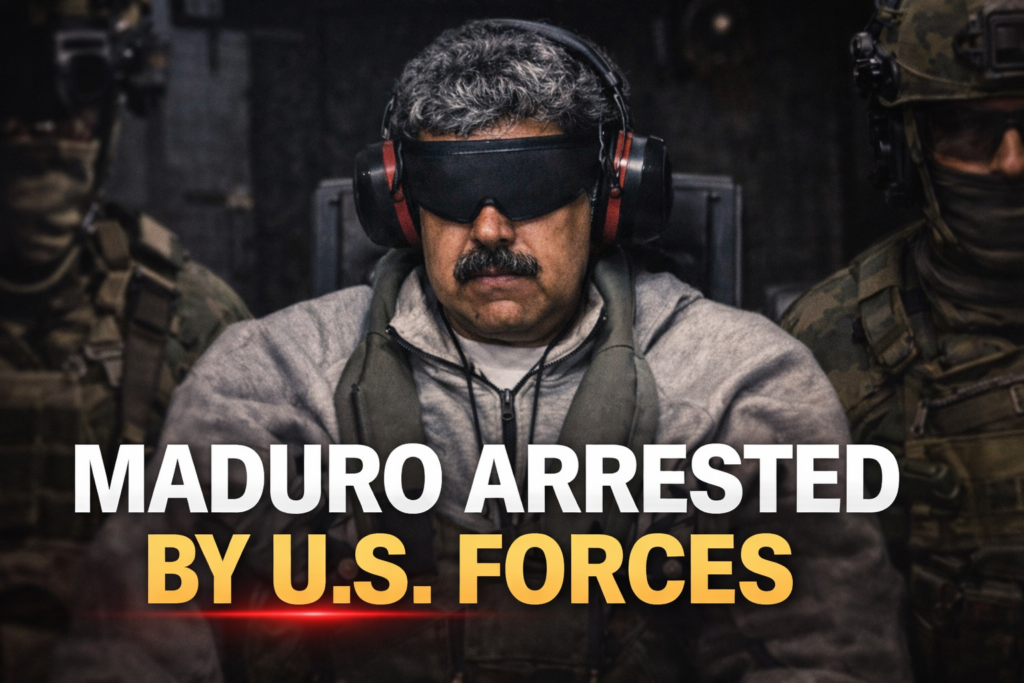
First, U.S. forces initiated a targeted military raid in Caracas on January 3, 2026. Then, precision strikes secured access routes while ground teams moved toward the presidential compound. Within hours, U.S. officials confirmed the detention of Maduro and his wife, Cilia Flores.
Next, U.S. forces transported Maduro out of Venezuela and into American custody. Shortly afterward, U.S. authorities announced that he would face federal criminal charges related to narcotics trafficking and corruption. Consequently, the event moved from a regional crisis to a global flashpoint.

Why the United States Acted
For years, Washington accused Maduro of running a narco-linked state. However, previous administrations relied on sanctions and diplomacy. This time, the approach changed.
Under Donald Trump’s second term, the U.S. adopted a hardline stance. Officials argued that Maduro’s indictments stripped him of political protection. Therefore, they treated the operation as law enforcement, not an act of war.
Nevertheless, this justification sparked fierce debate.
Immediate Impact Inside Venezuela
As soon as Maduro left the country, power structures wobbled. The Supreme Court announced an interim arrangement, while security forces flooded major cities. Meanwhile, protests erupted—some celebrating Maduro’s fall, others condemning foreign intervention.
At the same time, economic anxiety intensified. Markets froze, supply chains slowed, and citizens feared prolonged instability. In short, removing a leader proved easier than stabilizing a nation.
Global Reaction: A Divided World
International responses split sharply.
On one hand, several Latin American governments condemned the operation as a violation of sovereignty. Russia and China echoed that stance and warned of dangerous precedents. On the other hand, a few Western allies remained cautious, avoiding outright condemnation.
Meanwhile, international law experts raised urgent questions. Can a foreign power arrest a sitting head of state? Does criminal indictment override sovereignty? Because global law offers no clear answers, the world entered uncharted territory.
Legal and Political Consequences
From a legal standpoint, the case challenges long-standing norms. Traditionally, heads of state enjoy immunity. However, the U.S. argued that serious criminal charges eliminate that shield.
Politically, the message was unmistakable. Powerful nations may now bypass diplomacy if they believe enforcement justifies action. As a result, smaller states began reassessing their security assumptions.
Why January 2026 Marks a Turning Point
This incident did more than remove a president. It redefined global behavior. Sanctions and negotiations no longer represent the ceiling of pressure. Direct action has entered the playbook.
Moreover, the operation reshaped Latin American geopolitics. Countries in the region now face a tougher reality: external powers may intervene faster and more forcefully than ever before.
What Comes Next
Looking ahead, Maduro’s trial will test U.S. courts and international legitimacy. Simultaneously, Venezuela must navigate leadership, economic recovery, and social stability without its long-time ruler.
Ultimately, history will judge this moment not only by Maduro’s fate but by its ripple effects. One question now dominates global discussions: if this can happen once, where does it stop?
Final Word
January 2026 did not deliver a quiet arrest. Instead, it delivered a loud warning. Power dynamics have shifted, rules have blurred, and the world has entered a more aggressive geopolitical era. Whether this move brings justice or chaos depends entirely on what follows.