|
Getting your Trinity Audio player ready...
|

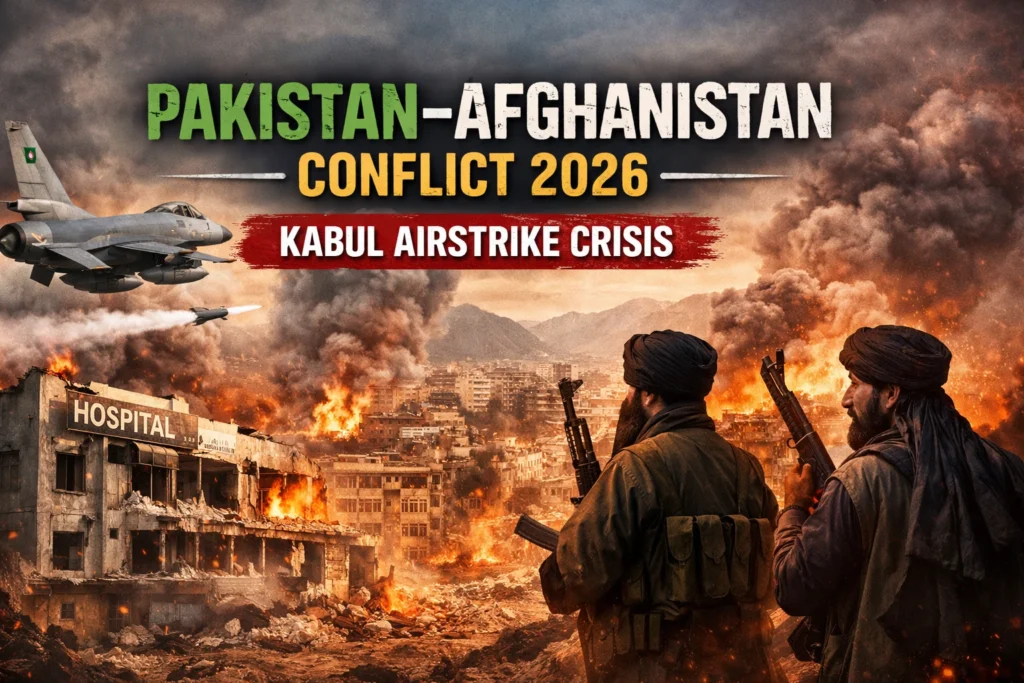
Tensions between Pakistan and Afghanistan have taken a dangerous turn in 2026, following shocking claims of a deadly airstrike in Kabul. According to reports, hundreds of civilians may have been killed after a strike allegedly carried out by Pakistan hit a hospital in the Afghan capital.
However, as with most geopolitical conflicts, the truth is layered, contested, and evolving. Both sides are presenting completely different narratives, making this situation not just a humanitarian concern but also a strategic flashpoint for the region.
What Happened in Kabul?
The Taliban-led Afghan government has accused Pakistan of launching an airstrike targeting a drug rehabilitation hospital in Kabul. Initial claims suggest:

- Over 400 people killed
- Around 250 injured
- Heavy damage to civilian infrastructure
If true, this would mark one of the deadliest incidents in recent Afghanistan–Pakistan tensions. The scale alone makes it globally significant.
Pakistan’s Side of the Story
Pakistan has firmly denied targeting civilians or any hospital. Instead, officials claim:
- The operation was a precision strike
- Targets were terrorist hideouts
- No intentional harm was directed at civilians
This sharp contradiction between both sides highlights a major issue in modern conflicts — information warfare.
The Real Reason Behind the Conflict
This isn’t just about one airstrike. The roots go deeper.
1. Militant Safe Havens
Pakistan has repeatedly accused Afghanistan of allowing militant groups, especially Tehrik-i-Taliban Pakistan (TTP), to operate from its soil.
2. Border Tensions
The Durand Line, which separates the two countries, has long been disputed. Frequent clashes and mistrust have kept the border volatile.
3. Retaliation Cycle
Recent attacks inside Pakistan have triggered retaliatory responses, creating a cycle of strike and counter-strike.
Why This Situation Is Dangerous
This isn’t just another regional clash — it has the potential to escalate rapidly.
- High civilian risk: If hospitals or public areas are hit, humanitarian crises will deepen
- Military escalation: Continued strikes could lead to full-scale conflict
- Regional instability: Neighboring countries, including India, will feel the impact
The situation is fragile, and even a small miscalculation could trigger something far bigger.
Global Reaction
The international community has expressed concern over the rising tensions. Calls are being made for:
- Independent investigations
- Immediate de-escalation
- Protection of civilians
However, global responses often move slower than events on the ground, which means the situation could worsen before any meaningful intervention.
The Bigger Picture
This incident reflects a broader shift in modern warfare:
- Conflicts are increasingly cross-border and fast-moving
- Narratives are shaped as much by media and propaganda as by facts
- Civilians are often the biggest victims
The Kabul airstrike controversy is not just about who is right or wrong — it is about how fragile peace in the region truly is.
Conclusion
The alleged Kabul airstrike has pushed Pakistan–Afghanistan relations to a critical point. With both sides holding firm to opposing claims, the truth remains uncertain, but the consequences are already real.
If tensions continue to rise, this conflict could evolve into a much larger crisis affecting not just the two nations but the entire South Asian region.
One thing is clear — this is no longer a minor border issue. It’s a situation the world cannot afford to ignore.