|
Getting your Trinity Audio player ready...
|
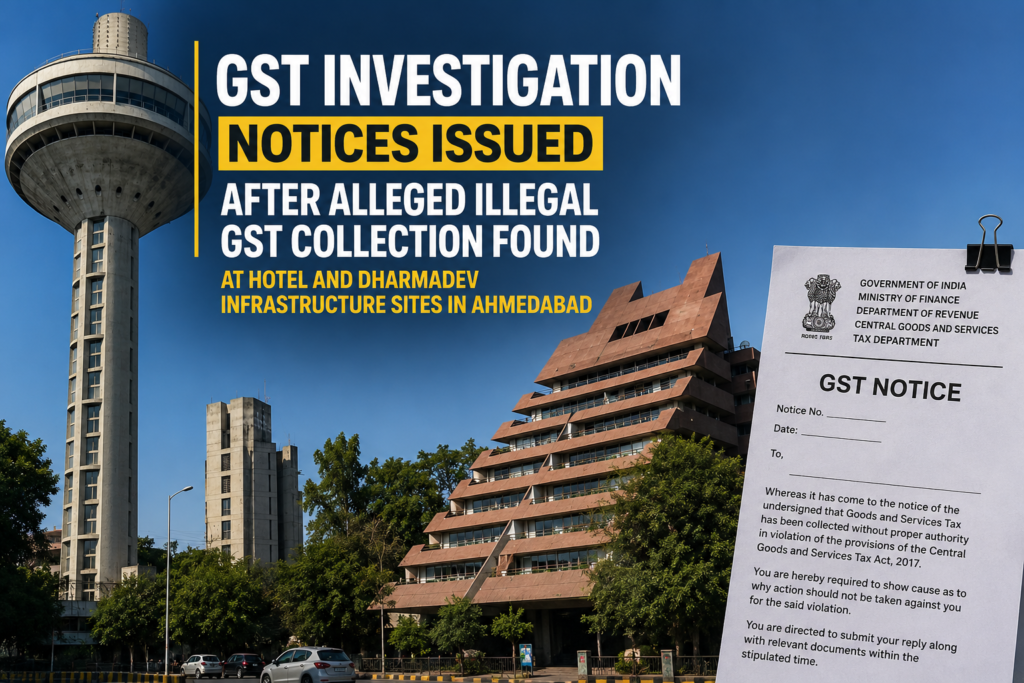
Ahmedabad’s iconic Patang Hotel has come under the scanner after the Central Goods and Services Tax (CGST) department uncovered alleged GST irregularities during a recent investigation. The tax authorities have issued notices to entities associated with Patang Hotel and Dharmadev Infrastructure after preliminary findings suggested that GST may have been collected from customers despite the cancellation of the hotel’s GST registration.
The development has drawn significant attention across Gujarat, as it highlights the importance of GST compliance for businesses operating in the hospitality and real estate sectors. While the investigation is still ongoing, officials have already begun examining financial records, invoices, and tax filings to determine the extent of the alleged violations.
Why Did the CGST Department Conduct Searches?
The investigation reportedly began after officials received information about possible GST-related irregularities involving Patang Hotel and Dharmadev Infrastructure. Acting on these inputs, the CGST department carried out searches at multiple locations in Ahmedabad.
The inspection covered Patang Hotel, the corporate office of Dharmadev Infrastructure near Shyamal Crossroads, and one of the company’s construction sites in Naroda. During the operation, officials examined financial records, GST returns, invoices, billing systems, and other business documents that could help determine whether tax laws had been violated.
Authorities believe that the collected evidence will play an important role in establishing the actual amount of tax involved and whether the applicable GST rules were followed.
Allegation of GST Collection After Registration Cancellation
One of the major findings of the preliminary investigation is that Patang Hotel’s GST registration had reportedly been cancelled several months before the recent searches.
Under the Goods and Services Tax Act, businesses whose GST registration has been cancelled are not permitted to collect GST from customers unless the registration has been restored. According to investigators, despite the cancellation, the hotel allegedly continued charging GST on restaurant bills issued to customers.
Officials are now examining whether the GST collected during this period was deposited with the government or retained without legal authorization. These findings will ultimately determine the final tax liability and any further legal proceedings.
Estimated Tax Liability
Initial estimates suggest that more than ₹1.5 crore may have been collected as GST after the cancellation of the registration. Once interest and statutory penalties are calculated under the GST Act, the total liability could reportedly exceed ₹4 crore.
These figures remain provisional and are subject to verification during the ongoing investigation. The final amount will only be determined after officials complete a detailed examination of financial records and receive responses from the concerned parties.
Notices Issued to Concerned Entities
Based on the preliminary findings, the CGST department has issued notices seeking explanations from the entities involved.
These notices require the recipients to submit supporting documents, explain the alleged discrepancies, and clarify whether the GST collected from customers was deposited with the government. The responses submitted will be reviewed before authorities decide whether recovery proceedings or additional legal action should be initiated.
Issuing notices is a standard legal procedure under GST law and provides businesses with an opportunity to present their side before any final order is passed.
Understanding the Legal Position Under GST
The Goods and Services Tax system requires every eligible business collecting GST from customers to maintain a valid GST registration. If the registration is cancelled or suspended, the business cannot legally charge GST on invoices unless the registration is restored.
Any tax collected without proper authorization may be treated as an irregular collection under GST law. In such cases, authorities can recover the amount collected along with applicable interest and penalties. Depending on the seriousness of the violation, additional legal proceedings may also be initiated.
For businesses, maintaining proper GST compliance is not only a legal obligation but also an essential part of building customer trust and avoiding financial liabilities.
Why This Case Matters
The Patang Hotel investigation has become an important case because it demonstrates how tax authorities are strengthening GST enforcement through regular inspections and document verification.
With digital invoicing, online GST return filing, and integrated tax databases, authorities are now better equipped to identify discrepancies between reported transactions and actual business activities. This has significantly improved compliance monitoring across industries.
The case also serves as a reminder for businesses that collecting GST without a valid registration can lead to substantial financial consequences, including recovery of tax, interest, penalties, and prolonged legal proceedings.
What Happens Next?
Although notices have been issued, the investigation has not yet reached its conclusion.
Officials will continue examining accounting records, invoices, GST returns, and bank transactions before arriving at a final assessment. The concerned entities will also have an opportunity to submit their explanations and supporting documents during the adjudication process.
Only after reviewing all available evidence will the CGST department determine:
- Whether GST was collected after the cancellation of registration.
- Whether the collected tax was deposited with the government.
- The final amount of tax, interest, and penalties payable.
- Whether any additional action is required under the GST Act.
Until that process is completed, the matter remains under official investigation.
Lessons for Businesses
The ongoing investigation highlights the importance of maintaining strict GST compliance at all times. Businesses should regularly verify the status of their GST registration, file returns within the prescribed deadlines, maintain accurate financial records, and ensure that any GST collected from customers is deposited with the government.
Regular internal audits and compliance reviews can help businesses identify potential issues before they become legal disputes. As tax authorities continue to strengthen enforcement, compliance has become more important than ever for companies operating in every sector.
Conclusion
The notices issued after the alleged illegal GST collection at Patang Hotel and Dharmadev Infrastructure sites have become one of Ahmedabad’s most closely watched tax investigations. While preliminary findings indicate possible violations involving GST collection after the cancellation of registration, the inquiry is still ongoing, and no final determination has been made.
As authorities continue to review evidence and financial records, the outcome of this case could serve as an important example of GST enforcement in India. For businesses across the country, it reinforces the need to maintain valid GST registration, follow tax regulations carefully, and ensure complete transparency in financial reporting.
FAQs
Why were notices issued to Patang Hotel?
The CGST department issued notices after alleging that GST continued to be collected from customers despite the reported cancellation of the hotel’s GST registration.
Which locations were searched?
Officials searched Patang Hotel, Dharmadev Infrastructure’s office near Shyamal Crossroads, and its construction site in Naroda, Ahmedabad.
How much GST is allegedly involved?
Preliminary estimates indicate that more than ₹1.5 crore may have been collected, with the total liability potentially exceeding ₹4 crore after interest and penalties.
Has the investigation been completed?
No. The investigation is still ongoing, and the authorities have not yet announced their final findings.
Can a business collect GST after its registration is cancelled?
No. Under GST law, a business cannot legally collect GST once its registration has been cancelled unless the registration is officially restored.