|
Getting your Trinity Audio player ready...
|
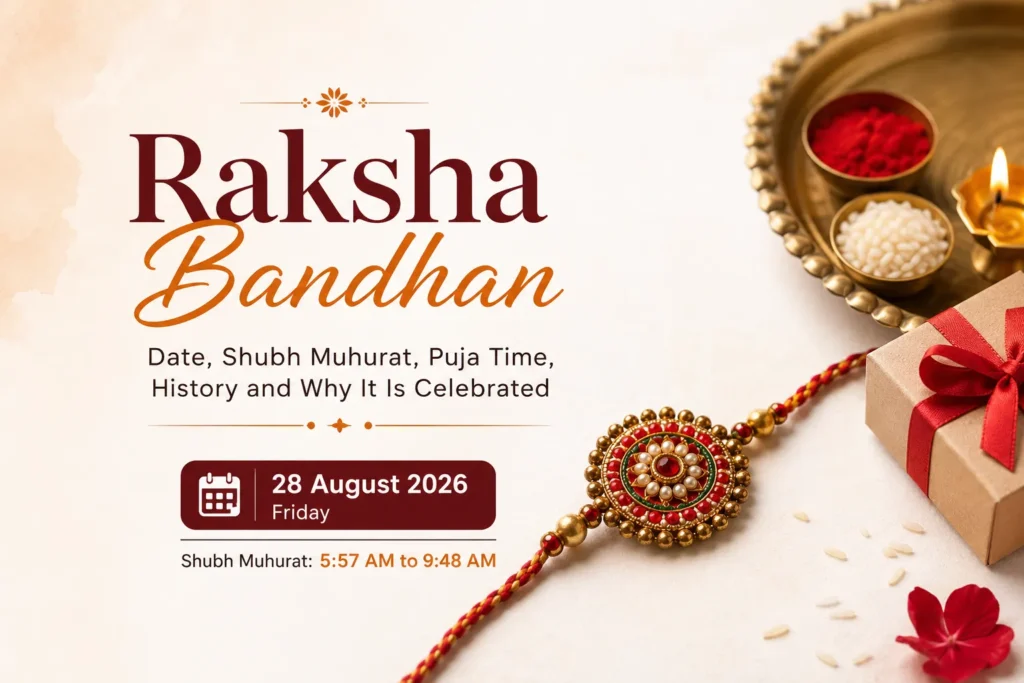
Raksha Bandhan 2026 Date: Friday, August 28, 2026
Raksha Bandhan Shubh Muhurat: 5:57 AM to 9:48 AM
Purnima Tithi: August 27, 9:08 AM to August 28, 9:48 AM
Festival: Raksha Bandhan / Rakhi
Day: Friday
Raksha Bandhan, popularly known as Rakhi, is one of India’s most cherished festivals celebrating the bond of love, care and protection between siblings. Every year, sisters tie a sacred thread called a rakhi around their brothers’ wrists, while brothers express their love and commitment and traditionally give gifts to their sisters.
In 2026, Raksha Bandhan will be celebrated on Friday, August 28. The date has attracted particular attention because the Shravan Purnima tithi falls across August 27 and August 28, creating confusion about whether Rakhi should be celebrated on August 27 or 28. According to the prevailing Panchang-based timings, August 28 is the festival day.
When Is Raksha Bandhan 2026?
Raksha Bandhan 2026 will be celebrated on Friday, August 28, 2026.
Raksha Bandhan is traditionally observed on Shravan Purnima, the full moon day in the Hindu month of Shravan.
This year, the Purnima tithi begins at approximately 9:08 AM on August 27 and ends at 9:48 AM on August 28. Since the relevant festival conditions fall on August 28 and Bhadra does not extend into the main Rakhi-tying period, the festival will be observed on August 28.
Raksha Bandhan 2026: Important Timings
| Event | Date & Time |
| Raksha Bandhan | Friday, August 28, 2026 |
| Purnima Tithi Begins | August 27, 9:08 AM |
| Purnima Tithi Ends | August 28, 9:48 AM |
| Rakhi Tying Shubh Muhurat | August 28, 5:57 AM – 9:48 AM |
| Bhadra | Ends before sunrise on August 28 |
Note: These timings are based on New Delhi calculations. Shubh Muhurat can vary slightly from one city to another, so devotees should check their local Panchang for precise timings.
Why Is Raksha Bandhan Celebrated?
The words Raksha Bandhan come from Sanskrit, where Raksha means protection and Bandhan means bond or tie. The festival therefore represents a bond of protection, affection and responsibility.
Traditionally, the sister ties a rakhi on her brother’s wrist and prays for his health, happiness and prosperity. The brother, in turn, promises to support and protect his sister and presents her with a gift.
However, the meaning of Raksha Bandhan has expanded over time. Today, it is not simply about the traditional brother-sister relationship. The rakhi can represent love, gratitude, trust, family connection and mutual care.
India’s official tourism portal describes Raksha Bandhan as a celebration that can extend beyond immediate siblings to relatives and friends, reflecting the broader idea of relationships and protection.
History and Traditional Stories of Raksha Bandhan
Raksha Bandhan has a long cultural and religious tradition, and several stories are associated with its origins. There is no single universally accepted historical account of how the modern festival began. Instead, Hindu texts, mythology and regional traditions contain several stories connected with the sacred protective thread.
Krishna and Draupadi
One of the best-known stories comes from the Mahabharata.
According to a popular traditional account, Lord Krishna injured his finger. Seeing him bleeding, Draupadi tore a piece of cloth from her sari and tied it around his finger to stop the bleeding.
The story is traditionally understood as an example of selfless affection and the bond of protection. Krishna is later said to have promised to protect Draupadi in return.
The story is widely associated with the spirit of Raksha Bandhan, although it should be understood as a traditional religious narrative rather than a verified historical origin of the modern festival.
Indra and Indrani
Another traditional account is associated with Indra, the king of the devas, and his wife Indrani.
According to the Bhavishya Purana tradition, a sacred protective thread was tied to Indra before battle. The thread was believed to provide divine protection and strength.
This story is one of the traditions cited in discussions about the ancient roots of the protective-thread ritual associated with Shravan Purnima.
Goddess Lakshmi and King Bali
Another popular legend connects Raksha Bandhan with King Bali and Goddess Lakshmi.
According to the story, Lord Vishnu had promised to protect King Bali. Goddess Lakshmi wanted Vishnu to return to Vaikuntha and, disguised as a Brahmin woman, tied a sacred thread around Bali’s wrist. When Bali learned her identity and the reason behind the threat, he accepted her as a sister and granted her wish.
This legend is traditionally connected with the custom of celebrating the sister’s visit and tying the protective thread on Shravan Purnima.
Raksha Bandhan Puja: How Is Rakhi Celebrated?
Raksha Bandhan is generally celebrated with a simple family puja followed by the rakhi ceremony.
A traditional Rakhi puja thali may include:
- Rakhi
- Kumkum or roli
- Rice grains
- Diya
- Incense
- Sweets
- Flowers
- Water
- Fruits or other offerings
Step-by-Step Rakhi Ritual
1. Prepare the puja thali
Arrange the rakhi, kumkum, rice, diya, sweets and other puja items.
2. Perform the puja
The family may pray to their chosen deity and seek blessings for health, prosperity and happiness.
3. Apply tilak
The sister traditionally applies a kumkum or sandalwood tilak to her brother’s forehead.
4. Tie the rakhi
The sister ties the rakhi around her brother’s wrist while offering prayers for his well-being.
5. Offer sweets
The siblings exchange sweets and seek blessings from elders.
6. Exchange gifts
The brother traditionally gives his sister a gift as a gesture of affection. Today, many sisters also give gifts to their brothers.
The ritual can vary between families and communities. There is no single mandatory form of celebration followed by every household.
What Is the Significance of Rakhi?
The rakhi is more than a decorative thread. It represents several important values:
Love and Affection
Raksha Bandhan gives siblings an opportunity to celebrate their relationship and express emotions that may not always be spoken in everyday life.
Protection and Responsibility
The traditional meaning of the rakhi is connected with protection. In modern celebrations, this idea can be understood more broadly as a promise to stand beside one another through difficult times.
Family Bonding
Rakhi often brings families together, particularly when siblings live in different cities or countries.
Gratitude
The festival is also an opportunity to appreciate siblings for their emotional support, companionship and presence in one’s life.
Why Is Raksha Bandhan Celebrated on Purnima?
Raksha Bandhan is traditionally associated with Shravan Purnima, the full moon day of the Hindu month of Shravan.
Shravan is considered an important month in Hindu religious traditions. The full moon day has also traditionally been associated with several other observances across different regions and communities.
The connection with Shravan Purnima is therefore an important reason why the festival’s date changes each year according to the Hindu lunar calendar.
Raksha Bandhan 2026: Why Is There Confusion About August 27 and August 28?
The confusion arises because the Purnima tithi begins on August 27 and continues until the morning of August 28.
However, simply identifying the date on which Purnima begins is not enough to determine the festival day. Traditional festival calculations also consider factors such as the timing of Purnima and Bhadra Kaal.
For Raksha Bandhan 2026, Bhadra ends before sunrise on August 28. As a result, the principal Rakhi ceremony falls on Friday, August 28, rather than August 27.
What Is Bhadra Kaal and Why Is It Important?
Bhadra is a period in the Hindu Panchang that is traditionally considered unsuitable for performing certain auspicious activities.
For Raksha Bandhan, many families traditionally avoid tying the rakhi during Bhadra. This is why Bhadra timings become especially important when determining the appropriate Rakhi Muhurat.
In 2026, the relevant Bhadra period ends before sunrise on August 28, meaning it does not interfere with the main Rakhi-tying window given for that day.
Raksha Bandhan 2026: Shubh Muhurat for Rakhi
According to the cited New Delhi Panchang calculation, the Rakhi-tying Shubh Muhurat on August 28, 2026, is from 5:57 AM to 9:48 AM.
This gives devotees a window of approximately 3 hours and 51 minutes for the traditional rakhi ceremony.
Because Panchang calculations can differ based on geographical location, families should check the local timing for their city before performing the ceremony.
Raksha Bandhan and the Modern Celebration
Raksha Bandhan has evolved considerably while retaining its traditional symbolism.
Today, siblings may celebrate by:
- Sending rakhis and gifts through courier services
- Connecting through video calls when living abroad
- Exchanging personalised gifts
- Preparing special meals at home
- Sharing Rakhi wishes and photographs on social media
- Celebrating with cousins and close family members
The central idea remains unchanged: celebrating relationships and promising continued love, care and support.
Raksha Bandhan 2026 Wishes
Here are a few simple wishes you can share with your brother or sister:
“May this Raksha Bandhan strengthen the beautiful bond we share and fill our lives with happiness, love and countless memories. Happy Rakhi 2026!”
“A sibling is a lifelong friend, a constant support and a special part of every memory. Wishing you a very Happy Raksha Bandhan!”
“May the sacred thread of Rakhi bring love, happiness, prosperity and togetherness to our family. Happy Raksha Bandhan 2026!”
Frequently Asked Questions About Raksha Bandhan 2026
1. Is Raksha Bandhan on August 27 or August 28 in 2026?
Raksha Bandhan will be celebrated on Friday, August 28, 2026. Although the Purnima tithi begins on August 27, the festival’s observance falls on August 28 based on the relevant Panchang considerations.
2. What is the Raksha Bandhan 2026 Shubh Muhurat?
The Rakhi-tying Shubh Muhurat cited for New Delhi is 5:57 AM to 9:48 AM on August 28, 2026.
3. When does Purnima Tithi begin in 2026?
The Shravan Purnima tithi begins at approximately 9:08 AM on August 27, 2026.
4. When does Purnima Tithi end?
The Purnima tithi ends at approximately 9:48 AM on August 28, 2026.
5. What does Raksha Bandhan mean?
Raksha Bandhan literally refers to a bond or knot of protection. The festival celebrates love, trust, responsibility and the enduring relationship between siblings.
6. Can Rakhi be tied during Bhadra?
Traditionally, many families avoid tying rakhi during Bhadra. In 2026, the relevant Bhadra period ends before sunrise on August 28, so it does not overlap with the main Rakhi-tying Muhurat.
Conclusion
Raksha Bandhan 2026 will be celebrated on Friday, August 28. While the Purnima tithi begins on August 27, the festival is observed on August 28 because of the traditional Panchang rules concerning Purnima and Bhadra.
With its combination of ancient traditions, mythology, family rituals and modern expressions of affection, Raksha Bandhan continues to hold a special place in Indian culture.
The rakhi may be a simple thread, but its meaning is much greater: a promise of love, protection, trust and lifelong companionship between siblings.
Happy Raksha Bandhan 2026!