|
Getting your Trinity Audio player ready...
|
India’s digital transformation journey has been powered by several groundbreaking initiatives, and one of the most impactful among them is the Aadhaar program managed by the Unique Identification Authority of India. Since its launch, Aadhaar has become the world’s largest biometric identification system, providing a unique identity to over a billion residents across India.
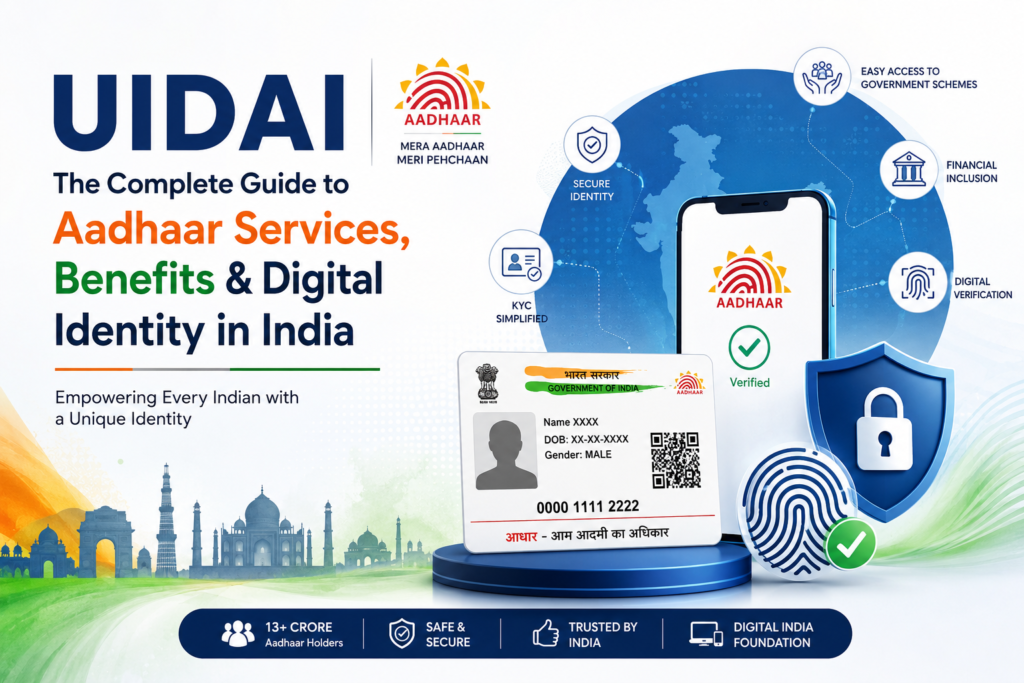
The Unique Identification Authority of India (UIDAI) was established to provide every resident of India with a unique identification number that could be verified online anytime and anywhere. Today, Aadhaar has become an integral part of everyday life, helping citizens access government schemes, banking services, mobile connections, healthcare facilities, educational opportunities, and various digital services.
As India moves toward a more digitally connected future, understanding the role of UIDAI, its services, benefits, and security features has become increasingly important. This comprehensive guide explores everything you need to know about UIDAI and Aadhaar.
- What is UIDAI?
- The History and Evolution of Aadhaar
- Key Objectives of UIDAI
- Major Services Offered by UIDAI
- How Aadhaar Works
- Benefits of Aadhaar for Citizens
- Aadhaar and Digital India
- Security Features of UIDAI
- Aadhaar's Impact on Government Welfare Programs
- Aadhaar and Financial Services
- Future of UIDAI and Aadhaar
- Challenges and Opportunities
What is UIDAI?
The Unique Identification Authority of India (UIDAI) is a statutory authority established under the provisions of the Aadhaar Act, 2016. It operates under the Government of India and is responsible for issuing Aadhaar numbers to residents of India.
UIDAI’s primary objective is to provide a unique digital identity to every resident, ensuring that identities can be verified efficiently while minimizing fraud and duplication. Through advanced biometric and demographic verification processes, UIDAI has created one of the most sophisticated identification systems in the world.
The Aadhaar number issued by UIDAI is a 12-digit unique identification number linked to an individual’s biometric and demographic information.
The History and Evolution of Aadhaar
The Aadhaar project was conceived to create a universal identity system that could help improve the delivery of public services and welfare schemes. Before Aadhaar, millions of citizens faced challenges in proving their identity, which often resulted in difficulties accessing government benefits and financial services.
The Aadhaar initiative was launched in 2009 and quickly expanded across the country. Over the years, UIDAI has continuously upgraded its technology infrastructure, security mechanisms, and service delivery platforms to accommodate the growing needs of India’s population.
Today, Aadhaar is recognized globally as one of the most successful digital identity programs, enabling seamless authentication and verification services for residents.
Key Objectives of UIDAI
UIDAI was established with several important goals:
Providing Unique Identity
Every Aadhaar number is unique and linked to an individual’s biometric and demographic data, eliminating duplicate and fake identities.
Enhancing Government Service Delivery
Aadhaar helps government agencies ensure that subsidies and welfare benefits reach the intended beneficiaries directly.
Promoting Digital Inclusion
The Aadhaar ecosystem enables millions of people to access banking, mobile connectivity, insurance, and various digital services.
Reducing Fraud
Biometric authentication minimizes identity fraud and ensures accurate verification of individuals.
Supporting Digital India
UIDAI plays a crucial role in supporting India’s digital economy and e-governance initiatives.
Major Services Offered by UIDAI
UIDAI provides a wide range of services to Aadhaar holders.
Aadhaar Enrollment
Residents can enroll for Aadhaar by visiting authorized enrollment centers. During enrollment, demographic and biometric information is collected and verified.
Aadhaar Update Services
Individuals can update various details in their Aadhaar records, including:
- Name
- Address
- Date of Birth
- Mobile Number
- Email ID
- Photograph
- Biometric Information
Aadhaar Authentication
UIDAI provides authentication services that allow organizations to verify an individual’s identity using:
- Fingerprint authentication
- Iris authentication
- Face authentication
- OTP-based authentication
Aadhaar Download
Residents can download their electronic Aadhaar (e-Aadhaar), which is digitally signed and equally valid as the physical Aadhaar card.
Aadhaar PVC Card
UIDAI offers Aadhaar PVC cards that are durable, secure, and easy to carry.
Virtual ID (VID)
To enhance privacy, UIDAI introduced the Virtual ID system. This temporary and revocable number can be used instead of the Aadhaar number during authentication.
How Aadhaar Works
The Aadhaar system is built upon advanced biometric technology.
When an individual enrolls, UIDAI collects:
- Fingerprints
- Iris scans
- Facial photograph
- Demographic information
This information is securely stored and processed. Whenever authentication is required, the system verifies the submitted biometric or demographic data against the stored records.
This process takes only a few seconds and helps organizations confirm an individual’s identity accurately.
Benefits of Aadhaar for Citizens
Easy Access to Government Schemes
Aadhaar enables direct benefit transfers, ensuring subsidies and welfare payments reach eligible beneficiaries.
Simplified Banking Services
Banks use Aadhaar-based verification to simplify account opening and customer onboarding processes.
Faster KYC Verification
Aadhaar-based e-KYC has transformed customer verification across industries.
Improved Financial Inclusion
Millions of people in rural and remote areas have gained access to banking and financial services through Aadhaar-enabled systems.
Convenient Digital Services
Aadhaar facilitates access to numerous online services, reducing paperwork and improving efficiency.
Secure Identity Verification
Biometric authentication provides a secure method for proving identity.
Aadhaar and Digital India
The Digital India initiative aims to transform India into a digitally empowered society and knowledge economy. Aadhaar serves as a foundational element of this vision.
By providing a trusted digital identity, UIDAI enables seamless interactions between citizens, businesses, and government agencies.
Digital services powered by Aadhaar include:
- Online banking
- Mobile connections
- Government portals
- Pension services
- Healthcare platforms
- Educational systems
As digital adoption continues to grow, Aadhaar remains central to India’s technological ecosystem.
Security Features of UIDAI
Security is one of UIDAI’s highest priorities.
Biometric Protection
Biometric information is encrypted and stored securely.
Multi-Layer Authentication
Several authentication methods provide flexibility and security.
Virtual ID System
Users can avoid sharing their actual Aadhaar number through the VID feature.
Aadhaar Lock and Unlock
Residents can temporarily lock their biometric information to prevent unauthorized use.
OTP-Based Verification
Additional security is provided through one-time password authentication.
Continuous Monitoring
UIDAI regularly upgrades its infrastructure and cybersecurity measures to address emerging threats.
Aadhaar’s Impact on Government Welfare Programs
One of Aadhaar’s most significant achievements has been improving the efficiency of welfare delivery.
Government schemes now use Aadhaar verification to:
- Identify beneficiaries accurately
- Prevent duplicate records
- Reduce leakages
- Ensure transparency
- Improve accountability
This has helped save substantial public resources while ensuring benefits reach genuine recipients.
Aadhaar and Financial Services
The financial sector has witnessed tremendous transformation due to Aadhaar integration.
Banks, insurance companies, and financial institutions utilize Aadhaar for:
- Customer onboarding
- e-KYC verification
- Account opening
- Digital payments
- Loan applications
- Insurance services
This has made financial services more accessible and efficient for millions of Indians.
Future of UIDAI and Aadhaar
The future of UIDAI is closely tied to India’s digital growth story. Emerging technologies such as artificial intelligence, advanced biometrics, and digital governance platforms are expected to further strengthen the Aadhaar ecosystem.
Future developments may include:
- Enhanced privacy controls
- Advanced authentication technologies
- Improved digital service integration
- Expanded support for government programs
- Greater interoperability with digital platforms
As technology evolves, UIDAI is likely to continue playing a pivotal role in shaping India’s digital identity infrastructure.
Challenges and Opportunities
While Aadhaar has achieved remarkable success, continuous efforts are required to address challenges related to privacy, cybersecurity, digital literacy, and accessibility.
At the same time, Aadhaar presents significant opportunities to:
- Enhance public service delivery
- Strengthen digital governance
- Promote financial inclusion
- Support economic development
- Accelerate digital transformation
By balancing innovation with security and privacy, UIDAI can continue to build trust and expand the benefits of digital identity.
Conclusion
The Unique Identification Authority of India (UIDAI) has revolutionized identity management in India through the Aadhaar program. What started as a vision to provide every resident with a unique identity has evolved into one of the world’s largest and most advanced digital identity ecosystems.
From banking and telecommunications to welfare schemes and digital governance, Aadhaar has become an essential part of everyday life for millions of Indians. Its ability to streamline verification processes, reduce fraud, and improve service delivery has made it a cornerstone of India’s digital infrastructure.
As the nation continues its journey toward a digitally empowered future, UIDAI and Aadhaar will remain key enablers of innovation, inclusion, and efficient governance.
1. What is UIDAI?
UIDAI stands for Unique Identification Authority of India, the organization responsible for issuing and managing Aadhaar numbers.
2. What is Aadhaar?
Aadhaar is a 12-digit unique identification number issued to residents of India based on biometric and demographic information.
3. Is Aadhaar mandatory for every Indian citizen?
Aadhaar is voluntary, but it is widely used for accessing various government and private services.
4. Can Aadhaar details be updated?
Yes, UIDAI allows residents to update demographic and biometric information when necessary.
5. What is e-Aadhaar?
e-Aadhaar is the electronic version of Aadhaar that can be downloaded online and is legally valid.
6. What is Aadhaar authentication?
It is a process that verifies an individual’s identity using Aadhaar-linked information such as fingerprints, iris scans, face authentication, or OTP.
7. What is a Virtual ID (VID)?
VID is a temporary, revocable number generated by UIDAI that can be used instead of the Aadhaar number for authentication purposes.
8. How does Aadhaar improve government services?
Aadhaar helps ensure accurate beneficiary identification, reduces fraud, and enables direct benefit transfers for government schemes.