|
Getting your Trinity Audio player ready...
|
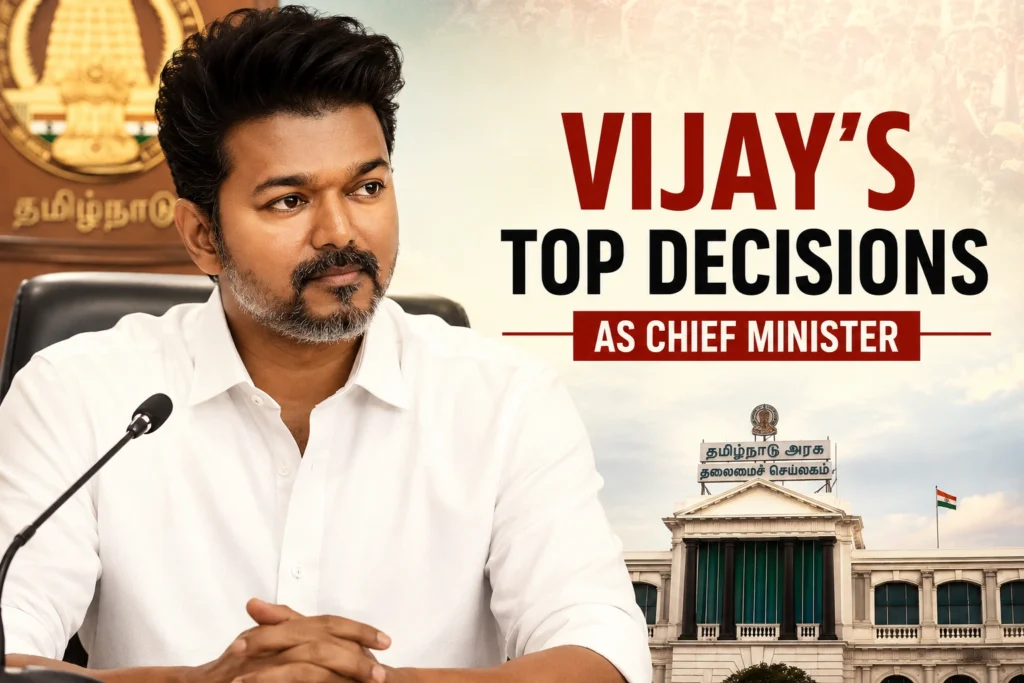
The political journey of Vijay from one of India’s most celebrated film stars to the Chief Minister of Tamil Nadu has been one of the most discussed developments in recent Indian politics. For years, his fans believed that the leadership qualities he displayed on screen would eventually translate into public service. After assuming office as Chief Minister, the spotlight shifted from cinema and election campaigns to governance, administration, and public expectations.
As with any newly elected leader, citizens wanted to know whether promises would be transformed into action. The early months of Vijay’s tenure have attracted widespread attention because of several visible decisions that directly affected the daily lives of ordinary people. While supporters view these decisions as signs of a people-centric administration, critics argue that the true measure of success will emerge over time. Regardless of political opinions, there is little doubt that Vijay’s initial governance style has generated significant public interest.
From reducing VIP culture and promoting administrative accessibility to focusing on public welfare and social reforms, several actions have helped shape the public perception of his leadership. These decisions have not only influenced political discussions across Tamil Nadu but have also sparked conversations across India about what modern governance should look like.
Vijay’s Top Decisions
Reducing VIP Culture and Prioritizing Public Convenience
One of the most widely discussed aspects of Vijay’s administration has been the emphasis on reducing the visible impact of political privilege on ordinary citizens. Across India, VIP convoys and political movements often result in temporary traffic restrictions, road closures, and inconvenience for commuters. Videos and reports associated with Vijay’s tenure have drawn attention because traffic disruptions appeared significantly reduced during official movements.
For many citizens, this decision represented something larger than traffic management. It symbolised a shift in political culture where public convenience was given greater importance. In an era where voters increasingly expect accountability and accessibility from elected representatives, actions that minimise disruptions are often viewed positively.
The public response demonstrated how even seemingly small administrative decisions can have a significant impact on public perception. Many people felt that governance should serve citizens rather than require citizens to adjust their daily routines for political activities. This approach helped strengthen Vijay’s image as a leader focused on practical governance rather than ceremonial authority.
Action Against Excessive Political Posters and Banners
Political banners, posters, cut-outs, and wall advertisements have long been part of the political landscape in many states. However, they are also frequently criticised for creating visual clutter, occupying public spaces, and contributing to unnecessary political symbolism.
One of the notable developments associated with Vijay’s administration has been the effort to discourage excessive political displays in public areas. The move was welcomed by residents who felt that public spaces should remain clean, organised, and accessible rather than being dominated by political branding.
Beyond aesthetics, this decision carried a broader message. It suggested a governance model that prioritises public infrastructure and civic responsibility over political glorification. For many observers, reducing unnecessary political displays represented a modern approach to leadership that focuses more on performance than publicity.
The positive reaction to this initiative highlights changing voter expectations. Citizens increasingly evaluate governments based on visible improvements in their surroundings rather than the size of political campaigns or promotional displays.
Strengthening Women’s Safety Initiatives
Women’s safety continues to be one of the most important issues in contemporary governance. Across India, citizens expect governments to introduce proactive measures that improve security, confidence, and accessibility for women in public spaces.
Under Vijay’s leadership, initiatives focused on women’s safety have gained attention as part of the administration’s broader governance agenda. Efforts aimed at improving public safety infrastructure and strengthening institutional responses have been viewed as important steps toward addressing concerns that affect millions of families.
The significance of these initiatives extends beyond law enforcement. Women’s safety is closely connected to education, employment, mobility, and economic participation. When citizens feel safer in public spaces, it creates broader social and economic benefits for the entire state.
By placing emphasis on this issue early in his tenure, Vijay signalled that social welfare and citizen security would remain important priorities within his administration.
Focus on Anti-Drug Campaigns and Youth Welfare
Tamil Nadu, like many regions across the world, faces challenges related to substance abuse and youth vulnerability. Governments often recognise that addressing these issues requires long-term planning, awareness campaigns, and coordinated institutional action.
One of the notable priorities of Vijay’s administration has been the focus on anti-drug initiatives and youth-oriented programmes. Public campaigns, awareness drives, and administrative measures have aimed to address concerns related to substance abuse among young people.
The emphasis on youth welfare resonates strongly because Vijay’s political support base includes a significant number of younger voters. Many supporters view these initiatives as evidence that the government is attempting to address issues that directly affect future generations.
Youth-focused governance can have far-reaching consequences. When governments invest in prevention, awareness, education, and support systems, they create conditions that contribute to healthier communities and stronger economic participation in the future.
Expanding Public Transport and Infrastructure
Transportation remains one of the most visible indicators of governance effectiveness. Efficient public transport systems influence employment opportunities, economic productivity, urban mobility, and overall quality of life.
The introduction and expansion of public transport services under Vijay’s administration have been among the most practical initiatives noticed by citizens. Improvements in transportation infrastructure directly benefit daily commuters, students, workers, and businesses.
Public transport investments are particularly important in rapidly growing urban areas where congestion and accessibility challenges can affect economic growth. Expanding transport networks helps improve connectivity between cities, towns, and rural regions while supporting broader development goals.
For many citizens, visible improvements in transportation serve as tangible evidence of government action because they directly impact everyday life.
Welfare Measures and Public Support Schemes
Welfare policies continue to play a central role in Indian governance. Citizens often evaluate governments based on their ability to balance economic growth with social support programmes that improve living standards.
Several welfare-oriented measures associated with Vijay’s administration have attracted public attention. These initiatives have been positioned as efforts to provide relief to households while supporting economic stability and social welfare.
Supporters argue that welfare programmes can improve financial security, increase access to essential services, and enhance quality of life for vulnerable populations. Critics may debate implementation methods or long-term sustainability, but welfare initiatives remain a key area through which governments engage directly with citizens.
The emphasis on public welfare reflects an understanding that governance success is often measured not only by economic indicators but also by the daily experiences of ordinary families.
Building a Public-First Image
One of the most significant achievements of Vijay’s early tenure may not be a single policy decision but rather the image he has cultivated as a public-focused leader. Modern voters increasingly expect leaders to be accessible, responsive, and connected to public concerns.
The perception that Vijay is attempting to reduce political excess, prioritise citizen convenience, and focus on practical issues has contributed significantly to his popularity. In an age dominated by social media, public perception can shape political narratives as strongly as policy announcements.
This image has also contributed to comparisons between Vijay and some of the idealistic characters he portrayed during his film career. Many supporters believe that his administration reflects values associated with accountability, accessibility, and public service.
Whether these perceptions continue over the long term will depend on future governance outcomes, but the early public response demonstrates the importance of leadership style in contemporary politics.
Challenges Ahead for the Administration
While the initial months of any government often generate enthusiasm, long-term success depends on addressing complex challenges. Economic development, employment generation, healthcare improvements, educational reforms, industrial growth, and infrastructure expansion will remain critical areas for the administration.
Citizens will ultimately judge the government based on measurable outcomes rather than symbolic actions alone. Delivering sustained economic growth while maintaining social welfare programmes requires careful planning and effective implementation.
The expectations surrounding Vijay’s leadership remain exceptionally high because of his popularity and public profile. Meeting these expectations will require consistent governance performance over multiple years rather than a few headline-generating decisions.
Conclusion
Vijay’s transition from cinema icon to Chief Minister has captured public attention across Tamil Nadu and beyond. His early decisions have generated discussion because they touch on issues that directly affect everyday life, including public convenience, civic responsibility, safety, youth welfare, transportation, and social support.
The reduction of visible VIP culture, action against excessive political displays, focus on women’s safety, anti-drug campaigns, and emphasis on public welfare have helped define the early narrative of his administration. These initiatives have strengthened his image as a leader attempting to introduce a more citizen-focused style of governance.
While it remains too early to determine the long-term impact of his tenure, the decisions taken during the initial phase of his administration have undoubtedly shaped public perceptions. As the government continues to evolve, citizens will watch closely to see whether these early promises translate into lasting progress and meaningful change.
FAQs
What are Vijay’s most notable decisions as Chief Minister?
Some of the most discussed decisions include efforts to reduce VIP culture, discourage excessive political banners, strengthen women’s safety initiatives, focus on anti-drug campaigns, expand public transport, and promote welfare measures.
Why are people praising Vijay’s governance style?
Many citizens appreciate the emphasis on public convenience, accessibility, and practical governance measures that directly affect daily life.
Has Vijay focused on youth-related issues?
Yes. Anti-drug campaigns and youth welfare initiatives have been highlighted as important priorities during his administration.
Why is the reduction of VIP culture considered important?
Citizens often view reduced traffic disruptions and fewer visible political privileges as signs of a government that prioritises public interests.
What challenges does Vijay’s government face in the future?
Key challenges include job creation, economic growth, healthcare improvements, education reforms, infrastructure development, and maintaining long-term governance effectiveness.