Few films have left as lasting an impact on Indian audiences as Nayak. Released more than two decades ago, the movie told the story of an ordinary man who unexpectedly becomes a leader and uses his authority to challenge corruption, cut through bureaucracy, and place the interests of citizens above political privilege. The film became a symbol of the kind of governance many people wished existed in real life.
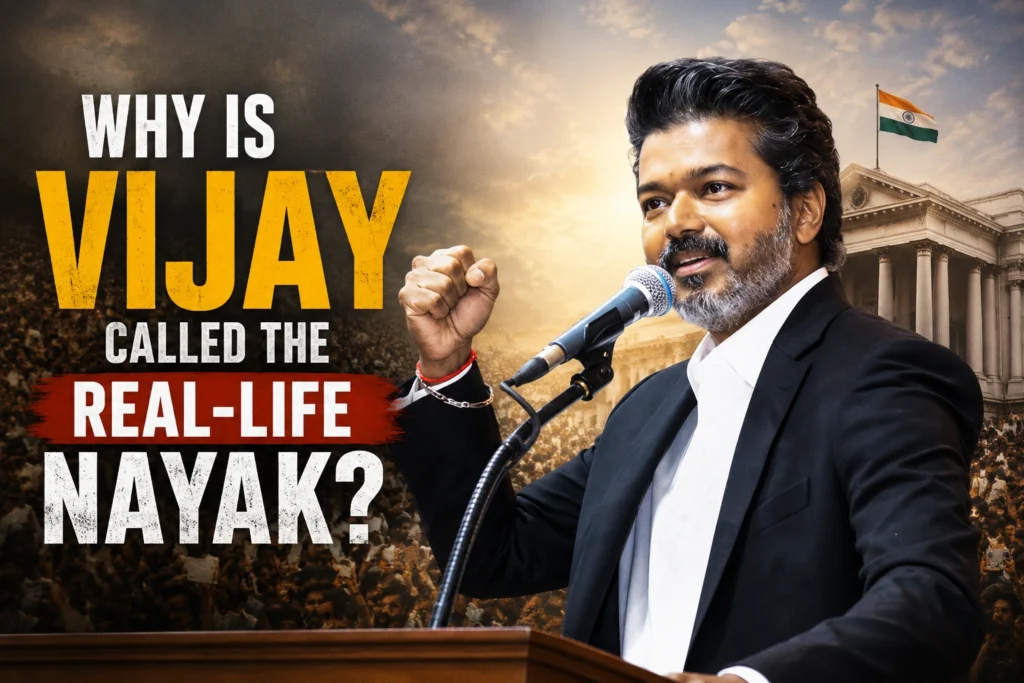
Today, that comparison has resurfaced in political discussions because many supporters of Vijay believe his actions as Chief Minister reflect some of the values portrayed in the movie. Across social media platforms, public discussions, and political conversations, phrases such as “Real-Life Nayak” have become increasingly common whenever people discuss Vijay’s governance style.
While cinema and politics are very different worlds, the comparison is fascinating because it reveals what citizens expect from modern leadership. People are not simply comparing Vijay to a fictional character. Instead, they are comparing their expectations of leadership to the actions they have observed since he entered public office.
Understanding why this comparison has become popular requires looking at both the legacy of Nayak and the public image Vijay has built as a political leader.
The Legacy of Nayak and Its Impact on Public Imagination
The popularity of Nayak goes far beyond its box office performance. The film became a cultural reference point because it presented a fantasy that resonated deeply with ordinary citizens. The protagonist challenged corruption, ignored political formalities, listened directly to people’s concerns, and made decisions quickly.
For many viewers, the movie represented the dream of efficient governance. It portrayed a leader who was accessible, fearless, and committed to solving real problems rather than focusing on political drama.
Even years after its release, the film remains relevant because many of the issues it addressed continue to be discussed in public life. Citizens still want leaders who are accountable, transparent, and focused on results. Whenever a political figure displays characteristics that resemble the values shown in the film, comparisons naturally emerge.
The reason the comparison has attached itself to Vijay is because his supporters see similarities between the public expectations created by Nayak and the governance image he has projected since becoming Chief Minister.
A Leadership Style Focused on Public Perception
One of the biggest reasons behind the “Real-Life Nayak” comparison is Vijay’s emphasis on appearing connected to ordinary citizens. In modern politics, perception matters almost as much as policy. Voters want leaders who appear approachable, relatable, and aware of everyday challenges.
Reports highlighting reduced VIP culture, public-focused initiatives, and efforts to minimise inconvenience to citizens have contributed significantly to this image. Many people believe that these actions demonstrate a willingness to place public interests ahead of political symbolism.
Unlike traditional political approaches that often rely heavily on hierarchy and visible displays of power, Vijay’s style has been perceived as simpler and more citizen-oriented. This perception aligns closely with the image of leadership portrayed in Nayak.
Whether every decision perfectly reflects the movie’s ideals is open to debate, but the public narrative has clearly been influenced by these similarities.
The Fight Against Political Excess
Another factor driving the comparison is the reported effort to reduce excessive political displays such as banners, posters, and large public cut-outs. Across many parts of India, political branding often dominates public spaces. While supporters view such displays as expressions of support, critics argue that they create visual clutter and encourage personality-focused politics.
When citizens saw efforts to discourage unnecessary political displays, many interpreted it as a signal that governance should focus more on performance than promotion. This message closely mirrors one of the central themes of Nayak, where leadership is measured by action rather than publicity.
The public reaction to these measures highlights a broader shift in voter expectations. People increasingly want governments to deliver results rather than rely solely on symbolic political marketing.
Why Young Voters Connect With the Comparison
Young voters have played an important role in popularising the “Real-Life Nayak” narrative. This generation has grown up in an era dominated by social media, instant communication, and greater political awareness. They expect leaders to be visible, responsive, and accountable.
Many young supporters see Vijay as someone who understands their aspirations because of his long-standing connection with younger audiences through cinema. His transition into politics has allowed these supporters to view him not just as an entertainer but as a leader capable of influencing policy and governance.
The anti-drug campaigns, youth-focused messaging, and emphasis on social responsibility have further strengthened this connection. Young citizens often respond positively to leaders who appear proactive rather than reactive, and this perception contributes to the popularity of the comparison.
In many ways, the “Real-Life Nayak” narrative reflects the hopes of a generation seeking practical governance and meaningful reform.
Social Media and the Growth of the Nayak Narrative
The rise of social media has accelerated the spread of political narratives more than any previous communication platform. Short videos, photographs, public appearances, and governance decisions can reach millions of people within hours.
Every time a video showing reduced traffic disruption, public interaction, or administrative action becomes viral, it reinforces the image that supporters have already formed. Social media thrives on simple narratives, and “Vijay is the Real-Life Nayak” is a message that is easy to understand and share.
This does not mean that every viral claim accurately represents reality. However, it does demonstrate how powerful storytelling can be in shaping public perception.
The continued circulation of these comparisons shows that many people find the narrative compelling because it connects political reality with a familiar cultural reference.
The Difference Between Cinema and Governance
Despite the popularity of the comparison, it is important to recognise the differences between a film and real-life administration. In Nayak, major problems are solved quickly through decisive action. Real governance is far more complicated.
A Chief Minister must work within legal frameworks, budget constraints, administrative systems, and democratic institutions. Policies often require months or years to produce visible results. Economic development, infrastructure projects, healthcare reforms, and educational improvements cannot be achieved overnight.
The comparison therefore works best as a metaphor rather than a literal description. It reflects public aspirations more than administrative reality.
Citizens may appreciate symbolic decisions and leadership style, but long-term evaluations of any government will ultimately depend on measurable outcomes.
Can Vijay Live Up to the Expectations?
One challenge of being compared to a beloved fictional leader is the enormous expectations that come with the comparison. Supporters expect rapid change, visible improvements, and consistent public engagement.
Maintaining such expectations over an entire political term can be difficult. Every government faces economic, social, and administrative challenges that require compromise and long-term planning.
For Vijay, the real test will be whether he can translate public goodwill into sustained governance success. If his administration continues delivering visible improvements while maintaining a citizen-focused image, the comparison may grow even stronger. If expectations are not met, public perception could change over time.
Political history shows that lasting legacies are built through results rather than symbolism alone.
Why the Comparison Matters
The significance of the “Real-Life Nayak” comparison goes beyond Vijay himself. It reveals how citizens think about leadership in modern India. People increasingly value accessibility, accountability, transparency, and public service.
The popularity of this narrative suggests that voters are looking for leaders who prioritise practical governance over political spectacle. Whether they support Vijay or not, many citizens are expressing a desire for a different style of politics.
In this sense, the comparison is as much about public expectations as it is about the Chief Minister.
Conclusion
The comparison between Vijay and the protagonist of Nayak has captured public attention because it connects political reality with a powerful cultural symbol. Supporters point to decisions related to public convenience, governance style, reduced political excess, and citizen-focused initiatives as reasons for the comparison.
While real governance is far more complex than a film storyline, the narrative reflects the hopes of many citizens who want leadership that is accessible, accountable, and focused on results. The “Real-Life Nayak” label may be symbolic, but it highlights the qualities that people increasingly value in their political leaders.
Whether Vijay ultimately lives up to these expectations will depend on the long-term outcomes of his administration. For now, the comparison remains one of the most interesting and widely discussed narratives in contemporary Indian politics.
FAQs
Why do people compare Vijay to Nayak?
Many supporters believe his governance style, focus on public issues, and efforts to reduce political excess resemble the leadership qualities shown in the film.
Is Vijay officially associated with the movie Nayak?
No. The comparison is symbolic and comes from public discussions rather than any official connection.
What actions led to the Real-Life Nayak comparison?
Public attention has focused on reduced VIP culture, citizen-centric governance, anti-drug campaigns, and efforts to improve public administration.
Can a real Chief Minister function like the character in Nayak?
Real governance involves laws, budgets, institutions, and administrative procedures, making it much more complex than a film storyline.
Will the comparison continue in the future?
That will depend largely on the long-term performance of Vijay’s administration and whether public expectations continue to be met.