|
Getting your Trinity Audio player ready...
|
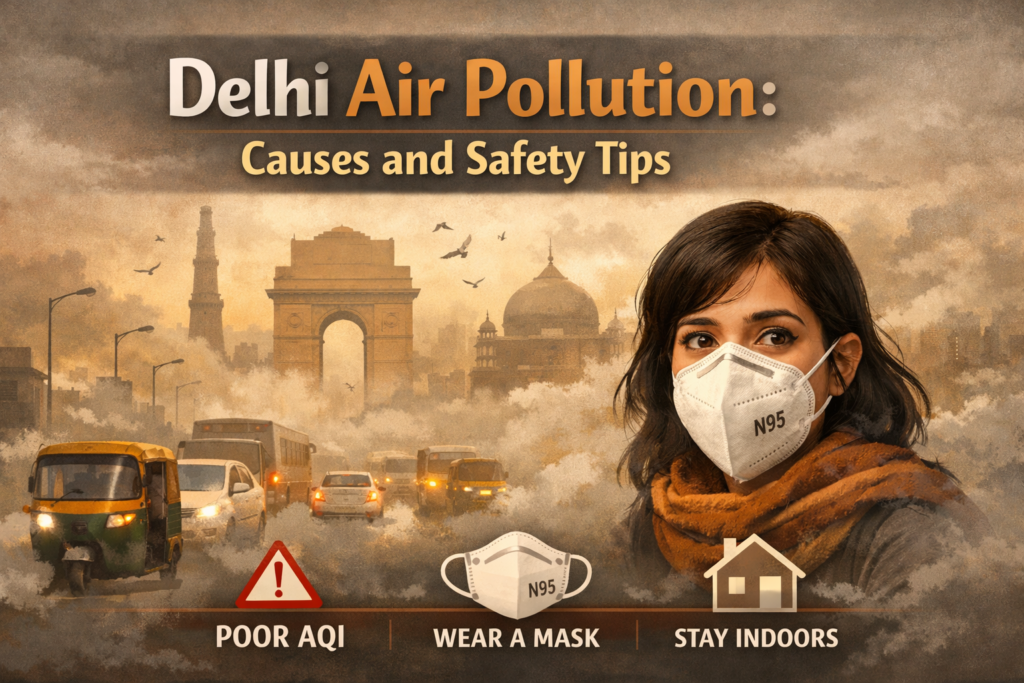
Delhi’s air pollution crisis is no longer seasonal news—it is a public health emergency. Every year, especially during winter, the city witnesses hazardous air quality levels that affect millions of lives. Breathing clean air has become a challenge for residents of Delhi, and the problem demands immediate awareness, preventive action, and long-term solutions.
This blog explains why Delhi’s air pollution is so severe, what precautions individuals can take, and how to stay safe during high-pollution days.
Understanding Delhi’s Air Pollution Problem
Delhi frequently records AQI (Air Quality Index) levels in the “Very Poor” to “Severe” category, especially between October and January. This means the air contains dangerously high levels of pollutants such as PM2.5, PM10, nitrogen dioxide, sulfur dioxide, and carbon monoxide.
Major Causes of Delhi Air Pollution
1. Vehicular Emissions
The city has millions of vehicles on the road, many running on fossil fuels. Traffic congestion worsens emissions, releasing fine particulate matter that penetrates deep into the lungs.
2. Crop Stubble Burning
Seasonal burning of crop residue in neighboring states significantly increases pollution levels in Delhi. Winds carry smoke directly into the city, creating thick smog.
3. Construction and Road Dust
Uncovered construction sites and damaged roads release large amounts of dust particles into the air.
4. Industrial Pollution
Factories, power plants, and small industrial units around Delhi emit harmful gases and particulates.
5. Firecrackers During Festivals
Firecrackers during Diwali sharply spike pollution levels within hours, pushing AQI into the severe zone.
6. Weather Conditions
Low wind speed and temperature inversion during winter trap pollutants close to the ground, preventing dispersion.
Health Effects of Air Pollution
Long-term exposure to polluted air can lead to serious health issues:
- Respiratory diseases such as asthma and bronchitis
- Eye irritation and skin allergies
- Reduced lung capacity in children
- Increased risk of heart disease and stroke
- Weak immunity and frequent infections
Children, elderly people, and those with pre-existing conditions are at the highest risk.
Precautions: What You Should Do
While large-scale solutions require government action, personal precautions can significantly reduce health risks.
1. Monitor Air Quality Daily
Check AQI levels before stepping out. Avoid outdoor activities when AQI is very poor or severe.
2. Wear Proper Masks
Use N95 or N99 masks when going outside. Regular cloth masks do not filter fine particles effectively.
3. Limit Outdoor Exposure
- Avoid morning walks during smog-heavy days
- Reduce outdoor exercise
- Prefer indoor workouts when pollution is high
4. Keep Indoor Air Clean
- Use air purifiers with HEPA filters
- Keep windows closed during peak pollution hours
- Clean floors and surfaces regularly to reduce indoor dust
5. Stay Hydrated and Eat Right
Drink plenty of water to help flush toxins from the body. Include antioxidant-rich foods like fruits, vegetables, turmeric, ginger, and vitamin C–rich foods.
6. Protect Children and Elderly
- Avoid sending children outdoors during severe pollution days
- Ensure elderly family members take extra precautions
- Consult a doctor if symptoms like coughing or breathlessness appear
How to Stay Safe During Severe Pollution Days
When pollution reaches emergency levels, take these steps seriously:
- Work from home if possible
- Avoid unnecessary travel
- Use public transport or carpool to reduce emissions
- Keep rescue medicines (like inhalers) handy if prescribed
- Seek medical attention immediately for breathing difficulty or chest pain
Ignoring symptoms can lead to long-term damage.
Long-Term Actions That Matter
Individual efforts combined with collective responsibility can bring change:
- Shift to public transport, EVs, or carpooling
- Support cleaner energy and waste management practices
- Avoid burning waste
- Plant and protect trees
- Raise awareness about pollution control
Delhi’s air pollution problem will not disappear overnight, but consistent action at individual, community, and government levels can make a measurable difference.
Final Thoughts
Delhi’s air pollution is a harsh reality, but awareness and precautions can save lives. Clean air is not a luxury—it is a basic right. Until long-term solutions take full effect, staying informed, prepared, and proactive is the only way to protect yourself and your family.
Delhi’s air pollution can worsen due to global events, like volcanic ash reaching the city from Ethiopia.
Breathing should never be dangerous. Staying safe starts with smart choices today.