|
Getting your Trinity Audio player ready...
|
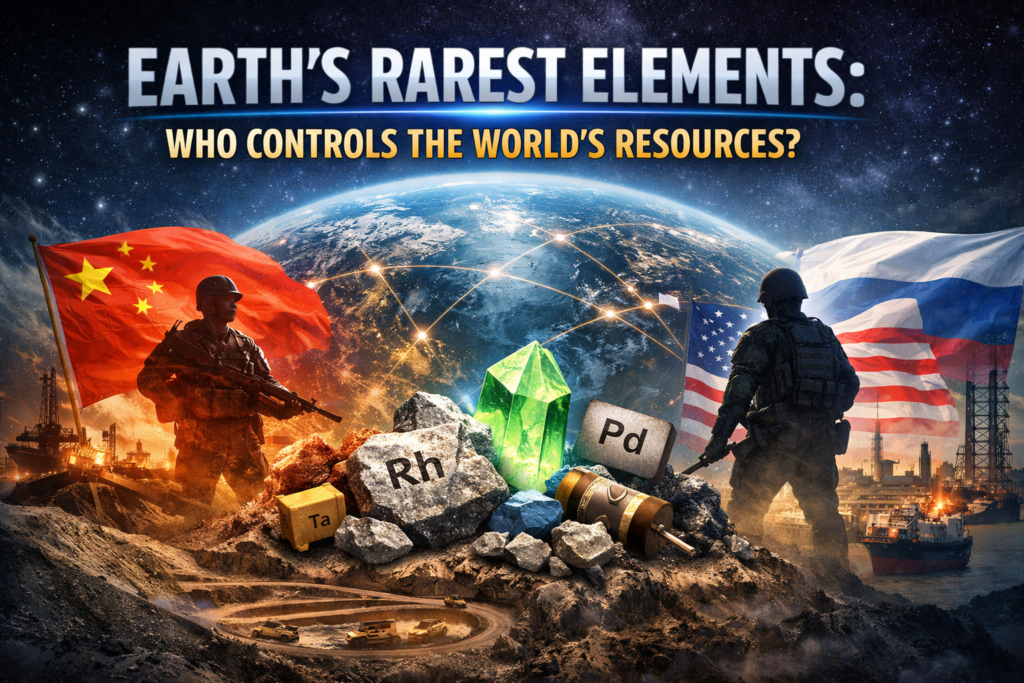
The modern world runs on invisible power. Not oil. No gold. Not even diamonds. It runs on rare elements—metals and minerals so scarce that entire technologies, defense systems, and economies depend on them. From smartphones and electric vehicles to satellites and missiles, these rare substances are the true backbone of the 21st century.
But here’s the real question: Who controls them?
Because whoever controls rare elements controls the future.
Let’s explore Earth’s rarest elements, why they matter, and which nations are quietly conquering them.
What Makes an Element “Rare”?
An element becomes rare for three major reasons:
- Low natural abundance – It exists in extremely small quantities in Earth’s crust.
- Difficult extraction – It’s hard to mine, refine, or separate.
- High demand – Modern industries depend on it.
Some elements aren’t technically rare in nature but are still called “rare” because they are nearly impossible to extract economically.
The Rarest Elements on Earth
1. Francium – The Rarest Natural Element
Francium is so rare that scientists estimate fewer than 30 grams exist on Earth at any moment. It forms from radioactive decay and vanishes almost instantly.
Uses:
None practical. It’s too unstable.
Who controls it:
No one. It cannot be stockpiled or used.
2. Astatine – Rarer Than Gold
Astatine is another ultra-rare radioactive element. At any given time, only a few grams exist naturally on Earth.
Uses:
- Experimental cancer treatments
- Scientific research
Who controls it:
Primarily research labs in the US and Europe.
3. Promethium – Almost Nonexistent
Promethium is a rare-earth element that barely exists naturally. It is mostly produced artificially.
Uses:
- Nuclear batteries
- Space probes
- Specialized medical devices
Who controls it:
Countries with advanced nuclear facilities, mainly the US, Russia, and China.
4. Rhodium – The King of Precious Metals
Rhodium is rarer than gold, platinum, and silver combined. It’s essential for catalytic converters in cars.
Uses:
- Vehicle emission systems
- Electronics
- Jewelry coatings
Who controls it:
South Africa dominates rhodium production, controlling nearly 80% of the global supply.
5. Palladium – The Silent Power Metal
Palladium plays a huge role in automotive, electronics, and hydrogen purification.
Uses:
- Catalytic converters
- Fuel cells
- Electronics
Who controls it:
Russia and South Africa together dominate global supply.
6. Iridium – The Densest and Most Corrosion-Resistant Metal
Iridium is incredibly rare and extremely tough.
Uses:
- Space equipment
- Spark plugs
- Medical implants
Who controls it:
South Africa and Russia.
7. Tantalum – The Smartphone Metal
Without tantalum, your smartphone wouldn’t exist.
Uses:
- Capacitors in phones
- Laptops
- Military electronics
Who controls it:
Large reserves exist in Central Africa, especially the Democratic Republic of Congo (DRC), but control is fragmented and controversial.
Rare Earth Elements: Not Rare, But Powerful
Rare Earth Elements (REEs) are a group of 17 metals critical for modern tech.
Examples:
- Neodymium
- Dysprosium
- Terbium
- Yttrium
Uses:
- EV motors
- Wind turbines
- Missile guidance systems
- Radar
- Lasers
- 5G networks
Who Is Conquering Rare Elements?
Now comes the uncomfortable truth.
China: The Undisputed King
- Over 60% of rare earth mining
- Nearly 85% of rare earth processing
- A massive share of global refining
China doesn’t just dig metals—it refines them, purifies them, and controls the supply chain.
This means even if another country mines rare earths, they often ship them to China for processing.
China’s strategy:
- Buy foreign mines
- Control refineries
- Restrict exports
- Weaponize supply chains
China has already used rare earths as a geopolitical weapon in the past.
United States: Late but Catching Up
For decades, the US ignored rare earth independence. Now it’s scrambling.
Actions:
- Reopening domestic mines
- Funding rare-earth startups
- Building refining plants
- Forming alliances
Problem:
Mining is useless without refining. And China still dominates that step.
Russia: Silent Controller
- Palladium
- Platinum
- Nickel
- Iridium
Russia uses its resource power strategically, especially in times of geopolitical tension.
Africa: Rich in Resources, Poor in Control
Africa holds massive deposits of:
- Tantalum
- Cobalt
- Lithium
- Rare earths
But most African nations don’t control these resources.
Instead:
- Foreign corporations dominate
- Smuggling is rampant
- Armed groups exploit mines
- Workers face inhumane conditions
Africa is resource-rich but power-poor.
Australia: The Strategic Alternative
Australia is becoming a key supplier of rare earths outside China.
Why it matters:
- Politically stable
- Rich in deposits
- Strong Western alliances
The US and Europe are heavily investing in Australian mining operations.
Why These Elements Decide the Future
Rare elements aren’t luxury metals. They are strategic weapons.
They decide:
- Military superiority
- AI development
- Clean energy leadership
- Space exploration
- Economic dominance
Whoever controls rare elements controls innovation.
The New Cold War Is a Resource War
Forget nukes. Forget tanks.
The next global conflict will be fought with supply chains.
Countries that dominate rare elements can:
- Halt foreign tech industries
- Cripple defense systems
- Control EV production
- Dictate clean energy transitions
This isn’t speculation—it’s already happening.
The Dark Side of Rare Element Mining
Behind your smartphone lies suffering.
Common problems:
- Child labor
- Toxic waste dumping
- Radioactive contamination
- Destroyed ecosystems
Rare earth mining is one of the most environmentally destructive industries on Earth.
The world wants green energy—but ignores the dirty cost.
What the Future Looks Like
Expect these trends:
- Countries will nationalize rare element mines.
- New trade wars will erupt over supply.
- Recycling rare metals will become critical.
- Space mining will gain attention.
- Deep-sea mining will rise despite protests.
The race has already begun.
Final Thoughts
Rare elements are not just materials. They are power.
China currently leads.
The US is reacting.
Russia is lurking.
Africa is exploited.
Australia is rising.
The world’s future will not be decided by oil fields—it will be decided by what lies beneath forgotten mountains and toxic pits.
And most people have no idea.