|
Getting your Trinity Audio player ready...
|
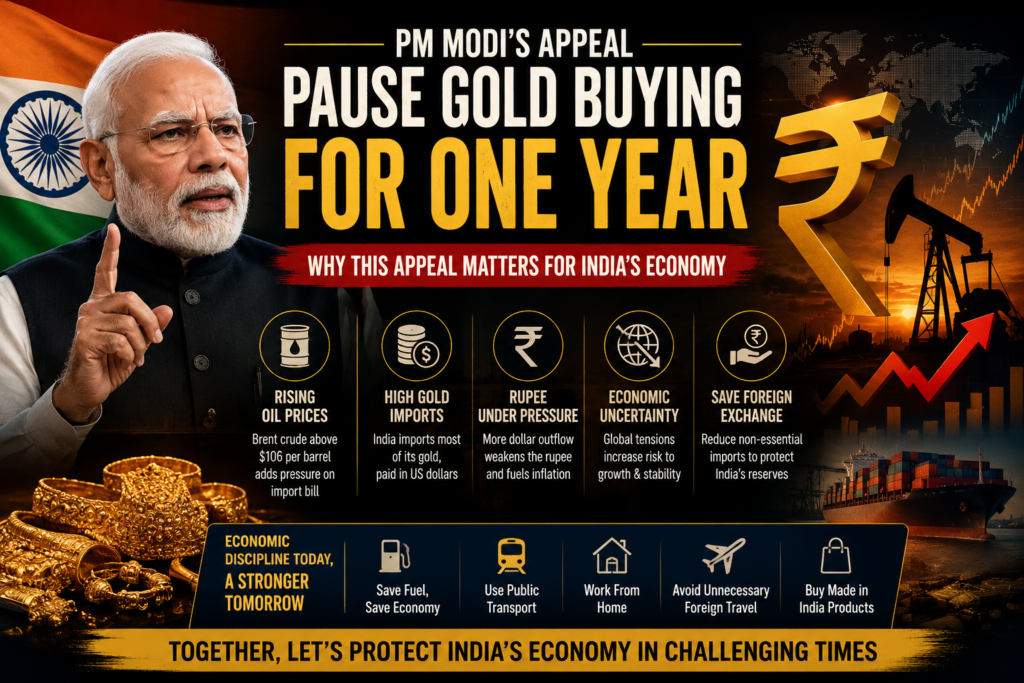
Prime Minister Narendra Modi recently made a surprising appeal to Indian citizens by asking them to avoid buying gold for one year. The statement immediately became a major national discussion because gold is deeply connected to Indian culture, weddings, investments, and savings.
The appeal came during growing global economic uncertainty, rising crude oil prices, and pressure on India’s foreign exchange reserves. Modi also encouraged citizens to reduce fuel consumption, avoid unnecessary imports, and adopt temporary economic discipline measures to help stabilize the economy.
Why Gold Became a Concern for the Government
India is one of the world’s largest consumers of gold. Every year, Indians buy massive amounts of gold jewellery, coins, and investment products during:
- weddings
- Diwali
- Akshaya Tritiya
- festive seasons
However, India imports most of its gold from other countries, and these imports are paid for in US dollars.
At the same time, India is also one of the world’s biggest crude oil importers. Rising oil prices due to global tensions have sharply increased India’s import bill. When both oil and gold imports rise together, the country spends a huge amount of dollars, creating pressure on the economy.
Global Crisis and Rising Oil Prices
The situation intensified after tensions increased in West Asia, especially involving the United States and Iran.
Reports showed Brent crude oil prices jumping above $106 per barrel after diplomatic tensions escalated. This directly affected countries like India that rely heavily on imported oil.
Higher oil prices create multiple economic problems:
- fuel becomes more expensive
- transportation costs rise
- inflation increases
- import bills surge
- pressure on forex reserves increases
The government appears to be trying to reduce non-essential dollar spending during this period.
Impact on the Indian Rupee
One of the biggest concerns is the weakening rupee.
As India spends more dollars importing crude oil and gold, demand for the US dollar increases. This weakens the Indian rupee against the dollar.
A weaker rupee makes imports even more expensive and increases inflationary pressure across the economy.
Stock Market Reaction
Financial markets reacted immediately after Modi’s appeal.
Reports indicated:
- the Nifty 50 fell sharply
- the Sensex also declined
- jewellery stocks faced heavy losses
- travel and fuel-linked sectors weakened
Jewellery companies such as:
- Titan Company
- Senco Gold
- Kalyan Jewellers
saw selling pressure in the stock market after concerns that gold demand could decline if consumers followed the government’s appeal.
Why Modi Also Mentioned Fuel Saving and Work From Home
The gold-buying appeal was part of a broader economic conservation message.
Modi reportedly encouraged citizens to:
- reduce petrol and diesel usage
- use public transport
- adopt work-from-home practices when possible
- postpone unnecessary foreign travel
- reduce luxury imports
The goal is to conserve foreign exchange reserves and reduce economic pressure during global uncertainty.
The work-from-home suggestion is especially linked to reducing fuel consumption and transportation costs, similar to trends seen during the COVID-19 period.
Why Gold Is Emotionally Important in India
The appeal triggered strong reactions because gold in India is more than just an investment.
For millions of Indian families, gold represents:
- financial security
- cultural tradition
- wedding rituals
- family savings
- social status
Indian households collectively hold one of the largest private gold reserves in the world. That is why the statement became emotionally sensitive and politically significant.
Is India Facing an Economic Crisis?
India is not facing an immediate economic collapse, but the government appears to be preparing for a difficult global environment.
Analysts believe the government wants to avoid:
- a widening current account deficit
- excessive dollar outflow
- sharp rupee depreciation
- inflation spikes
- pressure on forex reserves
The government’s message appears focused on economic caution rather than panic.
Opposition and Public Reactions
The statement quickly became a political issue.
Opposition leaders criticized the appeal and argued that ordinary citizens should not bear the burden of economic challenges. Meanwhile, supporters of the government viewed the message as a preventive step to protect India during global instability.
Social media also exploded with debates, memes, economic discussions, and concerns over how the advice could affect:
- weddings
- jewellery businesses
- gold investors
- middle-class families
Final Thoughts
PM Modi’s request to pause gold buying for one year is directly connected to rising oil prices, global instability, forex reserve management, and pressure on the Indian economy.
India imports huge quantities of both crude oil and gold. During periods of global crisis, excessive imports can increase pressure on the rupee and create inflation risks.
By encouraging reduced fuel usage, fewer luxury imports, and temporary financial discipline, the government hopes to strengthen India’s economic stability during uncertain times.
Whether people fully agree with the advice or not, the statement has already become one of the biggest economic and political discussions in India in 2026.