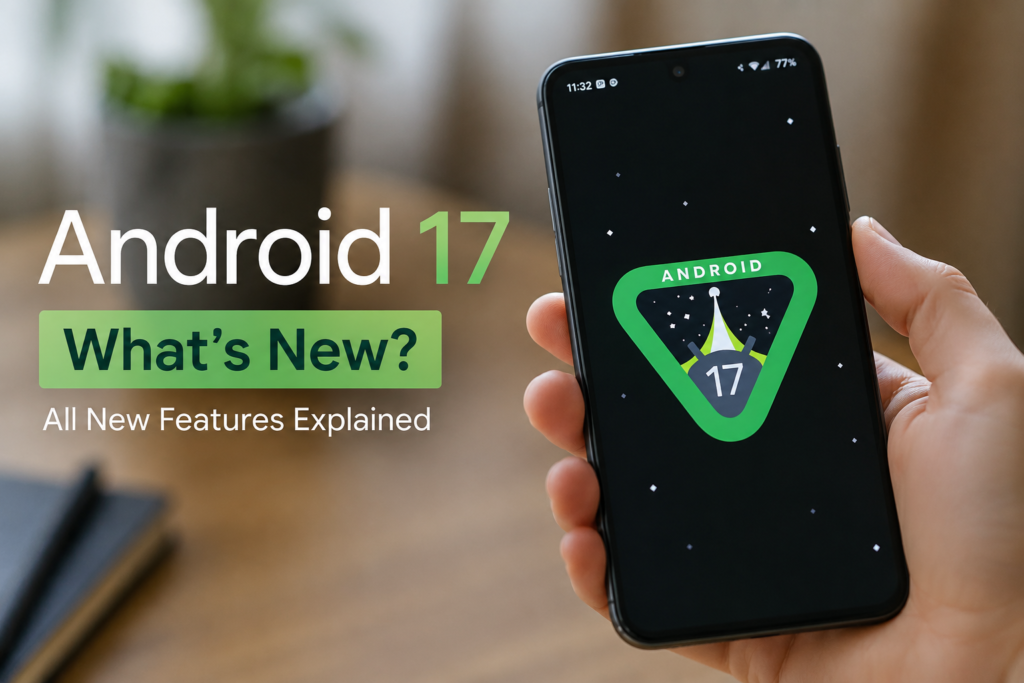
Android continues to evolve with every major release, and Android 17 represents Google’s latest effort to make smartphones smarter, more secure, and more productive. While Android 16 focused heavily on desktop-style multitasking, performance improvements, Material 3 Expressive design enhancements, and foldable optimization, Android 17 builds on that foundation with deeper AI integration, advanced privacy controls, improved security systems, enhanced cross-device connectivity, and a more refined user experience. For millions of Android users worldwide, the biggest questions are simple: What is new in Android 17, how does it compare to Android 16, and will their phone receive the update?
Google officially launched Android 17 in June 2026, beginning with supported Pixel devices. As expected, major smartphone brands such as Samsung, OPPO, OnePlus, Realme, Vivo, Xiaomi, iQOO, Motorola, and Honor are now preparing their customized Android 17 software versions. Samsung will release it through One UI, OPPO through ColorOS, OnePlus through OxygenOS, Xiaomi through HyperOS, Vivo through Funtouch OS, and Realme through Realme UI. Although Android 17 may not introduce the dramatic visual overhaul seen in some previous versions, it delivers meaningful improvements that enhance daily smartphone usage, productivity, security, gaming, and AI-powered experiences.
What is Android 17?
Android 17 is Google’s latest mobile operating system designed for smartphones, tablets, foldables, and other Android-powered devices. The update focuses on creating a more intelligent ecosystem where devices work together seamlessly while improving privacy, security, multitasking, and AI-driven functionality. Google has increasingly integrated artificial intelligence into Android, and Android 17 continues that strategy by bringing smarter widgets, contextual suggestions, better voice interactions, and enhanced device automation.
Unlike Android versions of the past that concentrated mainly on visual redesigns, Android 17 focuses on practical improvements. Users will notice smoother multitasking, stronger protection against theft and malware, better app management, enhanced foldable experiences, and improved performance optimization. These upgrades make Android 17 one of the most useful updates released by Google in recent years.
Android 17 vs Android 16: What’s New?
Many users are wondering whether Android 17 is a major upgrade over Android 16. The answer is yes, particularly when it comes to productivity, security, and AI integration.
Smarter App Bubbles
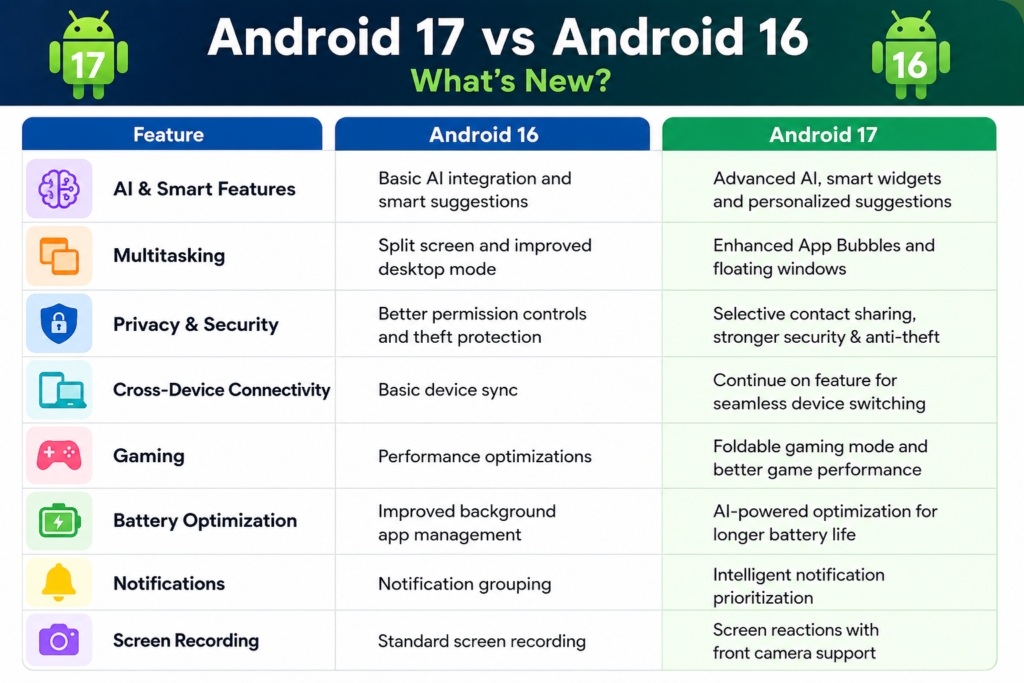
Android 17 significantly expands the functionality of App Bubbles. Users can now open supported applications in floating windows, making multitasking easier than ever. Whether you’re replying to messages while watching videos or using multiple apps simultaneously, the experience is smoother and more intuitive.
Advanced AI Personalization
Artificial intelligence plays a much larger role in Android 17. The operating system can suggest widgets, automate settings based on user habits, and provide more relevant recommendations throughout the interface. This makes devices feel more personalized and responsive to individual usage patterns.
Screen Reactions
Content creators and educators will appreciate Android 17’s new Screen Reactions feature. Users can record their screen while simultaneously capturing reactions through the front camera, simplifying tutorials, gameplay videos, and educational content creation.
Improved Privacy Controls
Privacy remains a key focus. Android 17 allows users to grant apps access only to selected contacts rather than an entire contact list. Location sharing controls have also become more granular, giving users better control over their personal information.
Better Cross-Device Connectivity
Android 17 introduces improved ecosystem integration. Users can start tasks on one Android device and continue them on another. This feature makes Android devices work together more effectively, similar to experiences available in other major ecosystems.
Foldable Gaming Enhancements
For foldable smartphones, Android 17 introduces new gaming controls that transform part of the screen into a virtual controller. This provides a more immersive gaming experience and highlights Google’s continued investment in foldable technology.
Stronger Security Protection
Android 17 includes upgraded anti-theft measures, better biometric authentication, stronger malware detection, and enhanced account protection. These improvements help safeguard user data against increasingly sophisticated cyber threats.
Top Android 17 Features Explained
AI-Powered Widgets
Widgets have become smarter than ever. Android 17 uses machine learning to recommend widgets based on user behavior and frequently used apps. These widgets can dynamically adjust their content depending on the time of day, location, or user activity.
Enhanced Notification Management
Notifications are now more intelligent and less intrusive. Android 17 prioritizes important alerts while minimizing distractions from less relevant notifications.
Better Battery Optimization
Battery efficiency has improved through advanced background process management. Apps consume fewer resources when running in the background, helping extend battery life throughout the day.
Improved Camera APIs
Developers gain access to enhanced camera capabilities, allowing smartphone manufacturers to deliver better photography experiences. This includes improved low-light performance, faster image processing, and more advanced computational photography features.
Faster App Launch Times
Android 17 optimizes system-level resource allocation, resulting in quicker app launches and smoother overall performance across supported devices.
Which Phones Will Get Android 17?
While manufacturers continue to announce their official rollout plans, devices eligible under existing software support policies are expected to receive Android 17.
Samsung Android 17 Eligible Devices
Samsung remains one of the most reliable Android brands when it comes to software updates. Many flagship and mid-range Galaxy devices are expected to receive Android 17 through One UI.
Galaxy S Series
- Galaxy S24
- Galaxy S24+
- Galaxy S24 Ultra
- Galaxy S25
- Galaxy S25+
- Galaxy S25 Ultra
- Galaxy S26 Series
Galaxy Z Series
- Galaxy Z Fold 6
- Galaxy Z Fold 7
- Galaxy Z Flip 6
- Galaxy Z Flip 7
Galaxy A Series
- Galaxy A56
- Galaxy A55
- Galaxy A36
- Galaxy A35
- Galaxy A26
Expected Rollout
- Beta Program: August 2026
- Stable Release: October 2026 to January 2027
OPPO Android 17 Eligible Devices
OPPO’s ColorOS updates have become significantly faster in recent years.
OPPO Find Series
- Find X8
- Find X8 Pro
- Find X8 Ultra
- Find X9 Series
- Find N3
- Find N5
OPPO Reno Series
- Reno 12 Series
- Reno 13 Series
- Reno 14 Series
- Reno 15 Series
OPPO F Series
- F29 Series
- F31 Series
Expected Rollout
- ColorOS 17 Beta: August–September 2026
- Stable Release: October–December 2026
Realme Android 17 Eligible Devices
Realme typically follows OPPO’s update roadmap due to shared software development.
Realme GT Series
- Realme GT 7
- Realme GT 7 Pro
- Realme GT Neo Series
Number Series
- Realme 14 Series
- Realme 15 Series
Narzo Series
- Narzo 80 Series
- Narzo 90 Series
Expected Rollout
- Beta Release: September 2026
- Stable Update: November 2026 to January 2027
OnePlus Android 17 Eligible Devices
OnePlus remains one of the fastest brands to adopt new Android versions.
Flagship Models
- OnePlus 13
- OnePlus 13R
- OnePlus 14 Series
Foldables
- OnePlus Open
- OnePlus Open 2
Nord Series
- Nord 5
- Nord CE 5
- Nord CE 6
Expected Rollout
- Open Beta: August 2026
- Stable Update: September–November 2026
Xiaomi Android 17 Eligible Devices
Xiaomi will deliver Android 17 through HyperOS.
Xiaomi Flagships
- Xiaomi 15 Series
- Xiaomi 16 Series
Redmi Series
- Redmi Note 14 Series
- Redmi Note 15 Series
- Redmi K Series
POCO Devices
- POCO F Series
- POCO X Series
- Selected POCO M Series
Expected Rollout
- HyperOS Beta: September 2026
- Stable Release: November 2026 to January 2027
Vivo Android 17 Eligible Devices
Vivo X Series
- Vivo X200 Series
- Vivo X300 Series
Vivo V Series
- Vivo V50 Series
- Vivo V60 Series
Vivo T Series
- Vivo T4 Series
- Vivo T5 Series
Expected Rollout
- Beta Testing: September 2026
- Stable Release: December 2026 to February 2027
iQOO Android 17 Eligible Devices
Flagship Models
- iQOO 13
- iQOO 14 Series
Neo Series
- iQOO Neo 10
- iQOO Neo 11
Z Series
- Select iQOO Z Series devices
Expected Rollout
- October 2026 to February 2027
Google Pixel Devices Getting Android 17 First
Google’s Pixel lineup always receives Android updates before other manufacturers.
Eligible Pixel Models
- Pixel 6
- Pixel 6 Pro
- Pixel 6a
- Pixel 7
- Pixel 7 Pro
- Pixel 7a
- Pixel 8
- Pixel 8 Pro
- Pixel 8a
- Pixel 9 Series
- Pixel Fold
- Pixel Tablet
Should You Upgrade to Android 17?
For most users, Android 17 represents a worthwhile upgrade. The operating system delivers practical improvements rather than flashy visual changes. Stronger security protections, better multitasking, smarter AI features, improved privacy controls, and enhanced battery management contribute to a noticeably better user experience.
Business users will appreciate the productivity enhancements, while content creators can take advantage of Screen Reactions and improved multitasking. Gamers benefit from foldable gaming features and performance optimizations, while everyday users gain a more secure and efficient smartphone experience.
Final Verdict
Android 17 may not be the most dramatic Android release ever, but it is arguably one of the most refined and useful. Google’s focus on artificial intelligence, privacy, security, productivity, and ecosystem integration makes the update valuable for both casual users and power users. As manufacturers begin rolling out Android 17-based software updates throughout 2026 and early 2027, millions of users will gain access to a faster, smarter, and more secure mobile experience.
If your device was launched within the last two to three years and still falls within its software support period, there is a strong chance it will receive Android 17. Flagship phones from Samsung, OnePlus, OPPO, Xiaomi, Vivo, Realme, and Google are expected to lead the rollout, followed by premium mid-range devices in subsequent months.
FAQs
When was Android 17 released?
Android 17 was officially released for supported Google Pixel devices in June 2026.
What is the biggest new feature in Android 17?
Enhanced AI integration, improved App Bubbles, stronger privacy controls, and better cross-device connectivity are among the most significant additions.
Which brand will get Android 17 first after Google?
OnePlus and Samsung are expected to begin beta testing among the earliest manufacturers.
Will older phones receive Android 17?
Only devices still covered under their manufacturer’s software support policy are expected to receive the update.
Is Android 17 better than Android 16?
Yes. Android 17 builds upon Android 16 with stronger security, improved multitasking, smarter AI features, and enhanced device connectivity.