|
Getting your Trinity Audio player ready...
|
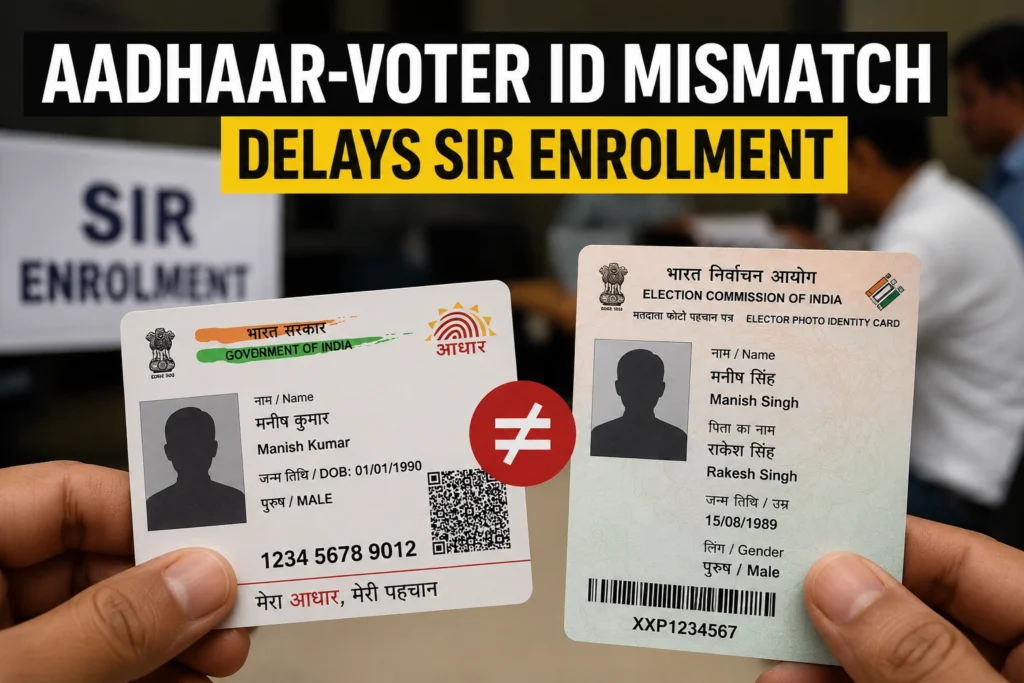
A growing number of voters are facing unexpected hurdles during the Special Intensive Revision (SIR) process due to discrepancies between their Aadhaar and Voter ID records. The issue has emerged as a significant concern in several regions, with many eligible citizens struggling to complete enrolment and verification procedures because of mismatched personal information across government databases.
Election officials have acknowledged that differences in names, dates of birth, addresses, and other demographic details are among the most common reasons behind delays. While authorities continue efforts to streamline the verification process, voters are being urged to review their documents and rectify inconsistencies as early as possible.
What Is the Special Intensive Revision (SIR)?
The Special Intensive Revision is a comprehensive exercise conducted by election authorities to update and verify electoral rolls. The objective is to ensure that voter databases remain accurate, eliminate duplicate entries, remove ineligible records, and include all eligible citizens.
During the SIR process, voters may be required to verify their details, submit supporting documents, or confirm their eligibility. Aadhaar is often used as an additional identity verification document, helping authorities improve the accuracy of electoral records.
However, when information stored in Aadhaar records does not match details available in Voter ID databases, verification can become complicated and lead to delays.
Why Are Mismatches Occurring?
Several factors contribute to discrepancies between Aadhaar and Voter ID records. Many citizens registered for these documents at different times in their lives, resulting in variations in personal information.
Common issues include:
- Differences in spelling of names
- Use of initials in one document but not the other
- Variations in surnames after marriage
- Incorrect dates of birth
- Outdated residential addresses
- Data entry errors during registration
- Regional language translation differences
Even minor inconsistencies can trigger verification concerns and require additional review by election officials.
For example, a voter whose Aadhaar card lists “Ramesh Kumar Patel” while the Voter ID shows “Ramesh K Patel” may face verification challenges despite both records belonging to the same person.
Impact on Voters
The mismatch issue is affecting a wide range of citizens, including students, senior citizens, migrant workers, and individuals who have recently changed their addresses.
Many voters have reported delays in completing enrolment formalities because officials require supporting documentation to confirm their identity. In some cases, applicants have been asked to submit additional proof such as:
- Birth certificates
- Educational certificates
- Passport copies
- Utility bills
- Residence proof documents
- Marriage certificates
While these measures aim to maintain electoral integrity, they can also create inconvenience for genuine voters.
For elderly citizens and residents in rural areas, obtaining additional documentation can be particularly challenging, leading to concerns about timely completion of the verification process.
Authorities Working to Resolve the Issue
Election officials have clarified that Aadhaar is intended to assist in verification and improve the quality of electoral rolls. The goal is not to deny voting rights to eligible citizens but rather to ensure that records remain accurate and up to date.
Officials are encouraging voters to check their details through official electoral services and update incorrect information wherever necessary. Dedicated camps and verification centres have also been established in some areas to help citizens resolve documentation issues.
Authorities have emphasized that voters should cooperate with verification efforts and submit required documents promptly to avoid delays.
Challenges in Data Synchronisation
India maintains one of the largest citizen databases in the world. Managing and synchronising information across multiple government systems is a complex task involving millions of records.
Aadhaar and Voter ID systems were originally developed for different purposes. Aadhaar serves as a unique identity platform, while electoral rolls focus on voter eligibility and constituency-based registration.
Because these databases operate independently, inconsistencies can emerge over time as individuals change addresses, update names, or correct personal information in only one database.
The current SIR exercise has highlighted the importance of maintaining consistent records across government platforms.
Concerns Raised by Citizens and Experts
The enrolment delays have sparked discussions among citizens, election observers, and policy experts regarding the balance between verification and accessibility.
Supporters of stricter verification argue that accurate electoral rolls are essential for free and fair elections. Removing duplicate or incorrect entries helps strengthen public confidence in the democratic process.
On the other hand, some experts caution that excessive documentation requirements could create barriers for legitimate voters, especially those from vulnerable communities who may not possess multiple supporting documents.
The challenge for authorities is ensuring robust verification without making the enrolment process unnecessarily difficult for genuine citizens.
How Voters Can Avoid Delays
To reduce the risk of verification problems, voters should review their records before beginning the enrolment process.
Key steps include:
Verify Personal Information
Check whether your name, date of birth, gender, and address are consistent across all government documents.
Update Incorrect Records
If any information is outdated or incorrect, submit correction requests through the appropriate government channels.
Keep Supporting Documents Ready
Maintain copies of important identity and address proof documents that may be required during verification.
Respond Quickly to Requests
If election officials request additional documentation, provide it as soon as possible to prevent further delays.
Monitor Application Status
Regularly check the status of enrolment and correction requests through official election services.
Importance of Accurate Electoral Rolls
Accurate electoral rolls form the foundation of a healthy democracy. They ensure that every eligible citizen can exercise their right to vote while preventing duplication and fraudulent registrations.
The current Aadhaar-Voter ID mismatch issue demonstrates the challenges involved in maintaining large-scale public databases. At the same time, it highlights the need for continued improvements in digital governance, record management, and citizen services.
As India continues to modernise its electoral systems, ensuring accuracy while preserving accessibility will remain a key priority for election authorities.
Final Thoughts
The ongoing delays in SIR enrolment caused by Aadhaar and Voter ID mismatches have brought attention to a widespread administrative challenge affecting many voters. While verification processes are essential for maintaining accurate electoral rolls, discrepancies in personal records can create obstacles for genuine citizens attempting to complete enrolment.
Authorities are working to address these issues, but voters also play an important role by ensuring that their personal information remains consistent across official documents. With timely corrections and proactive verification, many of these enrolment delays can be avoided, helping strengthen both electoral integrity and voter participation.