|
Getting your Trinity Audio player ready...
|
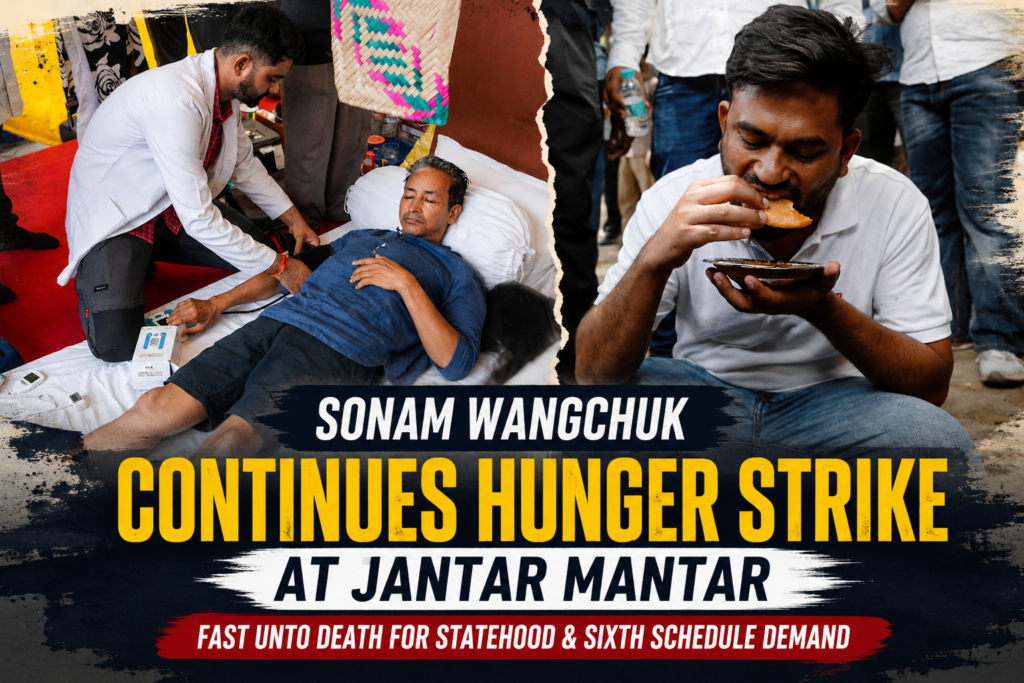
Environmentalist, innovator, and education reform advocate Sonam Wangchuk has once again become the center of national attention as his indefinite hunger strike at Delhi’s Jantar Mantar continues. The protest, which has now entered its eighteenth day, has sparked widespread debate across political circles, educational institutions, social media platforms, and civil society groups. Reports indicate that Wangchuk’s health has deteriorated significantly during the fast, yet he remains committed to his demands and has refused repeated appeals to end the strike.
The ongoing protest has evolved into one of the most discussed public movements of 2026. While supporters describe it as a fight for accountability and transparency, critics question whether prolonged fasting is the most effective way to address systemic issues. Regardless of differing opinions, the hunger strike has succeeded in bringing national focus to concerns surrounding examination irregularities, youth aspirations, and governance.
This article explores the background of the protest, Sonam Wangchuk’s role in public life, the demands being raised, the latest developments from Jantar Mantar, political reactions, health concerns, and the possible implications of the movement.
Who Is Sonam Wangchuk?
Sonam Wangchuk is an engineer, innovator, educator, and environmental activist from Ladakh. He gained national recognition for his work in education reform and sustainable development in the Himalayan region. Over the years, he has become one of India’s most respected voices on climate action, ecological conservation, and community-based innovation.
Many Indians recognize him as the inspiration behind the character Phunsukh Wangdu from the blockbuster Bollywood film 3 Idiots. However, Wangchuk’s real-life achievements extend far beyond cinema. His contributions include educational reforms, ice stupa technology for water conservation, renewable energy projects, and advocacy for environmentally responsible development.
His public activism has often focused on protecting fragile ecosystems, empowering local communities, and demanding greater accountability from institutions.
Why Did Sonam Wangchuk Begin the Hunger Strike?
According to reports, Wangchuk joined an ongoing protest movement at Jantar Mantar that was raising concerns over alleged examination irregularities and the NEET-UG 2026 paper leak controversy with CJP. Protesters have demanded greater accountability from authorities and have called for stronger action regarding examination transparency.
The issue gained momentum after allegations surrounding examination processes created uncertainty among students preparing for higher education admissions. For many young Indians, competitive examinations represent years of hard work and significant financial investment. Any concerns about fairness immediately trigger widespread public reaction.
Wangchuk stated that his participation was intended to support students seeking accountability in the education system and to amplify calls for institutional reforms. He has emphasized that the movement is not about personal recognition but about encouraging citizens to actively participate in democratic processes.
Timeline of the Hunger Strike
The hunger strike began on June 28, 2026, at Jantar Mantar in New Delhi. Initially, it attracted support from students, activists, and social organizations. As the days progressed and Wangchuk continued fasting despite health warnings, national attention increased significantly.
Key developments include:
June 28, 2026
Wangchuk joined the protest and began an indefinite fast in solidarity with student demands regarding examination accountability.
First Week
Supporters gathered at Jantar Mantar while discussions around examination reforms intensified across social media and news platforms.
Second Week
Health concerns started emerging as Wangchuk continued refusing food while maintaining public engagement through statements and messages.
Day 16–18
Reports indicated severe weight loss, low blood sugar levels, physical weakness, and increasing medical concerns. Appeals from political leaders, activists, and public figures intensified, urging him to end the fast.
Health Condition Raises Serious Concerns
One of the biggest concerns surrounding the protest is Wangchuk’s health.
Medical updates released during the hunger strike indicate substantial weight loss and signs of physical deterioration. Reports suggest that he has lost more than 8 kilograms since the beginning of the fast. Health assessments have also highlighted low blood sugar levels, muscle loss, weakness, and increasing physical stress on his body.
Supporters at the protest site have expressed concern about his condition, while doctors monitoring the situation reportedly continue advising caution. As the duration of the hunger strike increases, medical risks naturally become more severe.
Despite these concerns, Wangchuk has maintained that the issues being raised deserve national attention and meaningful action.
Why Jantar Mantar Remains a Symbolic Protest Site
Jantar Mantar has long served as one of India’s most recognized locations for democratic protests and public demonstrations.
Located in the heart of New Delhi, the site has witnessed countless movements involving farmers, students, activists, government employees, and civil society groups. The location offers visibility, accessibility, and symbolic importance in India’s democratic framework.
By choosing Jantar Mantar, the organizers ensured that the protest remained visible to policymakers, media organizations, and the public. The site continues to attract supporters who visit to express solidarity with the movement.
Growing Support From Public Figures
As Wangchuk’s health condition worsened, support began emerging from multiple sections of society.
Several political leaders reportedly appealed to him to end the fast while simultaneously expressing support for the broader issues being raised. Opposition leaders highlighted the importance of dialogue and urged authorities to engage with the concerns being presented.
The movement has also received support from actors, environmental advocates, education reform supporters, and social activists.
Veteran actors including Zeenat Aman, Abhay Deol, and Naseeruddin Shah publicly expressed concern and encouraged meaningful dialogue between authorities and protest representatives.
Actor Omi Vaidya, known for portraying Chatur in 3 Idiots, also voiced support for Wangchuk and urged people to pay attention to his deteriorating condition.
Student Community Closely Watching Developments
Students across India remain among the most invested observers of the protest.
Competitive examinations such as NEET influence the futures of millions of candidates every year. Any controversy involving examination integrity has direct consequences for admissions, career planning, and public trust.
Many students believe that greater transparency and accountability mechanisms are necessary to maintain confidence in examination systems. Others argue that reforms should focus on technology-driven security measures, faster investigations, and stricter penalties for malpractice.
The debate has extended beyond the immediate controversy and evolved into a broader conversation about educational governance in India.
Political Reactions and Government Response
Political reactions have varied significantly.
Opposition parties have largely framed the protest as an important call for accountability and transparency. Several leaders have expressed concern regarding Wangchuk’s health while urging constructive engagement between stakeholders.
Supporters of the movement argue that prolonged silence could increase public frustration and deepen mistrust among students and families affected by examination controversies.
Meanwhile, protest organizers have repeatedly called for stronger action and clearer responses to the issues raised during demonstrations.
What If Sonam Wangchuk Dies During the Hunger Strike?
The possibility of Sonam Wangchuk dying during the ongoing hunger strike has become a growing concern as his fast continues and reports indicate a decline in his health. Such an event would likely have consequences far beyond the protest site at Jantar Mantar.
His death could trigger nationwide demonstrations, widespread media coverage, public outrage, and renewed calls for action on the issues he has been raising. For many supporters, Wangchuk is not just an activist but a respected educator and innovator whose sacrifice could become a powerful symbol of resistance and accountability. While his death would not automatically lead to immediate policy changes, it could significantly increase pressure on authorities and transform the protest into a larger national movement.
Could the Government Be Held Responsible If Sonam Wangchuk Dies During the Hunger Strike?
If Sonam Wangchuk were to die during the hunger strike, the question of responsibility would immediately become a major political and legal debate. From a legal perspective, a voluntary hunger strike does not automatically make the government liable for a protester’s death. However, the government could face intense scrutiny over whether it took reasonable steps to address the situation, provide medical assistance, and engage in meaningful dialogue before the crisis escalated.
Even if no legal responsibility is established, many supporters and opposition leaders would likely hold the government politically and morally accountable for failing to respond effectively to repeated warnings about Wangchuk’s deteriorating condition. Such a scenario could lead to parliamentary discussions, demands for investigations, public protests, and increased pressure on policymakers. Ultimately, while courts would determine any legal accountability, the political impact of such a tragedy could be substantial and long-lasting.
What If Dharmendra Pradhan Resigns as Education Minister?
Will a Change in Leadership Solve the Issues Being Raised by Protesters?
As Sonam Wangchuk’s hunger strike continues and demands for accountability in the education system grow louder, some protesters and political observers have questioned whether the resignation of Union Education Minister Dharmendra Pradhan would lead to meaningful change. While a resignation could be seen by some as a symbolic acceptance of responsibility and may temporarily ease public anger, it would not automatically resolve concerns related to examination transparency, paper leak investigations, or broader education reforms. These issues involve multiple institutions, agencies, policies, and administrative systems that extend beyond the role of a single minister.
Could the Next Education Minister Be Better or Worse?
There is no certainty that a new Education Minister would handle the situation better than Dharmendra Pradhan. A successor could introduce stricter reforms, faster investigations, and stronger accountability measures, which might satisfy students and protesters. However, it is equally possible that a new minister could follow the same policies or adopt an approach that critics consider less effective.
Leadership changes often create expectations of improvement, but actual outcomes depend on policy decisions, administrative action, and long-term implementation rather than the individual holding the position. For this reason, many experts argue that lasting solutions require systemic reforms in examination management and governance rather than relying solely on a change in leadership.
Social Media Amplifies the Movement
Social media has played a major role in expanding the reach of the protest.
Hashtags related to Sonam Wangchuk, educational reforms, examination transparency, and student rights have generated significant engagement. Videos, health updates, speeches, and photographs from Jantar Mantar continue circulating widely across digital platforms.
The online conversation reflects diverse viewpoints. While many users express solidarity with Wangchuk’s cause, others debate the effectiveness of hunger strikes as a tool for policy change.
Regardless of differing opinions, social media has ensured that developments at Jantar Mantar remain visible to millions of people nationwide.
The Larger Questions Being Raised
Beyond the immediate controversy, the hunger strike raises several broader questions.
How can examination systems be made more secure?
Educational institutions increasingly rely on digital systems, but examination leaks and procedural concerns continue to emerge periodically.
How should governments respond to public protests?
Democratic societies regularly face debates about dialogue, negotiation, and responsiveness when citizens raise concerns through peaceful demonstrations.
What role do public intellectuals and activists play?
Figures like Sonam Wangchuk often use their public influence to draw attention to issues they believe require urgent action. Their involvement can elevate debates that might otherwise receive limited attention.
How can public trust be strengthened?
Trust remains a critical component of educational systems, governance structures, and democratic institutions. The current protest highlights how quickly trust can become a central national issue.
What Happens Next?
The future of the protest remains uncertain.
As Wangchuk’s hunger strike enters another day, pressure continues mounting from supporters, political leaders, medical professionals, and public figures. The coming days may prove crucial in determining whether discussions lead to a resolution or whether the protest continues further.
Observers across India will be watching closely for any developments involving dialogue, policy responses, or decisions regarding the continuation of the fast.
One thing is certain: the hunger strike has already succeeded in placing examination accountability and educational transparency firmly at the center of national discussion.
Conclusion
Sonam Wangchuk’s ongoing hunger strike at Jantar Mantar has become one of the most significant public protests of 2026. What began as a demonstration supporting demands for examination accountability has evolved into a nationwide conversation about education, governance, transparency, and democratic engagement.
With his health reportedly deteriorating after more than two weeks without food, concern continues growing among supporters and observers alike. Yet Wangchuk remains committed to highlighting issues he believes deserve urgent national attention.
Whether the protest leads to immediate policy changes or broader long-term reforms, it has already achieved one important objective: ensuring that questions surrounding educational accountability remain impossible to ignore.
FAQs
Why is Sonam Wangchuk on a hunger strike?
He is participating in a protest demanding accountability regarding alleged examination irregularities and the NEET-UG 2026 paper leak controversy.
Where is the hunger strike taking place?
The hunger strike is being held at Jantar Mantar in New Delhi.
How long has the hunger strike continued?
As of July 15, 2026, the protest has entered its eighteenth day.
What is Sonam Wangchuk’s health condition?
Reports indicate significant weight loss, muscle loss, weakness, and low blood sugar levels after more than two weeks of fasting.
Why is this protest receiving national attention?
The movement combines concerns about examination transparency, student welfare, governance accountability, and the involvement of a nationally recognized activist.