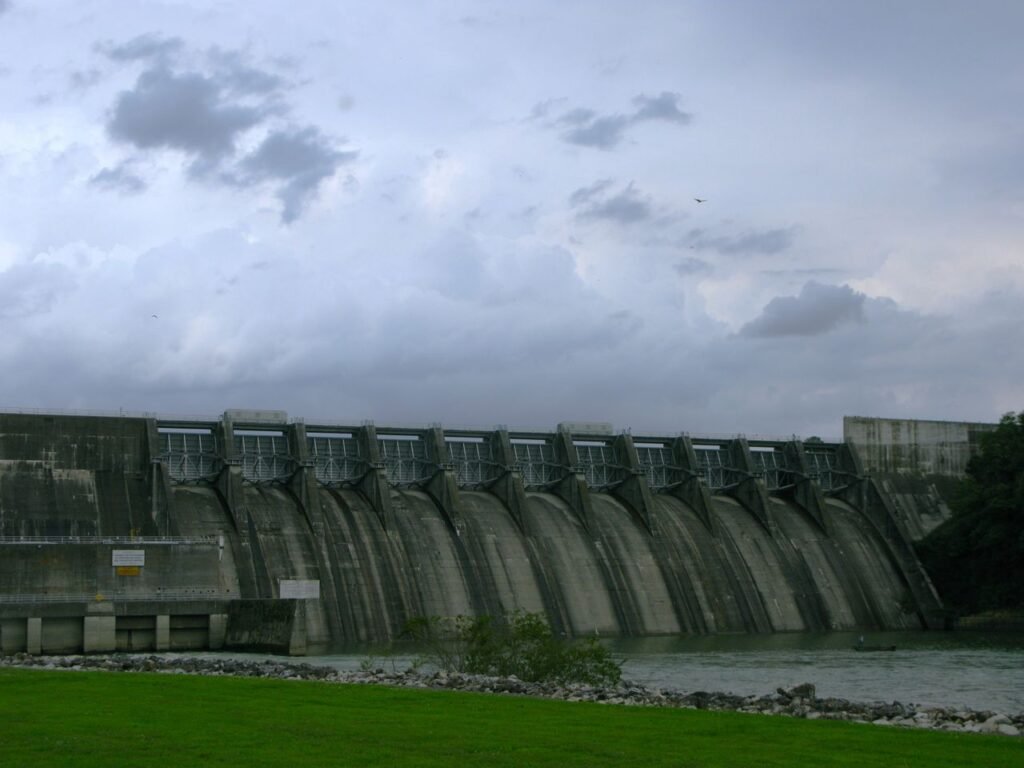
Water has always been the foundation of Gujarat’s economic growth. From agriculture and industries to rapidly expanding cities, every sector depends on a reliable supply of freshwater. However, despite remarkable industrial and infrastructural development, many parts of Gujarat continue to face seasonal water shortages. While regions in South Gujarat receive abundant rainfall during the monsoon, districts in Saurashtra, Kutch, and North Gujarat often struggle with limited water availability, forcing farmers and communities to rely heavily on groundwater and long-distance water supply networks.
To overcome this long-standing challenge, the Government of Gujarat proposed one of the most ambitious water resource projects ever envisioned in India—the Kalpasar Dam Project. More than just a dam, Kalpasar is a visionary multipurpose infrastructure project designed to create a massive freshwater reservoir across the Gulf of Khambhat. If completed, it has the potential to transform water management in Gujarat by providing drinking water, expanding irrigation, improving transportation, supporting industries, and opening new opportunities for economic development.
Unlike traditional dams built across rivers, the Kalpasar Project introduces a unique engineering concept. It proposes constructing a barrier across the Gulf of Khambhat to prevent seawater from entering a designated area while allowing freshwater from several rivers to accumulate naturally. This innovative approach could create one of the largest freshwater reservoirs in the world, making the project a landmark achievement in water conservation and infrastructure development.
What Is the Kalpasar Dam Project?
The Kalpasar Dam Project is a proposed mega water conservation and infrastructure initiative planned by the Government of Gujarat. The project’s name is derived from two Sanskrit words—“Kalpa,” meaning eternal, and “Sar,” meaning lake—symbolising the vision of creating a long-lasting freshwater reservoir capable of serving future generations.
The project proposes building a massive dam across the Gulf of Khambhat, located between the Saurashtra region and mainland Gujarat. Instead of allowing freshwater from major rivers to flow directly into the Arabian Sea, the dam would retain this water within a controlled reservoir. Rivers such as the Narmada, Mahi, Sabarmati, Dhadhar, and several smaller rivers would contribute freshwater to this vast storage system.
This concept is fundamentally different from conventional dams. Traditional dams are built across a single river to store water behind a concrete structure. The Kalpasar Project, on the other hand, aims to create an enclosed freshwater basin by separating seawater from river water across an entire gulf. Once the freshwater gradually replaces the saline water inside the enclosed area, Gujarat could gain access to an enormous water reserve capable of supporting millions of people.
The proposed dam is expected to extend for approximately 60 kilometres, making it one of the largest coastal dam projects ever planned. Beyond water storage, the structure is also expected to function as a transport corridor, significantly reducing travel distance between Bhavnagar and South Gujarat. Improved road connectivity would not only save travel time but also enhance trade, logistics, and regional economic activity.
The Kalpasar Project has been designed as a multipurpose development initiative rather than a standalone dam. Its primary objective is to improve water security across Gujarat, but its long-term vision extends far beyond water conservation. The project aims to strengthen irrigation networks, provide drinking water to drought-prone regions, support industrial growth, encourage fisheries, create tourism opportunities, and improve overall infrastructure connectivity.
Why Was the Kalpasar Dam Proposed?
The idea behind the Kalpasar Dam Project was born out of a simple yet significant challenge—Gujarat receives substantial rainfall during the monsoon, but a large portion of this freshwater eventually flows into the Arabian Sea without being effectively utilized. At the same time, many districts across the state continue to experience water shortages for agriculture, drinking purposes, and industrial use. This imbalance between water availability and water demand prompted the Government of Gujarat to explore a long-term solution that could secure the state’s future water needs.
Historically, regions such as Kutch, Saurashtra, and North Gujarat have faced recurring droughts and declining groundwater levels. Farmers in these areas often depend on uncertain monsoon rains, while many villages and towns rely on water transported through pipelines or tankers during dry seasons. Although projects like the Sardar Sarovar Dam have significantly improved water availability, experts believe Gujarat’s growing population and expanding economy will require additional water resources in the coming decades.
The Kalpasar Project was therefore conceived as a solution that would capture freshwater before it reaches the sea. Every year, rivers including the Narmada, Mahi, Sabarmati, Dhadhar, and several smaller rivers discharge enormous volumes of freshwater into the Gulf of Khambhat. By constructing a barrier across the gulf, much of this freshwater could be stored instead of being lost to the Arabian Sea. The stored water could then be distributed across different parts of Gujarat through an extensive canal network, ensuring a more reliable and balanced water supply.
Agriculture has been one of the biggest driving forces behind the project. Gujarat is a leading producer of crops such as cotton, groundnuts, cumin, wheat, bajra, and horticultural produce. However, agricultural productivity in many districts is directly linked to rainfall. During years of weak monsoons, farmers often face reduced crop yields, lower incomes, and increasing dependence on groundwater. The Kalpasar Dam aims to provide a stable irrigation system that can support farming throughout the year, reduce uncertainty, and encourage more efficient agricultural practices.
Another important reason for proposing the project is Gujarat’s rapid industrial development. The state is home to major industrial hubs, ports, petrochemical complexes, pharmaceutical companies, engineering industries, and manufacturing units. As industries continue to expand, their demand for freshwater also increases. A dependable water source is essential not only for industrial operations but also for attracting future investments. The Kalpasar Project is expected to strengthen Gujarat’s industrial infrastructure by ensuring long-term water availability.
Where Will the Kalpasar Dam Be Built?
The Kalpasar Dam is proposed to be built across the Gulf of Khambhat, a large inlet of the Arabian Sea located on the western coast of Gujarat. The gulf lies between the Saurashtra Peninsula on one side and mainland Gujarat on the other, making it one of the most strategically important coastal regions in the state. Its unique geography has made it the preferred location for a project of this scale.
The proposed dam would stretch across the gulf, connecting the Bhavnagar district with the Bharuch region. At approximately 60 kilometres in length, it would rank among the longest coastal dams ever planned anywhere in the world. Once completed, the structure would effectively separate seawater from freshwater entering the gulf through multiple rivers.
Several major rivers flow into the Gulf of Khambhat, including the Narmada, Mahi, Sabarmati, and Dhadhar, along with numerous seasonal rivers and streams. Instead of allowing their freshwater to mix with seawater and flow into the Arabian Sea, the dam would retain it within a controlled reservoir. Over time, this enclosed area would gradually transform into a massive freshwater storage basin.
The Gulf of Khambhat was chosen after extensive technical studies because it naturally receives freshwater from a large river catchment spread across central and northern Gujarat. Its location also makes it suitable for integrating water storage with road connectivity, creating opportunities for both infrastructure development and regional economic growth.
In addition to serving as a freshwater reservoir, the proposed dam is expected to include a roadway that would directly connect Bhavnagar with South Gujarat. Currently, road travel between these regions requires a long journey around the gulf. A direct connection across the dam could significantly reduce travel distance and time, making transportation more efficient for businesses, commuters, and tourists alike. and securing the state’s water future.
Key Features of the Kalpasar Project
The Kalpasar Project is much more than a conventional dam. It is designed as a multi-purpose infrastructure project that combines water conservation, irrigation, transportation, industrial development, and environmental management into a single long-term initiative. Its scale, engineering approach, and proposed benefits make it one of the most ambitious water resource projects ever planned in India.
One of the most remarkable features of the project is the creation of a massive freshwater reservoir across the Gulf of Khambhat. By constructing a barrier across the gulf, freshwater flowing from rivers such as the Narmada, Mahi, Sabarmati, Dhadhar, and several smaller rivers would be retained instead of flowing directly into the Arabian Sea. Over time, this enclosed area would become an enormous freshwater storage system capable of supplying water throughout the year.
Another defining feature is the approximately 60-kilometre-long dam proposed across the Gulf of Khambhat. Unlike conventional river dams, this coastal structure would need to withstand powerful tidal movements, strong sea currents, and challenging marine conditions. Building such a structure requires advanced engineering, making it one of the most technically demanding infrastructure projects in the country.
The project also aims to develop an integrated water distribution network. Water stored in the reservoir would be supplied through canals and pipelines to drought-prone regions across Gujarat. This network would help improve irrigation, ensure reliable drinking water supplies, and meet the growing needs of industries and urban centres.
Transportation is another important component of the Kalpasar Project. The dam is expected to include a road corridor connecting Bhavnagar with South Gujarat, reducing travel distance considerably. Faster connectivity would improve logistics, lower transportation costs, and strengthen trade between different regions of the state.
The Kalpasar Project also includes plans for flood management. During heavy monsoon seasons, the reservoir could help regulate excess river water, reducing the impact of flooding in certain downstream areas while storing valuable freshwater that would otherwise flow into the sea.
Renewable energy is another area where the project could contribute significantly. Experts have suggested that the infrastructure may support solar energy installations and explore opportunities for tidal energy generation, making better use of the unique coastal environment of the Gulf of Khambhat. These initiatives could complement Gujarat’s growing renewable energy sector and contribute to cleaner power generation.
Benefits of the Kalpasar Dam for Gujarat
If the Kalpasar Dam Project is successfully completed, it has the potential to reshape Gujarat’s future in several ways. From improving water security to boosting agriculture and strengthening economic growth, the project is expected to deliver benefits that extend across multiple sectors.
One of the most significant advantages would be the availability of a reliable freshwater supply. Gujarat experiences uneven rainfall, and many regions face water shortages during dry seasons. A large freshwater reservoir would help store excess monsoon water and ensure that drinking water remains available throughout the year, reducing dependence on groundwater and emergency water supply measures.
Agriculture is expected to be one of the biggest beneficiaries. Farmers in drought-prone districts often face uncertainty due to irregular rainfall and declining groundwater levels. The Kalpasar Project would expand irrigation coverage, allowing farmers to cultivate crops more consistently and potentially increase agricultural productivity. Reliable irrigation could also encourage crop diversification, improve food security, and enhance rural incomes.
Industrial development would receive another major boost. Gujarat is one of India’s leading industrial states, hosting sectors such as petrochemicals, pharmaceuticals, engineering, textiles, automobiles, and manufacturing. A dependable water supply is essential for industrial operations, and the Kalpasar Project could provide the long-term water security needed to support existing industries while attracting new investments.
The project could also improve the availability of drinking water in urban and rural areas. As Gujarat’s population continues to grow, demand for clean water is expected to rise. Additional freshwater storage would strengthen municipal water supply systems, helping cities and towns meet future requirements more effectively.
Improved transportation infrastructure is another important benefit. The proposed roadway across the dam would create a direct connection between Bhavnagar and South Gujarat, reducing travel distance and saving valuable time. Better connectivity would facilitate trade, improve freight movement, and encourage regional economic integration.
Challenges Facing the Kalpasar Project
While the Kalpasar Dam is widely regarded as one of Gujarat’s most visionary infrastructure proposals, it is also one of the most technically complex projects ever planned in India. The sheer scale of constructing a dam across the Gulf of Khambhat presents numerous engineering, environmental, financial, and administrative challenges. These factors have contributed to the project’s long planning and evaluation phase.
One of the biggest challenges is the unique geography of the Gulf of Khambhat. The gulf experiences some of the highest tidal ranges in India, with powerful tidal currents moving vast quantities of water every day. Constructing a 30-kilometre barrier capable of withstanding these forces requires highly advanced engineering solutions, durable construction materials, and long-term maintenance strategies. Ensuring the dam remains structurally stable under such extreme marine conditions is a significant engineering task.
Another major concern is sedimentation. Rivers flowing into the Gulf of Khambhat carry large amounts of silt and sediment, especially during the monsoon season. Over time, these sediments can accumulate within the proposed reservoir, reducing its water storage capacity and increasing maintenance requirements. Engineers must therefore develop effective sediment management systems to ensure the reservoir remains functional for decades.
The environmental impact of the project is another important area of study. The Gulf of Khambhat supports a rich marine ecosystem that includes fish species, mangroves, mudflats, migratory birds, and various aquatic organisms. Altering the natural flow of seawater and freshwater could affect biodiversity, fisheries, and coastal habitats. Comprehensive environmental assessments are essential to minimise ecological disruption and develop sustainable mitigation measures.
Water quality management also poses a challenge. When freshwater replaces seawater within the enclosed area, maintaining water quality becomes crucial. Authorities will need to monitor salinity levels, pollution, oxygen content, and biological activity to ensure the stored water remains suitable for drinking, agriculture, and industrial use.
The project’s financial investment is another significant consideration. Large-scale infrastructure projects require substantial funding for planning, land acquisition, construction, environmental protection, and future maintenance. As project costs evolve over time due to inflation, technological advancements, and updated engineering requirements, financial planning becomes increasingly important. Securing adequate investment while ensuring long-term economic viability remains one of the key challenges.
Latest Updates on the Kalpasar Dam
The Kalpasar Dam Project continues to remain part of Gujarat’s long-term infrastructure vision. Although the project has not yet entered full-scale construction, the Government of Gujarat has continued to evaluate its feasibility through detailed technical studies, engineering assessments, environmental analyses, and economic planning.
Over the years, several expert committees have examined different aspects of the project, including dam alignment, tidal behaviour in the Gulf of Khambhat, sediment movement, reservoir management, and environmental sustainability. These studies aim to ensure that the project is technically feasible while balancing economic development with ecological protection.
The state government has repeatedly highlighted the importance of Kalpasar as a strategic water resource project for Gujarat’s future. Planning efforts have focused on refining engineering designs, updating cost estimates, assessing environmental impacts, and exploring modern construction techniques that could improve efficiency and long-term sustainability.
Recent discussions have also emphasised integrating the project with Gujarat’s broader water management strategy. Rather than functioning as a standalone reservoir, Kalpasar is expected to complement existing infrastructure, including canal networks, irrigation systems, drinking water supply projects, and industrial water distribution. Such integration could maximise the benefits of the state’s overall water resource management system.
Technological advancements have strengthened the project’s prospects compared to earlier decades. Modern computer modelling, satellite mapping, coastal engineering techniques, and advanced construction technologies enable planners to analyse tidal behaviour, structural performance, and environmental impacts with far greater accuracy than was previously possible.
Expected Impact on Gujarat’s Economy and Environment
If the Kalpasar Dam Project becomes a reality, its impact is expected to extend far beyond water conservation. It has the potential to reshape Gujarat’s economy by strengthening agriculture, supporting industries, improving transportation, and enhancing long-term water security. At the same time, the project could significantly influence the state’s environmental landscape, making sustainable planning and responsible resource management essential.
From an economic perspective, the project could become a major driver of growth. Reliable access to freshwater is one of the most important factors for economic development, and Gujarat’s expanding industries, growing cities, and agricultural sector all depend on a consistent water supply. By creating a large freshwater reservoir, the Kalpasar Project could reduce water shortages that often limit development in drought-prone regions.
Agriculture is expected to receive one of the greatest benefits. Farmers across Saurashtra, Kutch, and North Gujarat frequently face uncertain rainfall and declining groundwater levels. Improved irrigation infrastructure could allow them to cultivate crops more consistently throughout the year, increase yields, diversify into higher-value crops, and reduce dependence on unpredictable monsoons. Higher agricultural productivity would strengthen rural economies, create employment opportunities, and improve farmers’ incomes.
Industrial growth could also accelerate with a stable water supply. Gujarat is already one of India’s leading industrial states, hosting major sectors such as petrochemicals, pharmaceuticals, engineering, textiles, chemicals, and automobile manufacturing. Water is a critical resource for these industries, and additional freshwater availability could encourage further investment while supporting the expansion of existing industrial zones.
Improved transportation infrastructure is another expected advantage. The proposed roadway across the Gulf of Khambhat would significantly reduce travel distance between Bhavnagar and South Gujarat. Faster movement of goods and people would lower logistics costs, improve supply chain efficiency, and strengthen trade between different regions of the state. Better connectivity could also stimulate tourism, real estate development, and commercial activity along the surrounding areas.
Final Thoughts
The Kalpasar Dam Project represents one of the boldest infrastructure visions ever proposed in Gujarat. Rather than focusing solely on building another dam, it aims to address multiple long-term challenges through a single integrated solution. By combining freshwater storage, irrigation, drinking water supply, transportation, industrial support, and regional development, the project seeks to strengthen Gujarat’s economic future while improving the quality of life for millions of people.
Its scale and ambition have made it a subject of discussion among engineers, environmentalists, policymakers, economists, and citizens for decades. Supporters view it as a transformative opportunity to solve water scarcity and promote sustainable growth, while experts continue to evaluate the technical and environmental challenges that accompany such a massive undertaking.
FAQs
1. What is the Kalpasar Dam Project?
The Kalpasar Dam Project is a proposed mega infrastructure initiative by the Government of Gujarat to create a massive freshwater reservoir across the Gulf of Khambhat. The project aims to improve drinking water supply, irrigation, transportation, industrial development, and regional connectivity.
2. Where will the Kalpasar Dam be built?
The proposed dam will be constructed across the Gulf of Khambhat in Gujarat, connecting the Bhavnagar region with South Gujarat while creating a large freshwater storage reservoir.
3. Why is the Kalpasar Project important for Gujarat?
The project is designed to address long-term water scarcity, improve irrigation for agriculture, provide drinking water to millions of people, support industrial growth, reduce travel distance between regions, and strengthen Gujarat’s overall economic development.
4. Is the Kalpasar Dam under construction?
As of now, the Kalpasar Dam Project is not under full-scale construction. It remains in the planning, feasibility study, and technical evaluation stage while government agencies continue to assess engineering, environmental, and financial aspects of the project.
5. What are the main challenges facing the Kalpasar Project?
The major challenges include engineering complexity, high tidal forces in the Gulf of Khambhat, sedimentation, environmental impact on marine ecosystems, project cost, water quality management, and obtaining the necessary regulatory and environmental approvals.